Samples on Your Own Wood
Let the stain and topcoat dry before choosing a shade. Hold your finished sample next to trim or cabinets you plan to retain.



Let the stain and topcoat dry before choosing a shade. Hold your finished sample next to trim or cabinets you plan to retain.

Match the last sanding grit to the wood and finish system. Check your prepared floor for scratches before applying a stain trial.

Consistent sanding and a wet edge help keep stain even. Review the prepared areas before coating rooms that share an opening.

Keep the one-year staining workmanship terms with the approved trial, the product details and care guidance for the finish applied.


 Get your Free In-Home Estimate
View a coated sample in the shaded area and beside the brightest window in the room. Bring it next to the trim or cabinet that will remain. Near the park, daylight through trees can shift the way a sample reads during the day, so also check it under the lights you use at night.
Sample both woods at the opening between the main house and the addition. The same stain can read differently when boards have different grain or preparation histories. Check the samples together with their final coating and decide whether to coordinate the tone or separate the rooms at the threshold.
Pick a spot by the entry that gets used from Annadale Road and a second spot deeper into the house. If one area has been repaired, include some of that wood in the test. Keep the comparison close to the fixed trim so you can see the relationship after the coat dries.
Test the shade on a tread or matching stock and on the floor at the landing. Compare them from both directions with the rail and casings in view. If the species differ, approve the two coated samples separately so the goal for each surface is clear.
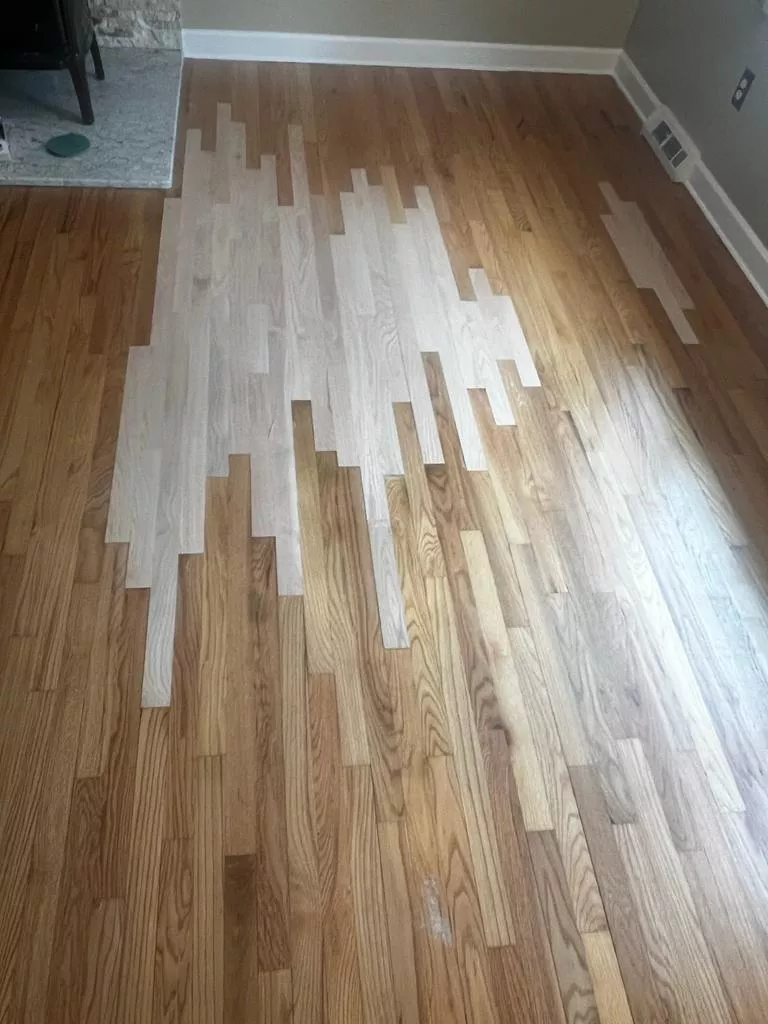
Try the candidate color on the repaired wood and the surrounding boards, using the preparation planned for each. Compare both near a window and again in artificial light. Keep a note of the difference you can accept before the stain is applied across the rest of the room.
Yes. View the stain under the intended clear finish before making your choice. Look at both tone and sheen after the sample dries and keep the approved trial as a reference.
First check how much wood can be prepared and test a small area. Color can persist differently across old and replacement boards. Approve a coated trial before deciding the final shade.
Save the approved sample if possible along with the stain formula, the wood species and the finish used. If a future repair brings new wood, compare a fresh trial against the retained floor.