.svg)


Hardwood
Stair Treads

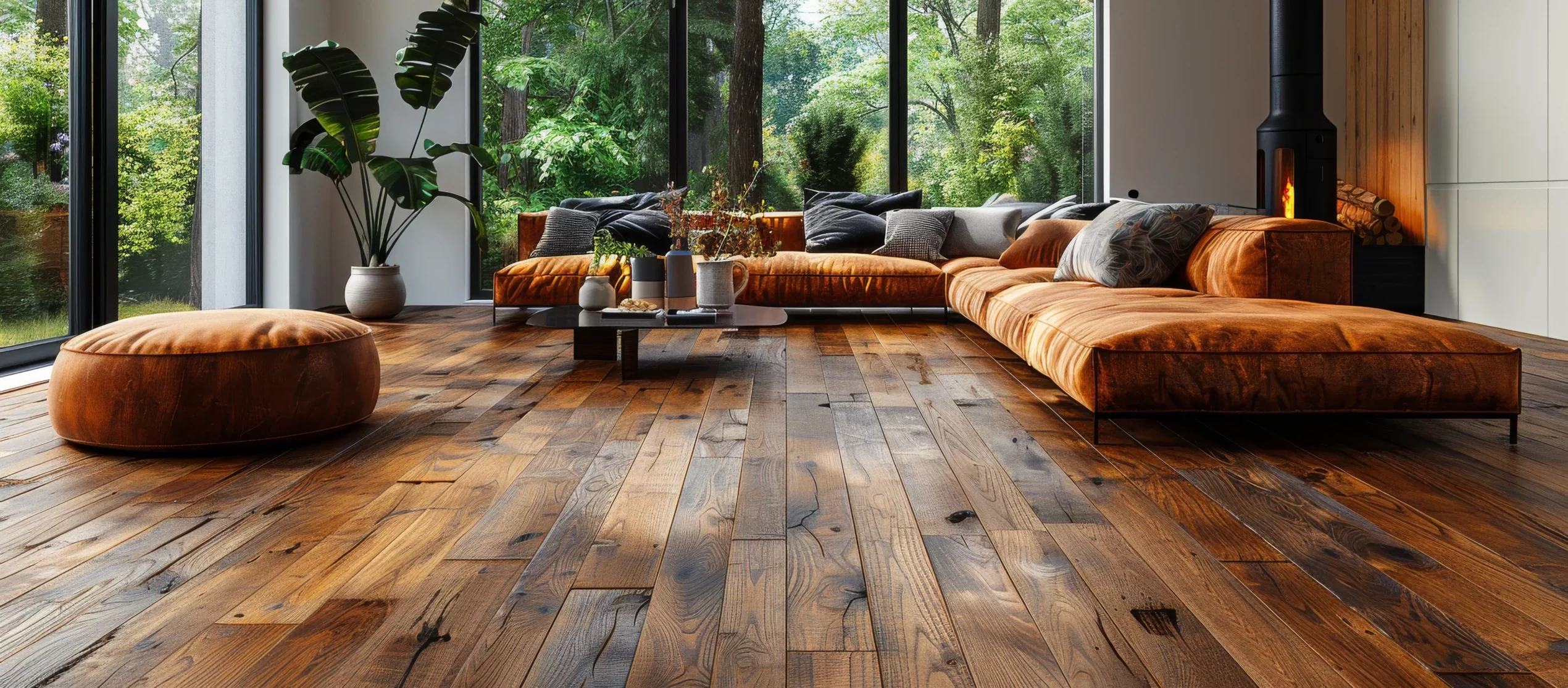
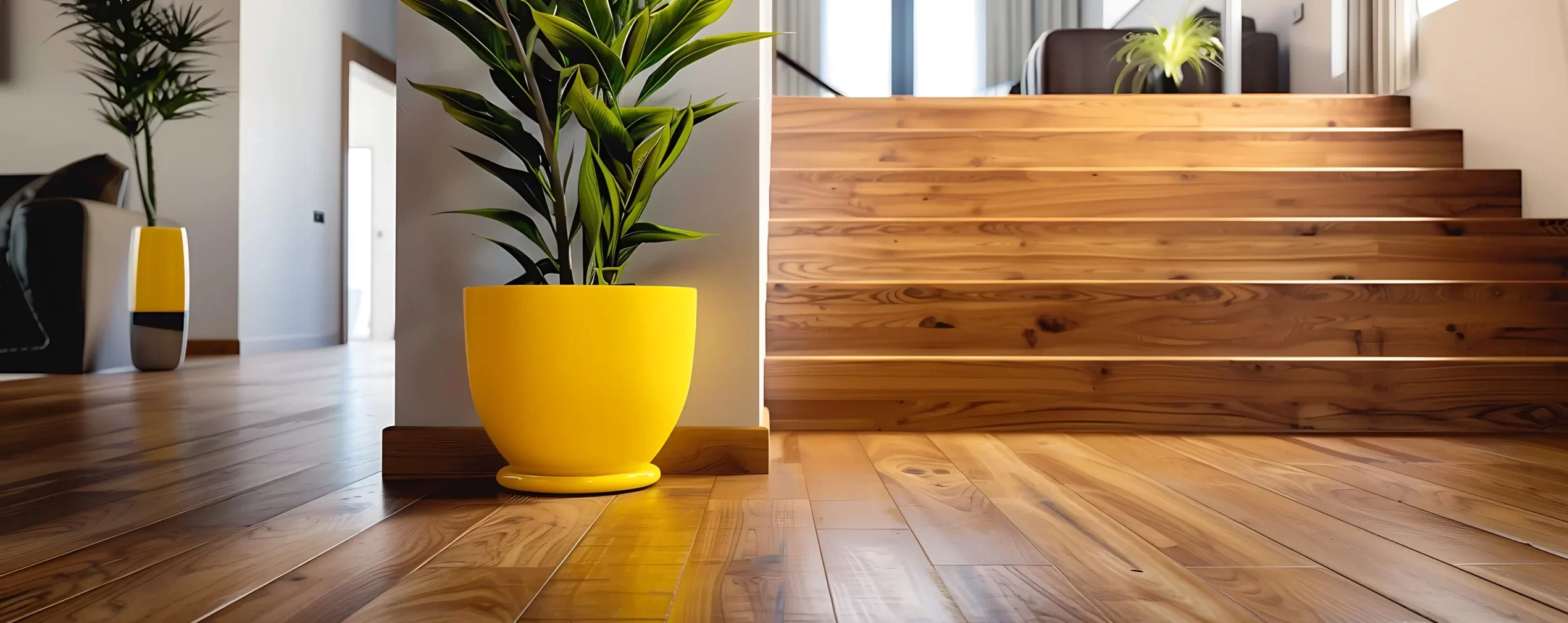
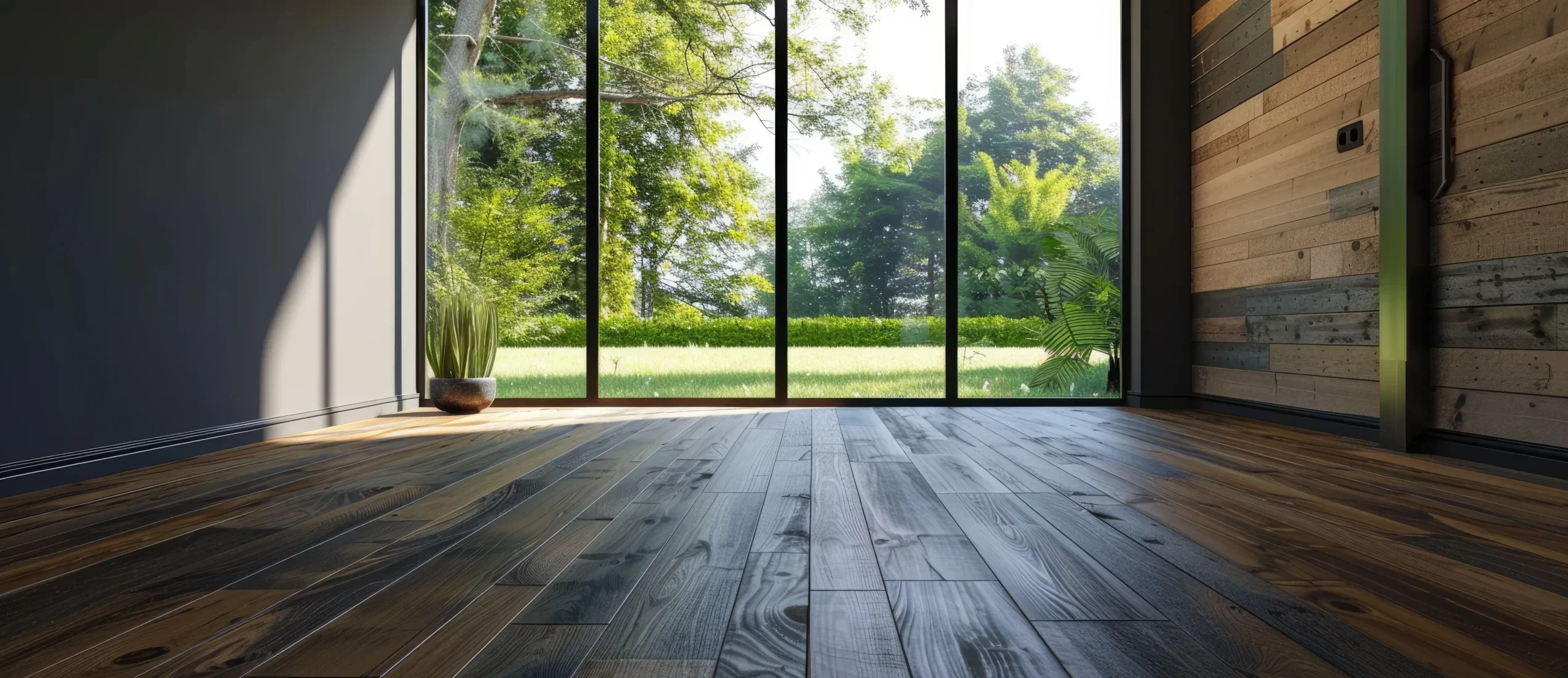


Stairs That Match the Floor Above and Below
Pick a wood below to see how it looks on a staircase. No two steps are ever quite the same size, so each tread gets trimmed to the step it sits on.
Tread Woods
Red and white oak are the most common picks and take stain well, so they're easy to match to an oak floor. Maple and hickory are harder and hold up to kids and dogs running up and down a New Jersey split level all day.


Stair Work We Do
Most jobs start with the carpet coming off, the tack strips pulled and every old step checked for squeaks. After that, each tread is scribed to the walls and stringers, glued, fastened down and finished along with the floor.


Why Stairs Squeak
A step that creaks usually has a little play between the tread and the framing under it. Scribing each board tight to the walls, then gluing and fastening it, takes out that movement so the stairs stay quiet for years.
Open Sides Need Return Ends
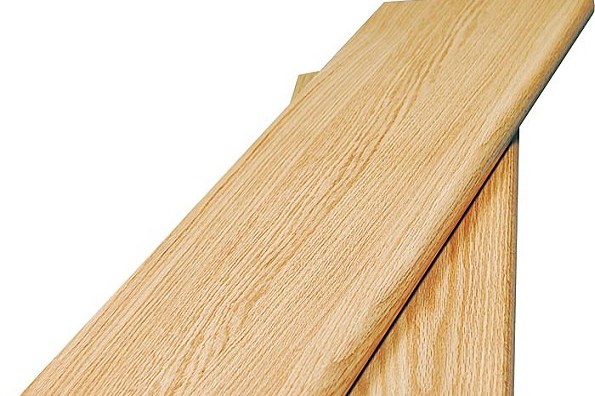
When one side of the staircase is open to the room, the tread needs a finished end, called a return, so you see wood grain and not a raw cut. Treads can come with a return on one end or on both.
Landings Tie It Together
A landing tread is a wide piece that finishes the top step or a middle landing and meets the hallway floor. Matching its nosing to the stair nosing keeps the whole run looking like one job.
Staining Stairs to Match
Treads get stained and sealed to blend with your hardwood, and white or wood risers come down to taste. White risers brighten a narrow Massachusetts staircase, while wood risers feel warmer and more traditional.
Refinishing Instead of Replacing
If your treads are solid wood with enough thickness left, sanding and refinishing can bring them back for far less than new ones. Every step is sanded by hand, so we look at the wear first and tell you which way makes sense.
Safer Wood Stairs
Satin and matte finishes are less slick than high gloss on stairs. A runner is another good option on steep stairs in older New York homes, and it still lets the wood show along both sides.
Stair Tread Questions
How much does stair tread installation cost?
Stairs are priced per step, since each one gets measured and cut on its own. The wood, the risers and any return ends change the number, and you'll have it in writing after we measure.
What size are standard stair treads?
Most hardwood treads are 1 inch thick and 11 1/2 inches deep with a rounded bull nose, sold in lengths from 36 to 94 inches. Extra wide or deep steps can use custom sizes.
Can you replace carpet on stairs with hardwood?
Yes. The carpet, pad and tack strips come off first, then we check what's underneath. New treads and risers either go over the old steps or replace them, depending on their shape.
Should stair treads match the floor?
Most people match the species and stain so the stairs and floor read as one. A darker tread with white risers is popular too, and we can set out samples so you see both options in your Connecticut hallway.
Can I get prefinished stair treads?
Yes, prefinished treads come in many woods, though they can take a few weeks to arrive. Unfinished treads let us stain them on site so the color lines up with your floor.
Stair projects can be split into monthly payments with our financing.
Tread woods and stain samples come to your Rhode Island home at the free visit.
Each tread and riser is cut, fitted and coated by our own installers.
Loose or creaky steps get fixed underneath before any new tread goes on.
Ready for New Stairs?
Book a free visit, see tread woods and stain samples on your own steps, and get a written price for every stair.
