Samples on Your Own Wood
Inspect the wood and previous finish before planning a color change. The preparation needed is part of the project, not a detail to decide after color selection.



Inspect the wood and previous finish before planning a color change. The preparation needed is part of the project, not a detail to decide after color selection.

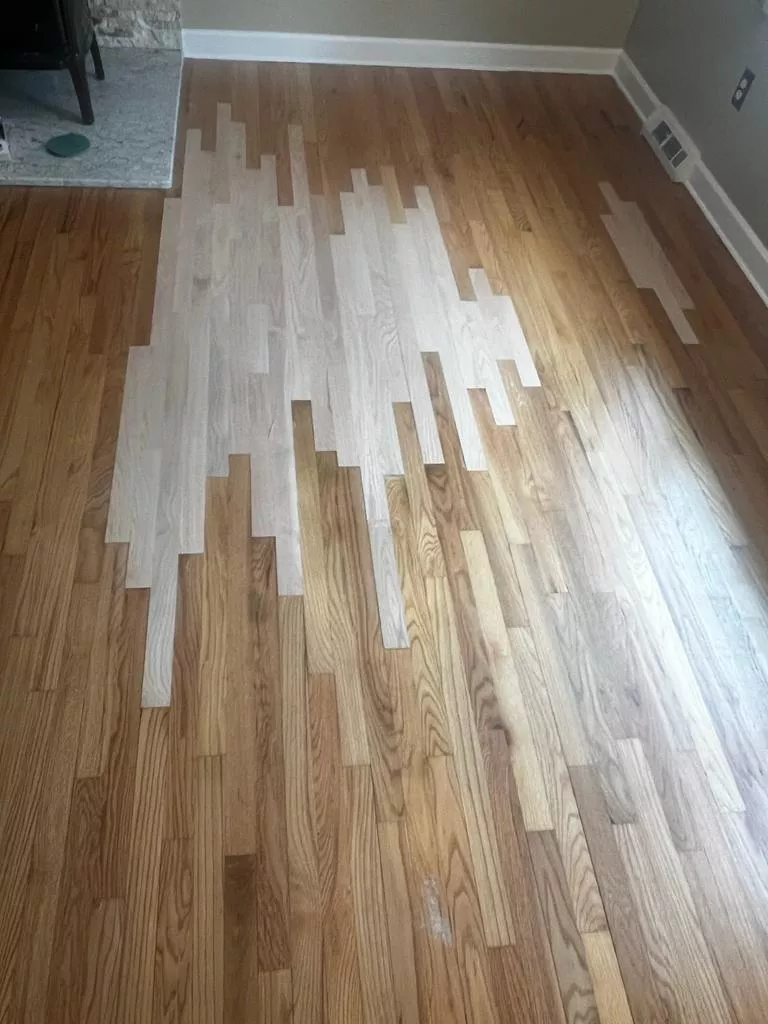
Review old repairs and different wood species together. A shared stain does not guarantee identical color across unlike planks.

Compare a prepared sample in the room itself. Daylight, artificial lighting and retained trim can change how the same stain appears.

Our written warranty provides one year of workmanship coverage. The coating manufacturer requirements govern routine care and return-to-use instructions.


 Get your Free In-Home Estimate
A photograph can show a preference, but it is not a reliable final match. Compare a sample on suitable prepared wood under your room lighting.
Wood species, grain and earlier repairs influence absorption and appearance. Some variation can remain even within one floor.
It does not repair the wood. Gouges, splits and deep contamination need assessment before the coloring process is chosen.
The result depends on the wood, previous treatments and how much preparation is possible. Review a test area before committing to the full project.
Yes. The final coating affects how the color is seen. Discuss both decisions before the finishing system is selected.
They can be assessed together, but the new material may respond differently. The proposal should explain the likely limits of color blending.
Stain is only part of the system. Follow the coating and project instructions for walking, furniture and rugs rather than using one universal waiting period.
Send room photos, the approximate area and any known sanding or repair history. Include color references and identify the adjoining floors you plan to keep.