
Boards Matched to Yours
Identify the existing wood dimensions and construction before sourcing replacement planks. A similar color alone does not make a plank compatible.



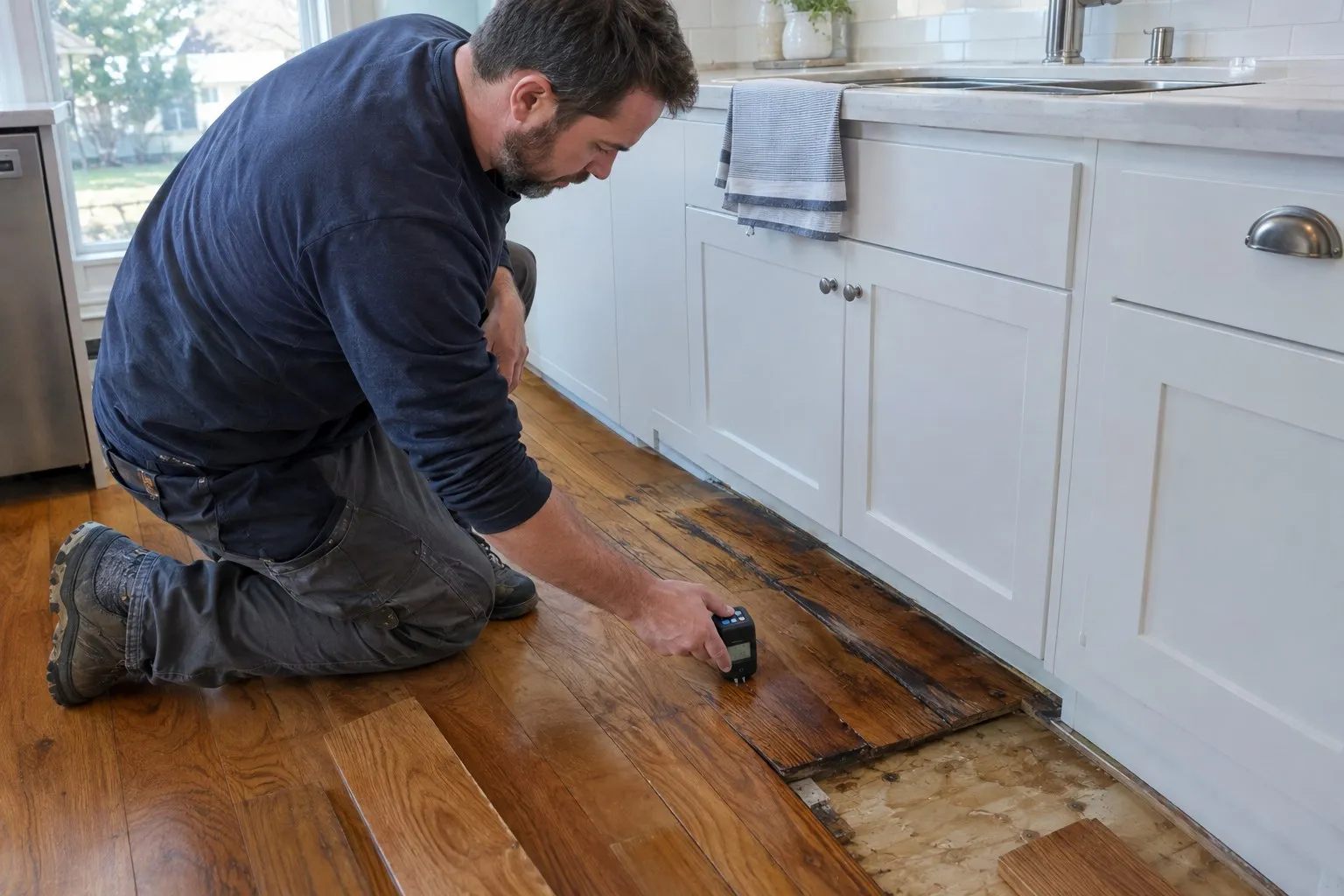
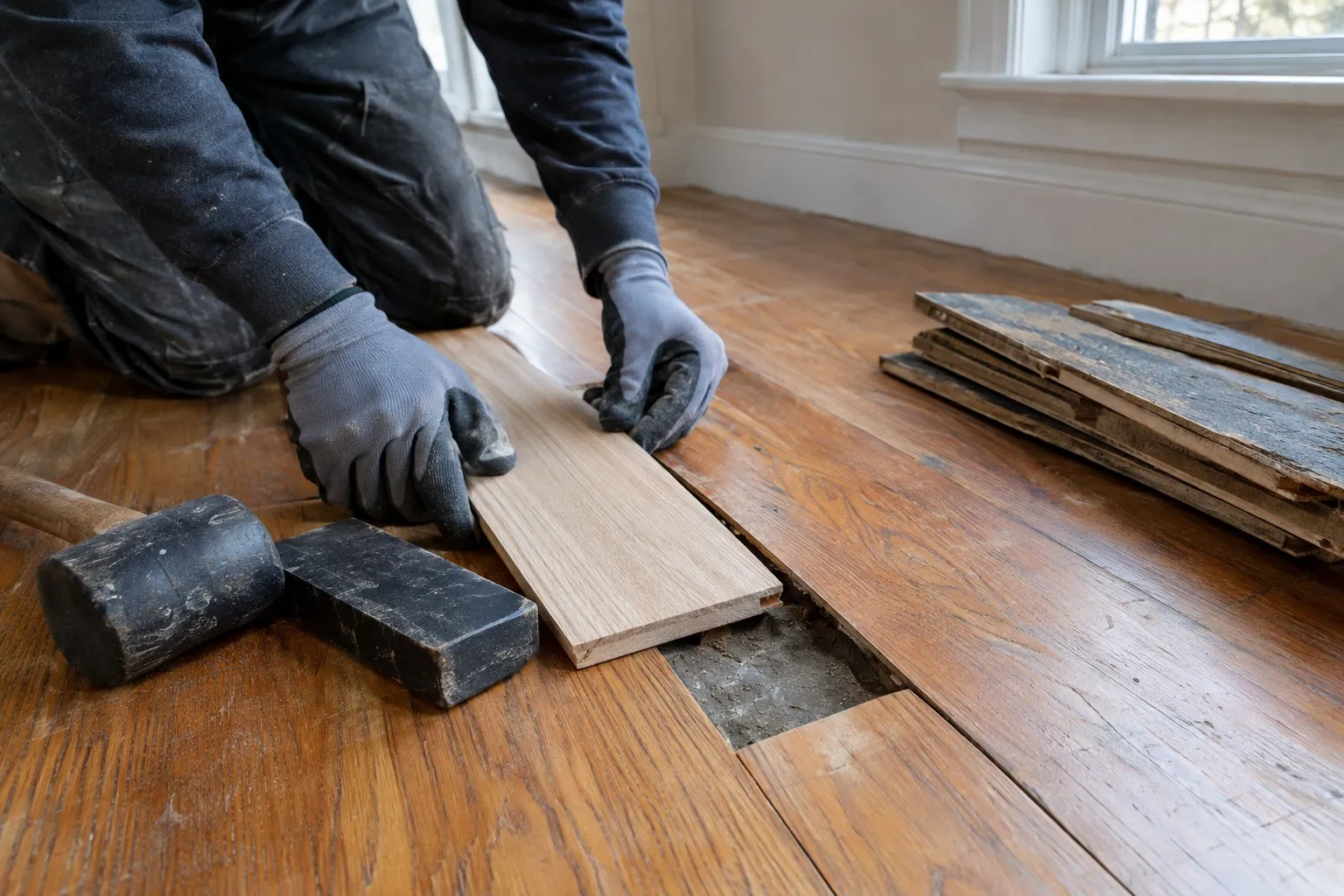

Identify the existing wood dimensions and construction before sourcing replacement planks. A similar color alone does not make a plank compatible.

Address an active moisture source before replacing affected wood. A patch cannot protect new planks from the same unresolved conditions.

Check where the movement originates. A squeak or loose section may involve fasteners, the base or another part of the floor assembly.

The written one-year workmanship coverage applies to the agreed repair. The proposal should describe any limitations on matching old and new material.


 Get your Free In-Home Estimate
Sometimes. Matching dimensions, the surrounding joints and access for removal determine whether an individual replacement is practical.
Not necessarily. New wood can differ from older planks in grain and color response. Review the expected appearance before authorizing the repair.
The active leak needs attention first. Floor replacement should follow an assessment of the remaining moisture and damage.
Some problems can be addressed that way, but the construction and source of movement matter. An inspection is needed before selecting a repair method.
No. Wood movement and indoor conditions can affect gaps. The assessment should distinguish normal changes from damaged or poorly supported areas.
They may help if their dimensions and condition are suitable. Keep the product details and tell us how the spare material has been stored.
It depends on the existing coating and the patch. A wider finish area may help coordinate the result, but the scope should be discussed before work starts.
Include the affected planks, a wider view of the room and nearby doorways. Describe the cause if known and when you first noticed the problem.







