Boards Matched to Yours
Identify the original plank dimensions and construction. Spare material is useful only when its profile and condition suit the repair.



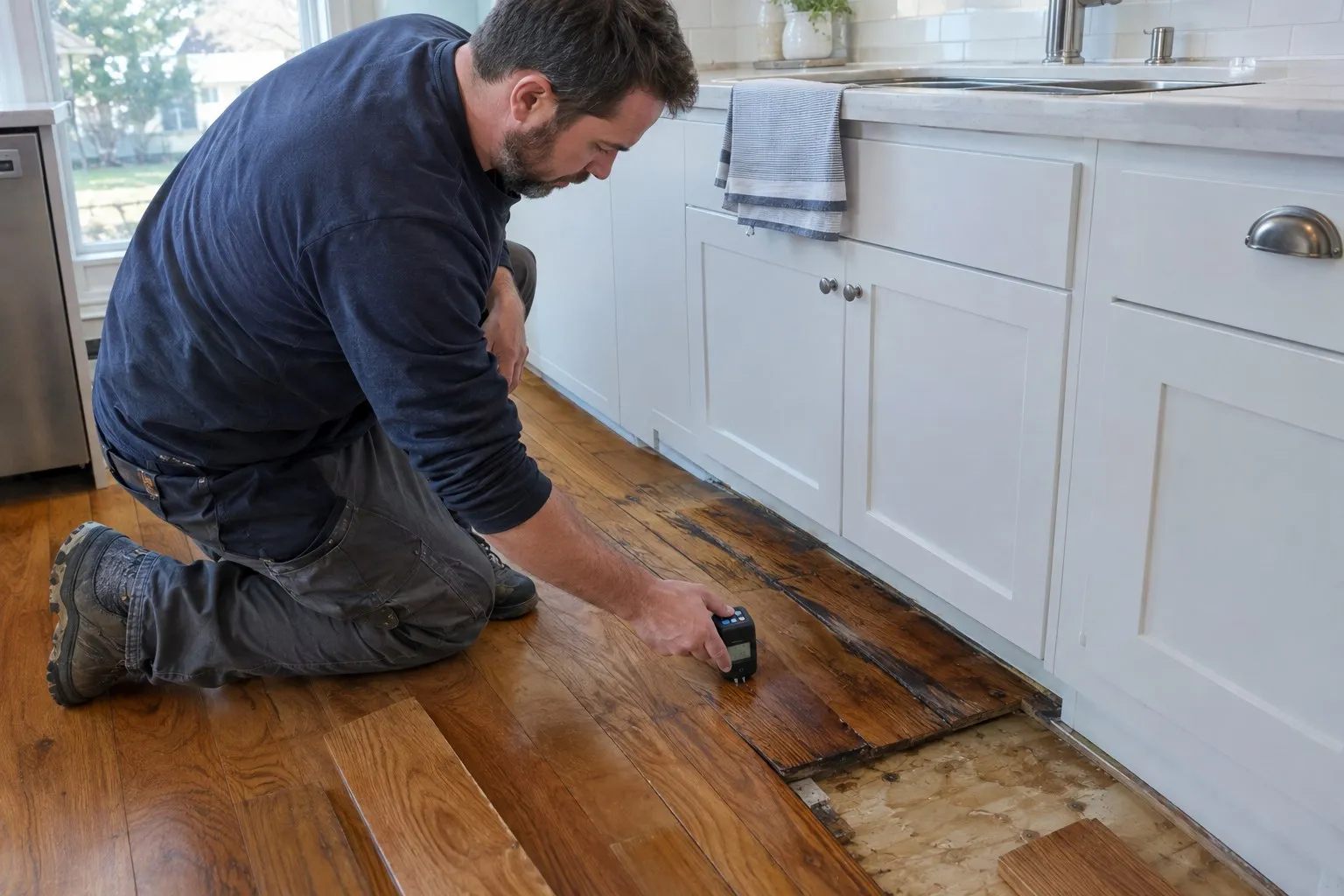
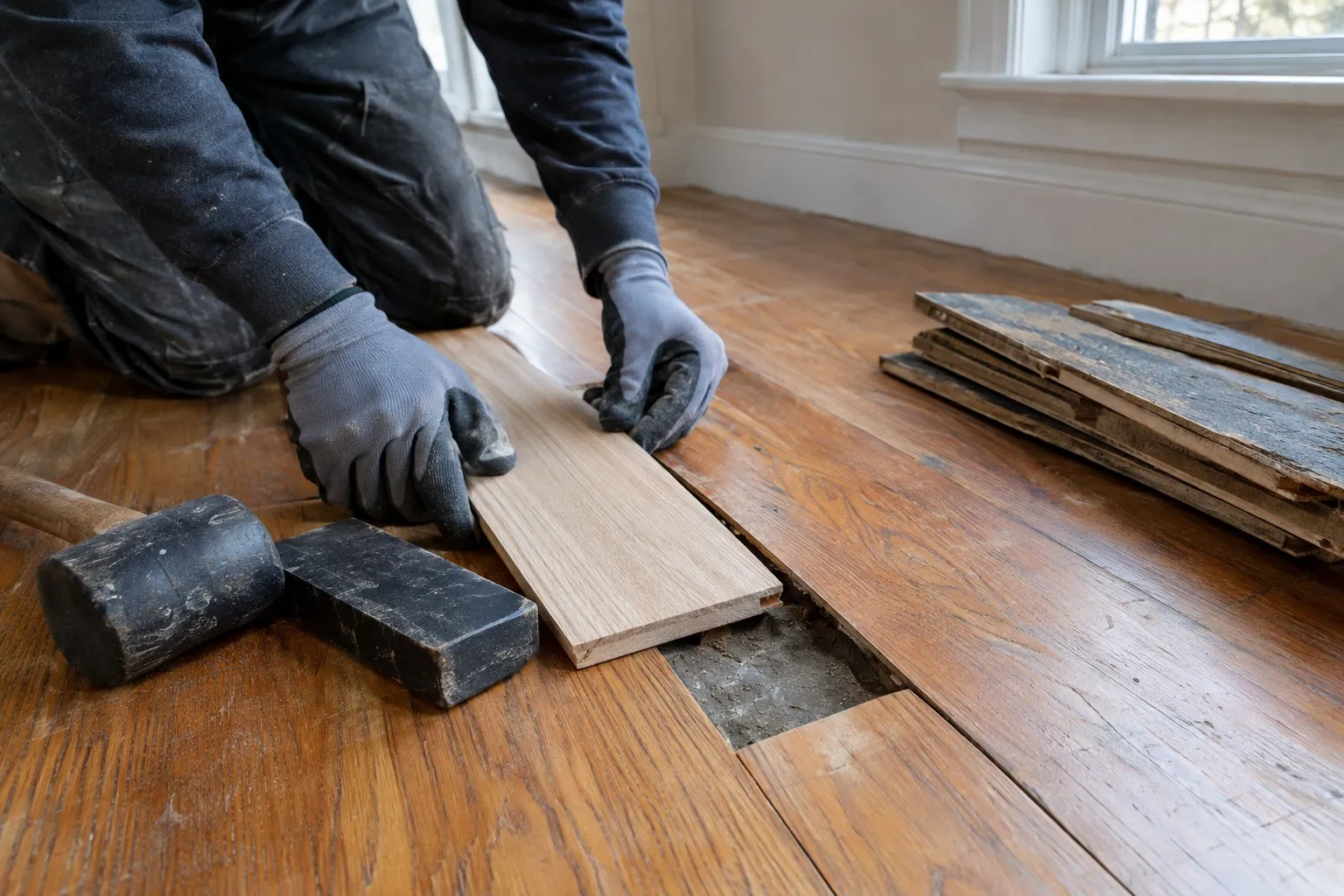

Identify the original plank dimensions and construction. Spare material is useful only when its profile and condition suit the repair.

Resolve active water problems before replacing damaged flooring. Review the remaining condition before enclosing the area again.

Assess the source of movement around a loose section. A repair should address the relevant support or fastening issue.

Keep the written repair scope and workmanship terms. Matching limitations should be explained alongside the proposed treatment.


 Get your Free In-Home Estimate
Sometimes a local repair is practical. Plank compatibility, surrounding condition and the finishing plan determine the available options.
They may be useful if their dimensions, profile and condition are suitable. Share the product information and how the planks have been stored.
That cannot be guaranteed. Age, grain and finish response can leave differences even when the dimensions match.
Address the water source first. The affected floor then needs assessment before replacement or finishing is planned.
No. Movement can come from different parts of the floor assembly. An inspection is needed to locate the cause.
No. Wood movement and changing conditions can affect gaps. The proposed treatment should follow an assessment of their cause and history.
That depends on the material and existing finish. Discuss the finish boundary and whether a wider area should be included before work starts.
Photograph the defect close up and from across the room. Include nearby doorways and describe movement, water events or previous work if known.