Samples on Your Own Wood
Assess whether the existing wood can receive the required preparation. A color change depends on the floor condition and previous treatments.



Assess whether the existing wood can receive the required preparation. A color change depends on the floor condition and previous treatments.

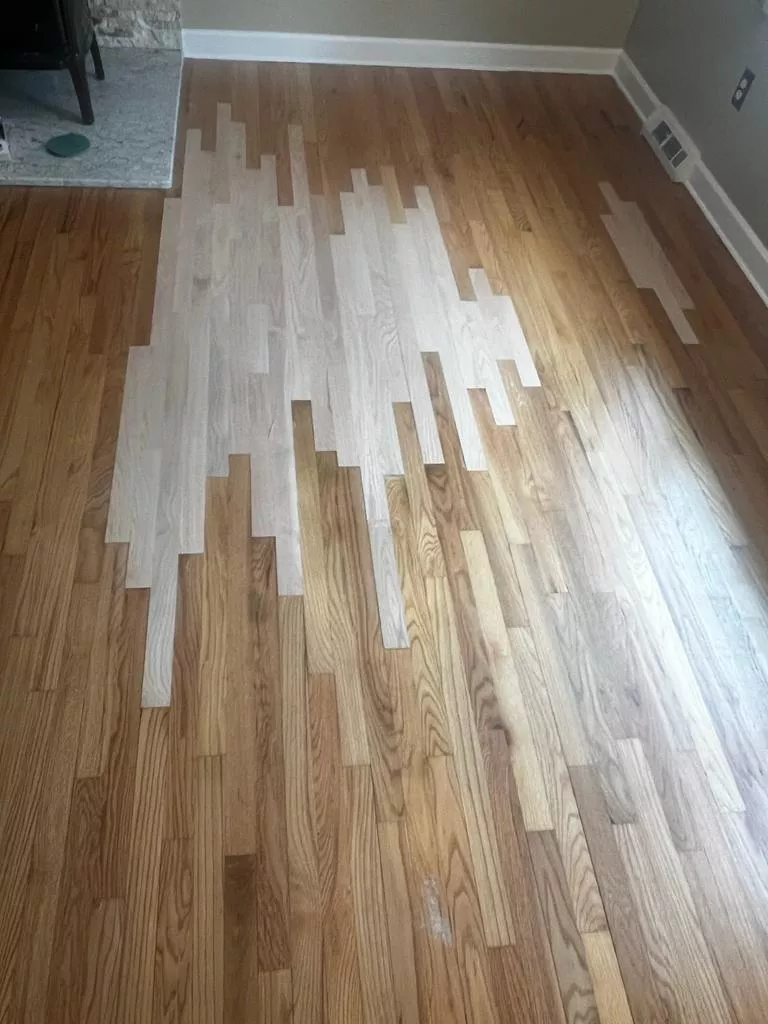
Include older repairs in the sample discussion. Different planks may retain visible variation after the same color treatment.

Compare the sample in the room at different times of day. Check it beside the surfaces that are staying in place.

Review written workmanship terms and keep the coating care instructions. Ask for separate guidance on walking, furniture and rugs.


 Get your Free In-Home Estimate
Use the image to communicate a preference. Approve the final choice on suitable prepared wood in the room because screens and lighting can alter appearance.
Not necessarily. Grain, species and age influence the result, so the expected variation should be discussed before application.
That depends on the wood and previous treatments as well as the preparation possible. A sample area helps establish a realistic result.
It does not repair missing or damaged wood. Assess the defect and any repair needed before deciding on the color.
They are different parts of the process. Review the color choice and the final coating system together in the proposed scope.
Yes. Sheen affects the completed appearance and should be considered with the stain selection. Confirm both choices before full application.
That may be possible where a suitable boundary is defined. Discuss the visible connection with adjoining floors before scheduling.
Follow the final coating instructions for the specific project. Rug placement may require a different waiting period from walking or moving furniture.