Samples on Your Own Wood
Approve stain on prepared boards with the planned protective finish. Keep the chosen sample identifiable throughout the work.



Approve stain on prepared boards with the planned protective finish. Keep the chosen sample identifiable throughout the work.

Fine sanding should suit the timber and planned stain. The prep sequence helps limit visible sanding marks and uneven absorption.

Even application starts with uniform prep and controlled working edges. Review absorption differences before staining a room.

Ask for the one-year staining labor terms and finish-care dates. The approved trial records color expectations and matching limits.


 Get your Free In-Home Estimate
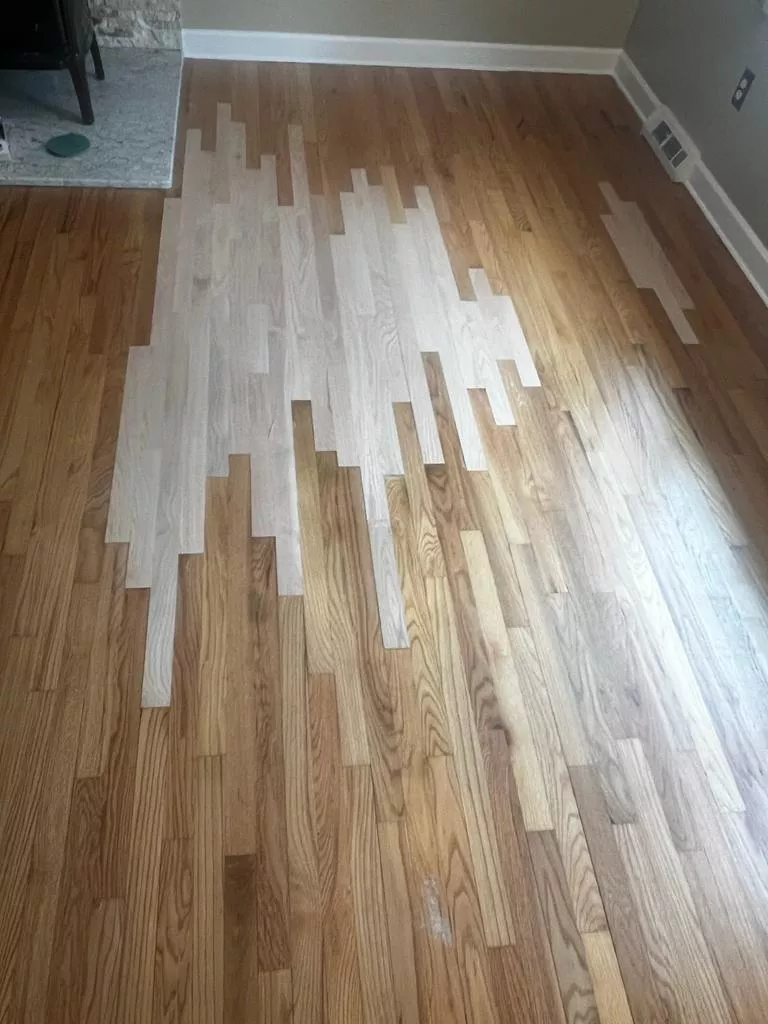
City Planning documents Bayside detached houses built in the 1950s. A property that has been altered since that time may combine earlier wood with strips installed during later repairs or additions. Identify those changes and prepare separate trials where the woods differ. Compare the coated samples under each room’s normal combination of daylight and lamps before approving a formula. The goal is an achievable relationship between the surfaces, not an assumption that one stain will make every period of flooring look identical.
One- and two-family detached housing appears throughout the City’s description of Bayside. If a room or connecting stair serves another household, identify that circulation before the stain and finish sequence is scheduled. Discuss an available alternative route, protected areas and the product guidance governing return. Share the resulting plan with the people who depend on the passage. A finish choice is only part of the decision; an occupied property also needs a practical arrangement for the period when its treated surfaces cannot be used.
The Bell/Northern town center is Bayside’s documented commercial focus. For a business floor, test the proposed color under the lighting customers will actually see and beside fixtures that will remain. Confirm that the protective finish is suited to the described use, then plan fixture movement and reopening around its instructions. Existing cleaners or coatings may affect preparation and should be disclosed. Those operating details belong with the approved sample so a visual choice does not outrun the practical conditions of the work.
Yes. NYC excludes debris generated by professional renovation from residential garbage collection, so the contractor and owner should agree how the actual project waste will be handled. Discuss sanding residue, removed repair pieces if any, and product-related materials according to their applicable disposal requirements. Do not assume a resident cleanup allowance covers every part of hired staining work. Naming responsibilities at the estimate stage keeps material handling connected to the planned preparation and prevents a vague cleanup promise from substituting for a disposal arrangement.
A color change does not repair damaged wood or establish adhesion over an unknown coating. Inspect the existing treatment and prepare a suitable surface before applying stain.
The wood’s underlying color and grain influence the result. Use prepared, topcoated trials to judge the balance, and record the combination you approve.
Test first on the actual stair wood. A different species or preparation can alter absorption, even when the stain container carries the same color name.
It should represent the prepared wood, stain and protective finish together. Identify the approved trial and discuss remaining variation so the reference is useful during application.