
Boards Matched to Yours
A replacement board must fit the old floor and resemble it. Check thickness, width, joint profile and the likely appearance after finishing.



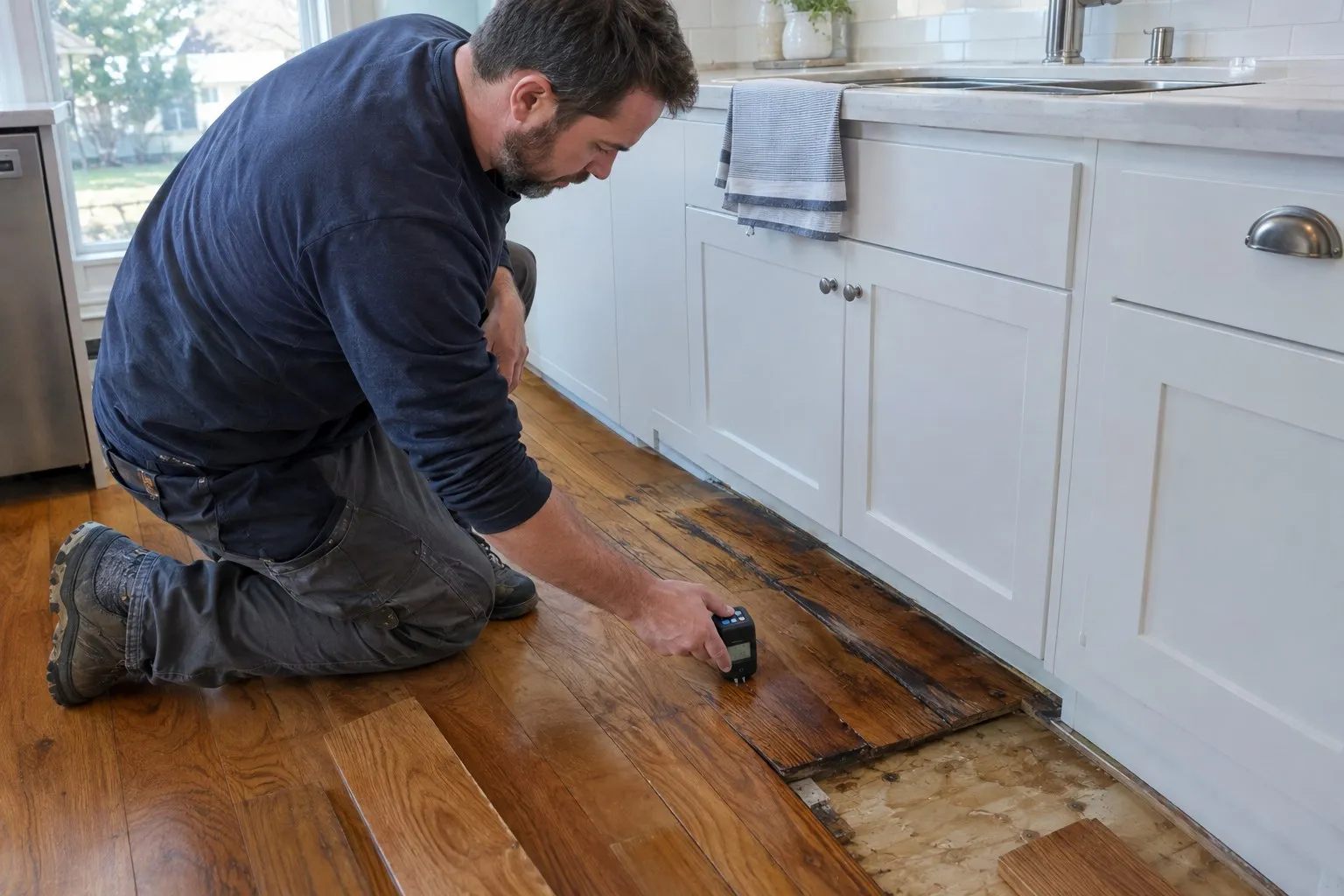
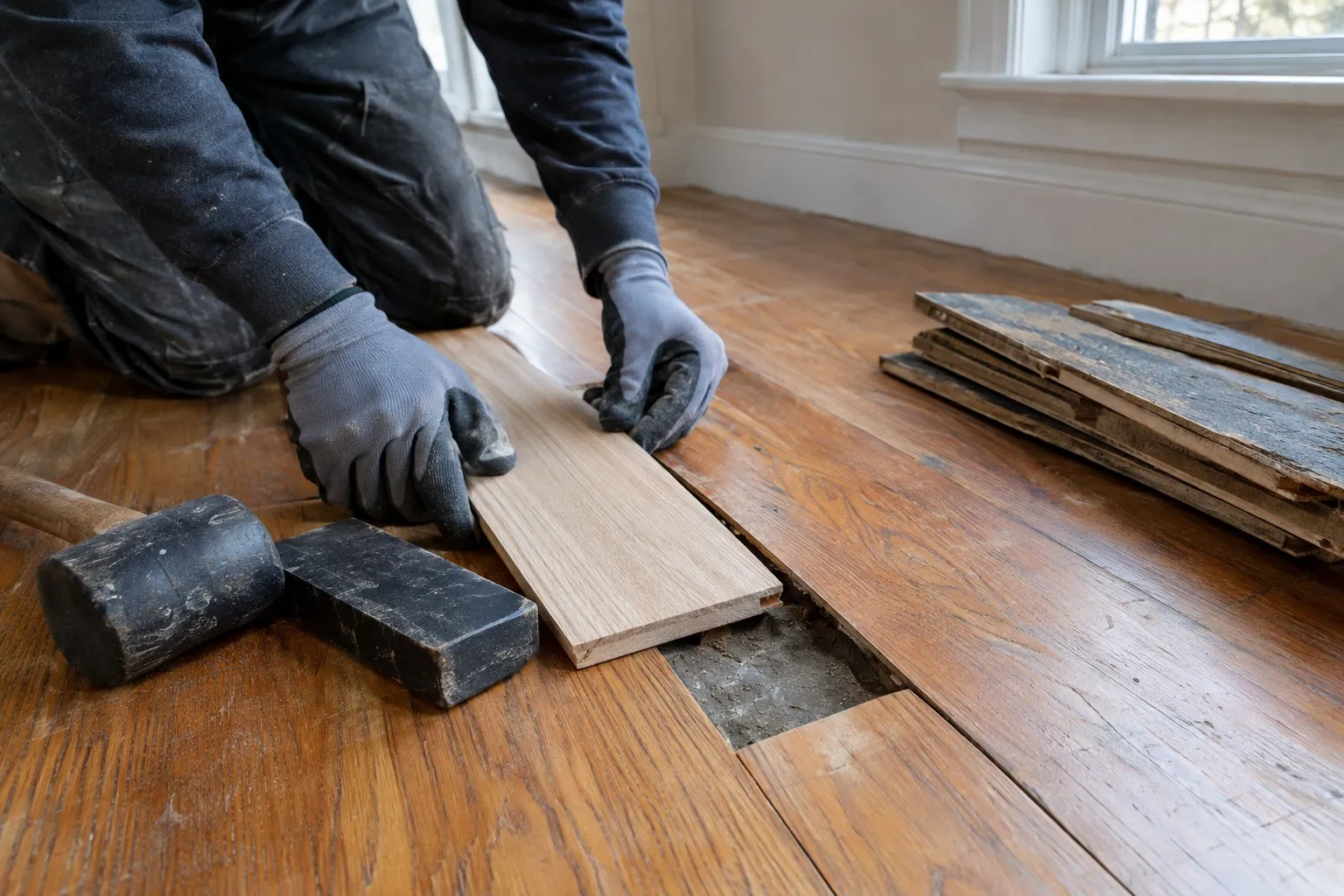

A replacement board must fit the old floor and resemble it. Check thickness, width, joint profile and the likely appearance after finishing.

Moisture-related damage needs the source addressed and conditions reviewed. New wood should not conceal an unresolved problem below it.

Gaps and squeaks need the causes identified. Note changing joints and which boards move before choosing filler, fasteners or new boards.

Assess the one-year repair labor terms, treatment boundary and likely visual differences. Keep the care advice with the scope.


 Get your Free In-Home Estimate
The Bayside planning study records midcentury detached housing, but a home from that period may contain later replacement boards or added rooms. Start by identifying which floor area is damaged and whether its construction differs from the rooms around it. Measure the actual width, thickness and joint profile before searching for stock. A close color in a showroom is not enough if the replacement cannot fit the existing assembly. Discuss possible appearance differences using the material that can actually be sourced.
Bayside’s City Planning study records detached homes used by one or two households. If the affected floor is above an occupied unit, tell us whether the underside can be inspected with permission and whether the noise or movement is noticed below. Also explain the shared entry route and any access limitations. These details can help locate a problem and plan the visit, but they do not establish a cause. Inspection must connect the proposed repair to the actual damaged or moving part.
Bell and Northern Boulevards form the commercial focus identified in Bayside’s planning record. A business arranging a repair should mark the damaged area, describe customer circulation and identify movable fixtures before a work boundary is agreed. Discuss whether the finish will stop locally or continue across a larger area, and follow the chosen products’ return-to-service instructions. That operating context matters when deciding how a repair is scheduled. It does not justify promising an invisible patch or immediate reopening before the wood is assessed.
Professional construction waste is outside NYC’s normal residential garbage allowance. For a board repair, the proposal should explain the private removal arrangement and include any damaged base material that the agreed work will expose and remove. Keep responsibilities clear if another trade is dealing with a leak or structural issue at the same address. Small repair size does not automatically turn hired work into DIY disposal. Settle the collection and carrying details before strips are lifted from an occupied room.
The source and resulting conditions should be addressed first. Otherwise replacement material or a new coating may hide a continuing problem and the same damage can return.
Not necessarily. Joint movement and the floor’s condition determine whether filling is suitable. A rigid patch can reopen where the boards are still changing position.
Sometimes the affected depth exceeds the usable wood. Examine the stain and remaining thickness, then compare limited treatment with replacing the contaminated pieces.
Only when that broader treatment is included in the agreed proposal. Define the replacement boundary, the finishing area and the expected blend before work begins.







