
Boards Matched to Yours
New wood is matched by species, width and grain, then stained by hand and checked against the old floor until you cannot tell where one ends.



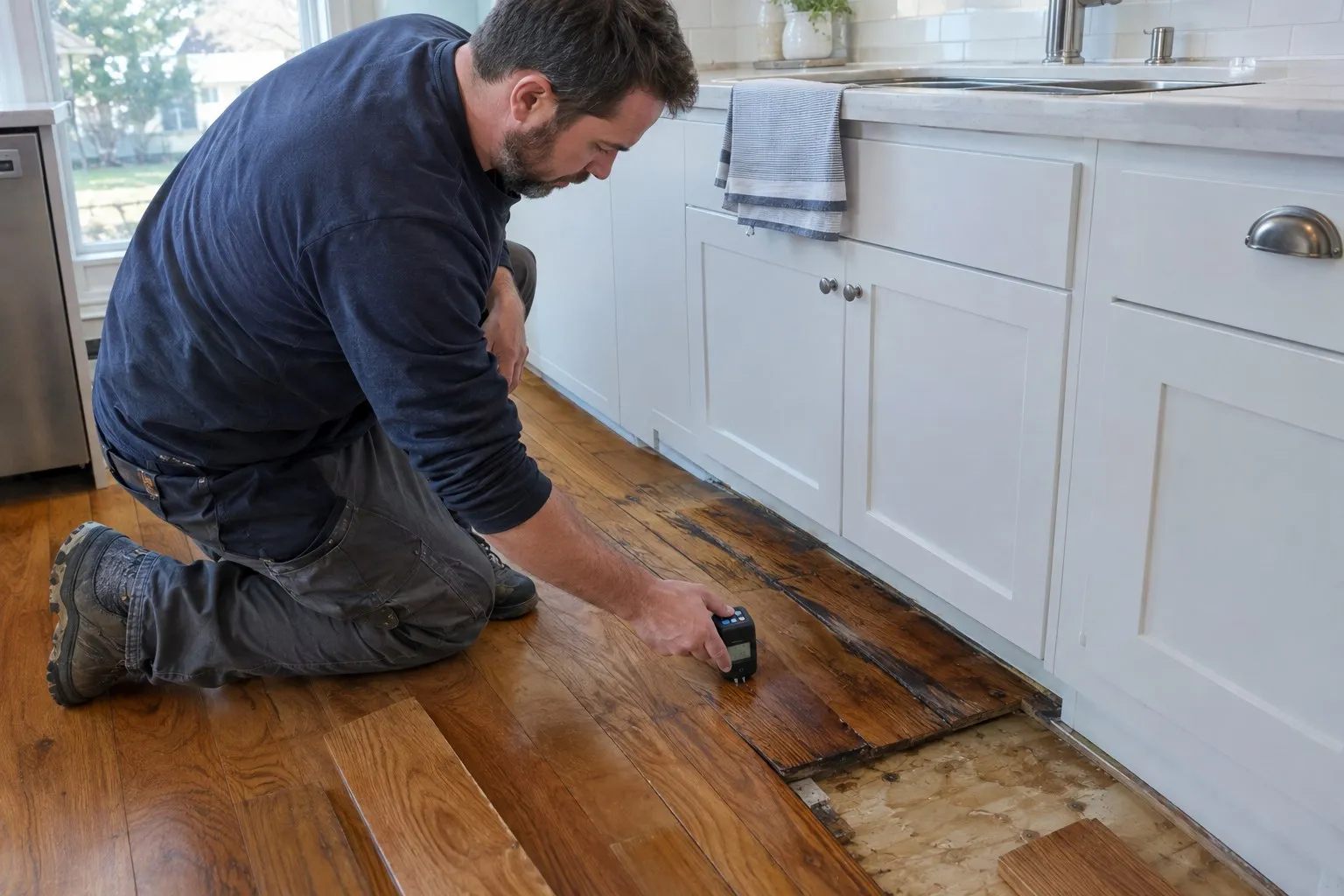
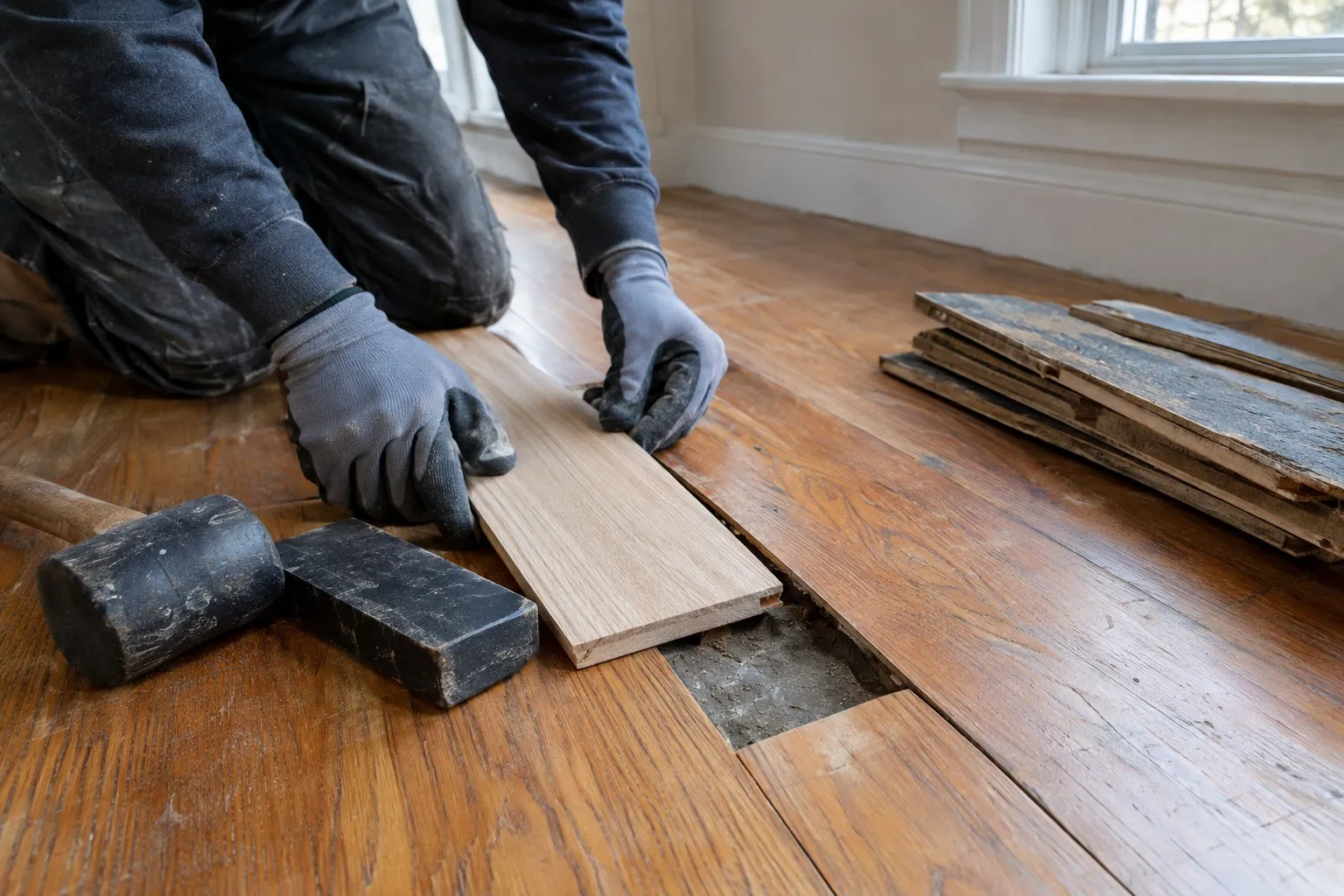

New wood is matched by species, width and grain, then stained by hand and checked against the old floor until you cannot tell where one ends.

On the free visit, a tech studies the damage, meters the moisture and checks the basement ceiling below, because a patch over a hidden leak never lasts.

Any strip that teeters when you step on it gets anchored again, and those winter cracks that show up once the furnace runs get packed with filler.

Our repair techs carry NWFA training, a state license and full insurance, and the labor on each fix is covered for twelve months.


 Get your Free In-Home Estimate

Honestly, no. Two cracked strips and a hidden leak are very different jobs, so a tech visits free of charge, studies the damage and then quotes a firm number.
Often, yes. New strips get laced in and the finish feathered out. On older floors, though, sanding the entire room can look more even, and we say which route fits.
Nine times out of ten it is water: an icemaker line, a sweaty basement, a rubber backed rug by the door. That source gets tracked down and stopped before any wood gets replaced.
Species, width and grain come first, then stain tests on the new pieces until you cannot pick them out. Very old or uncommon wood can take extra work, and we say so up front.
Yes. Squeaks usually come from loose strips or nails. We drive trim head screws through to the joists so the floor stays quiet under your feet.
Light marks sometimes sand out. Deep black stains have soaked through the wood, so those pieces get replaced and colored to sit in with everything around them.
We can often get to your house within a day or two. Plenty of small fixes wrap up in one trip right after we price them, sometimes that same week.
Yes, for a full year on labor. If a patch we put in lifts, cracks or squeaks inside that window, our licensed and insured techs come back to redo it.







