
Boards Matched to Yours
We identify the species, whether oak, maple, or pine, and measure the strip width, then brush stain on spare offcuts until it matches your floor.



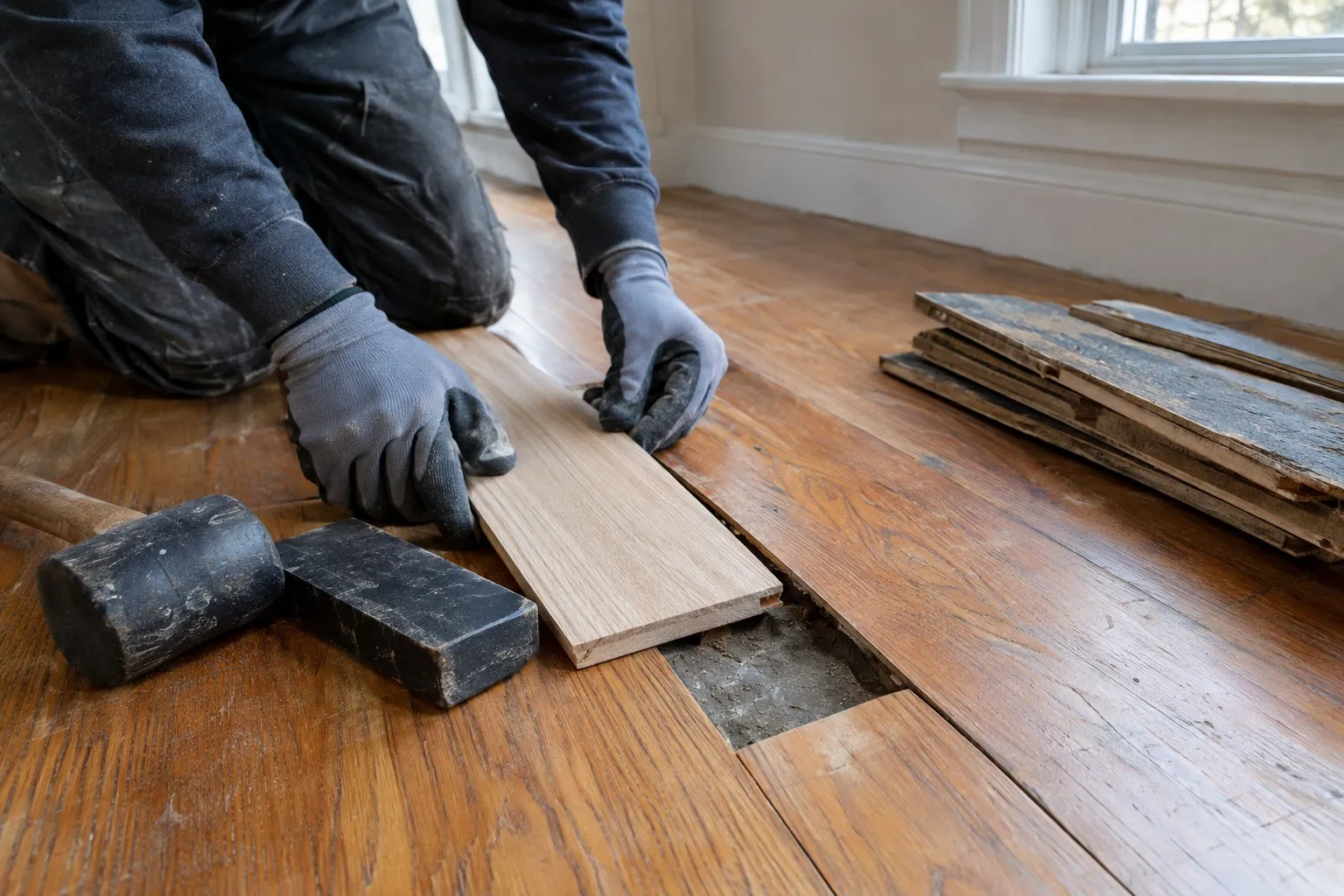

We identify the species, whether oak, maple, or pine, and measure the strip width, then brush stain on spare offcuts until it matches your floor.

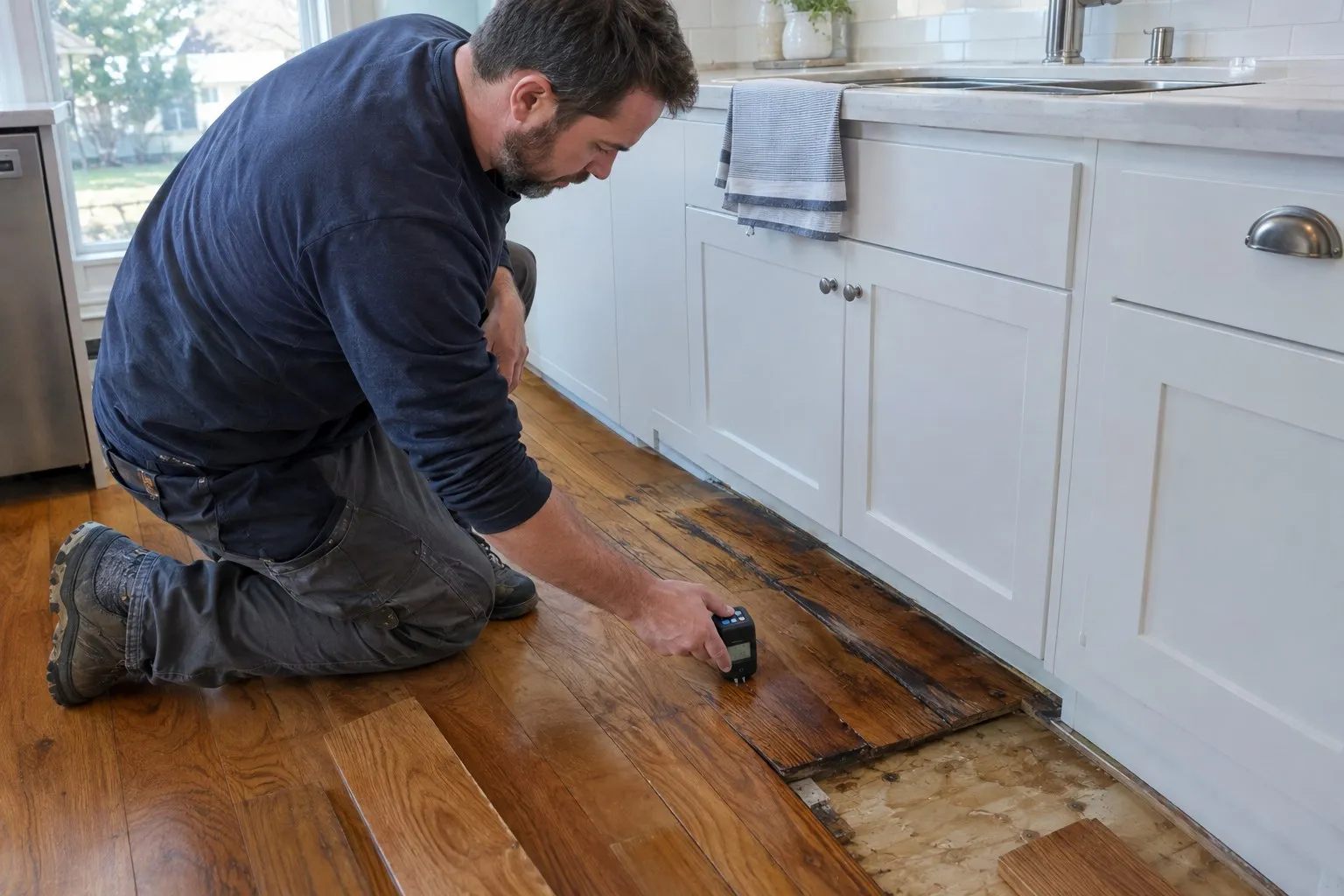
The visit costs nothing. We test squishy areas underfoot, check moisture with a meter, look at the joists from downstairs when we can and leave a firm price.

Bouncy areas get secured to the subfloor from above with small trim screws, and wide seasonal cracks get filled so dirt stops packing into them.

NWFA trained employees handle your repair, never subcontractors, all licensed and insured. Should a patch of ours let go inside a year, the redo costs you nothing.


 Get your Free In-Home Estimate

Each job is different, so an estimator comes out for free and quotes a set price before any work begins. Many small patches cost less than people expect.
A light singe can sometimes be sanded away. A deeper burn usually means removing those strips and weaving in new ones, then blending the color.
Cupping happens when the bottom of the wood absorbs more moisture than the top. We find the source, like a leak or wet entry, and fix that before replacing strips.
Often, yes. Pine is soft and ages to its own amber color, so we look for matching wood and blend stain carefully to keep the patch from standing out.
We work hard to make it blend. Matching species, width, stain and sheen usually makes the repair very hard to spot once it's finished.
Not always. Minor fixes can often be blended right where they sit. If the surrounding floor is badly faded, a full room refinish afterward gives the most even look.
Walking on it gently is usually fine by evening or the following morning. Give the finish a couple of days to cure before sliding heavy furniture back.
Yes. Workmanship on repairs is guaranteed twelve months. If something we fixed comes loose or fails during that time, one phone call brings a crew member back to sort it out.







