
Boards Matched to Yours
Describe the damage and its known history. A surface mark and a moving or swollen board may require different responses.



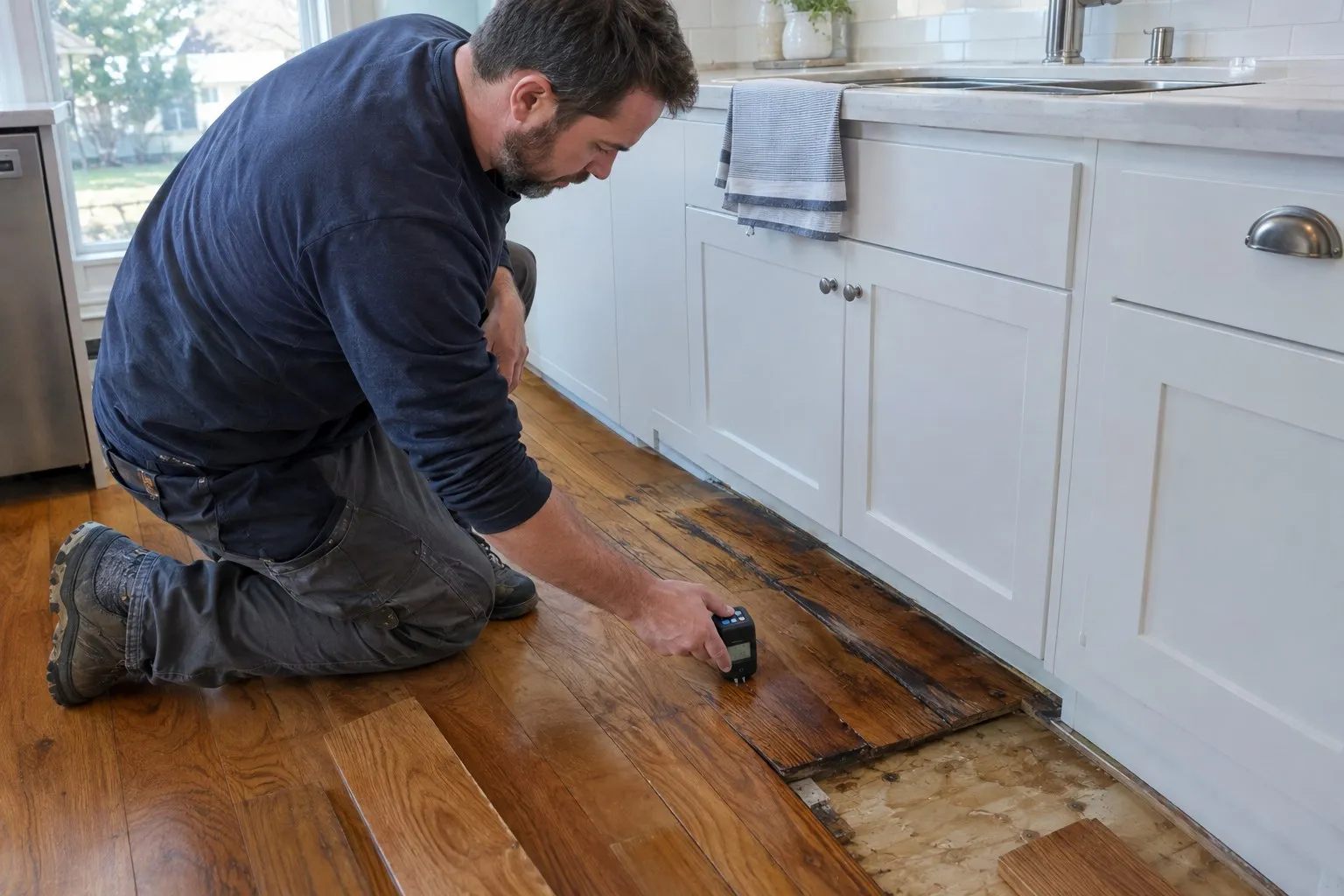
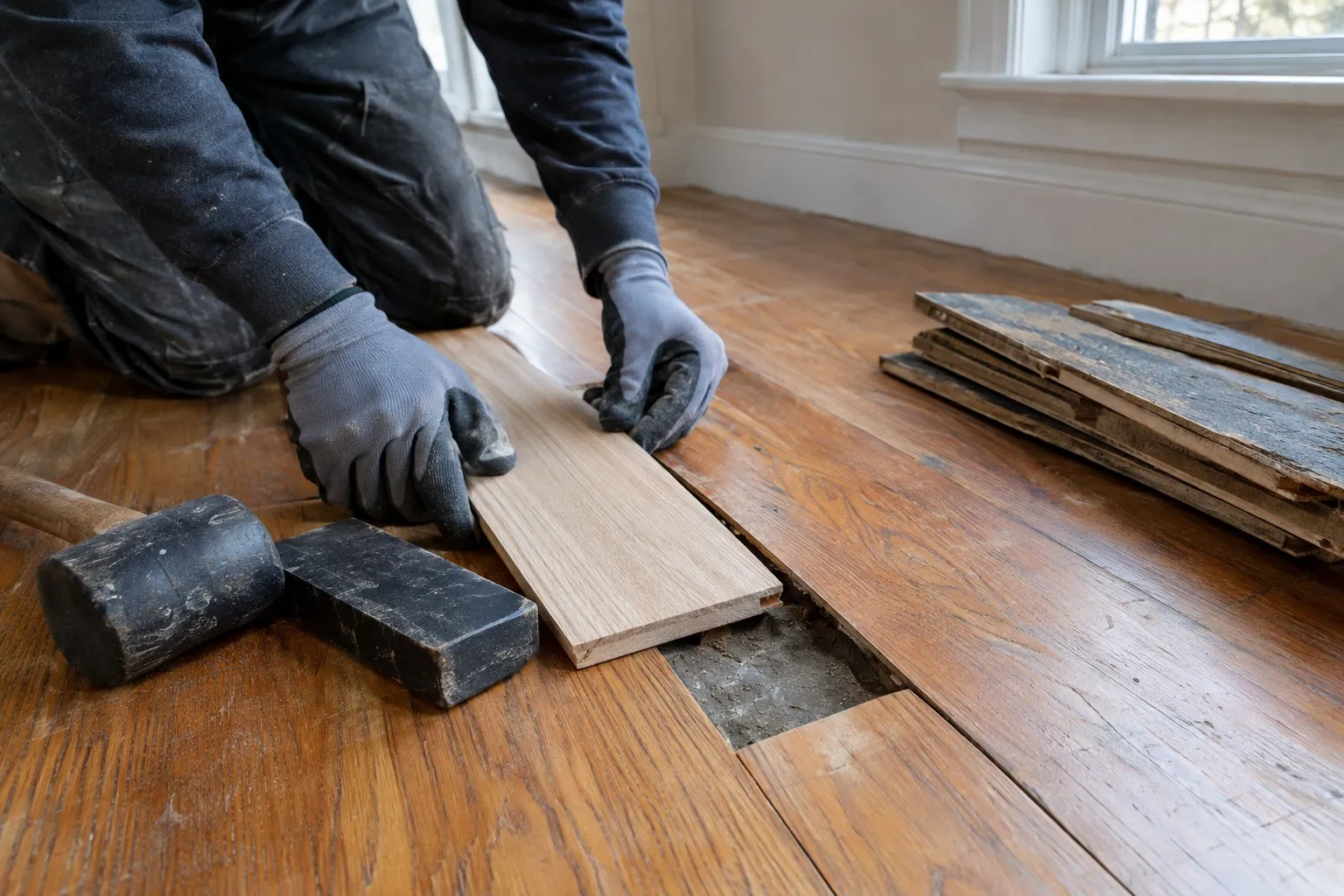

Describe the damage and its known history. A surface mark and a moving or swollen board may require different responses.

Plan how the repaired area will meet the existing finish. A localized patch can remain visible even with careful material selection.

Check any spare boards for size, profile and condition. Similar color alone does not establish that a board will fit.

Ask for the written workmanship terms and retain the product care instructions. Confirm the agreed scope and any exclusions before work begins.


 Get your Free In-Home Estimate
No. Age, sunlight, wood grain and the existing finish can leave differences. Review the likely appearance and finishing options before approving a repair.
Yes. The source and remaining moisture need attention before the repair plan is finalized; replacing boards does not correct the leak.
Include the property address, photos of the affected rooms and approximate dimensions. Mention previous work and any building access restrictions.
The existing surface and selected system need inspection. Ask the proposal to distinguish removal, preparation and finishing from the main installation or restoration work.
Discuss essential access and furniture locations before scheduling. The proposed sequence must allow for the actual work and product return-to-use instructions.
Check the rooms, materials, preparation, transitions and exclusions. Confirm who handles furniture and removal, and how changes discovered during work will be addressed.
Film the board and nearby joints while someone crosses the spot. Point out where the motion starts so the assessment can consider the wood and what supports it.
Observe whether its width changes over time and have the cause assessed. Filling a moving joint too early can lead to cracking or material being pushed back out.







