
Boards Matched to Yours
We study the kind of wood you have, its strip width and grain, then mix stain on scraps of new oak until the color vanishes beside the original strips.



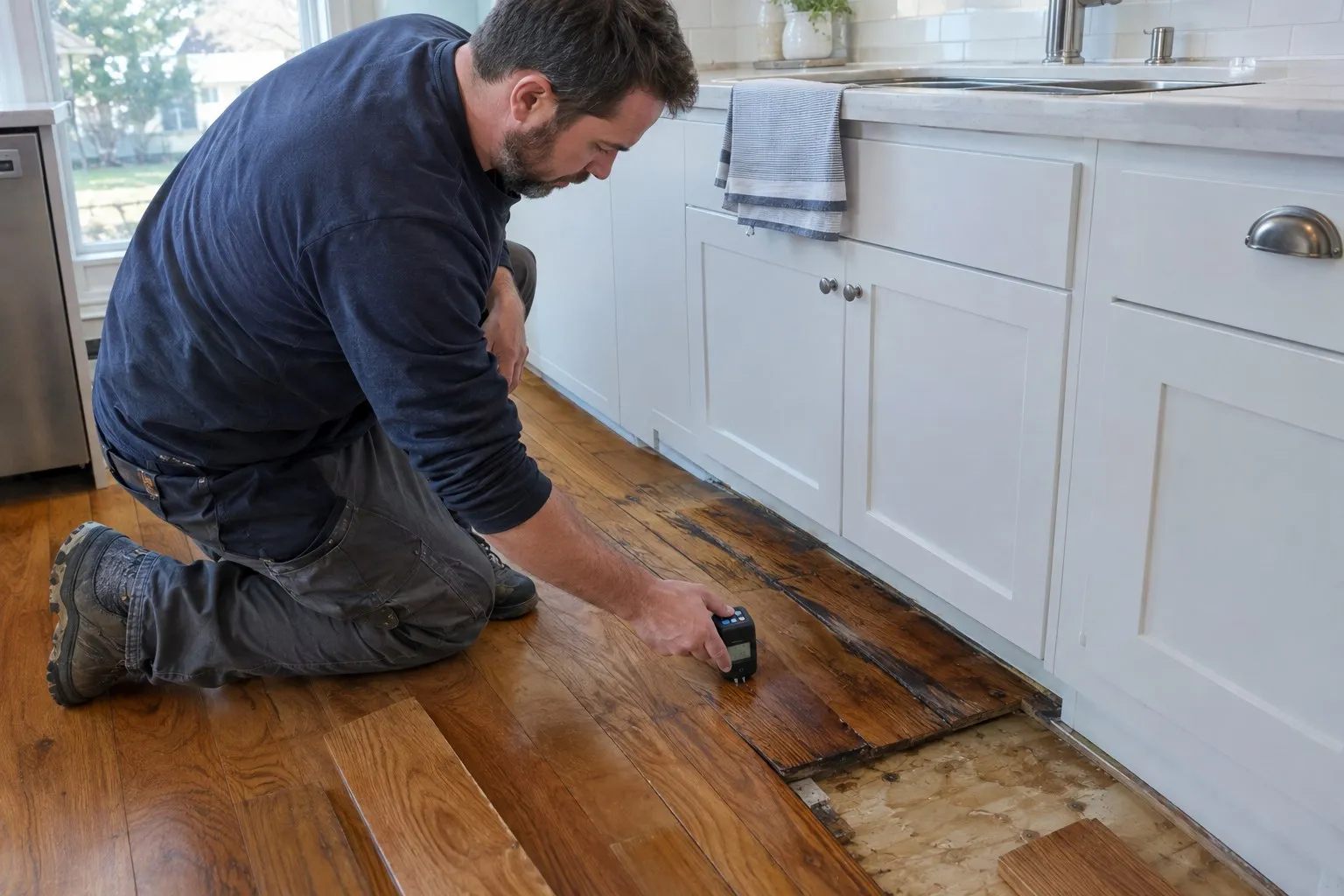
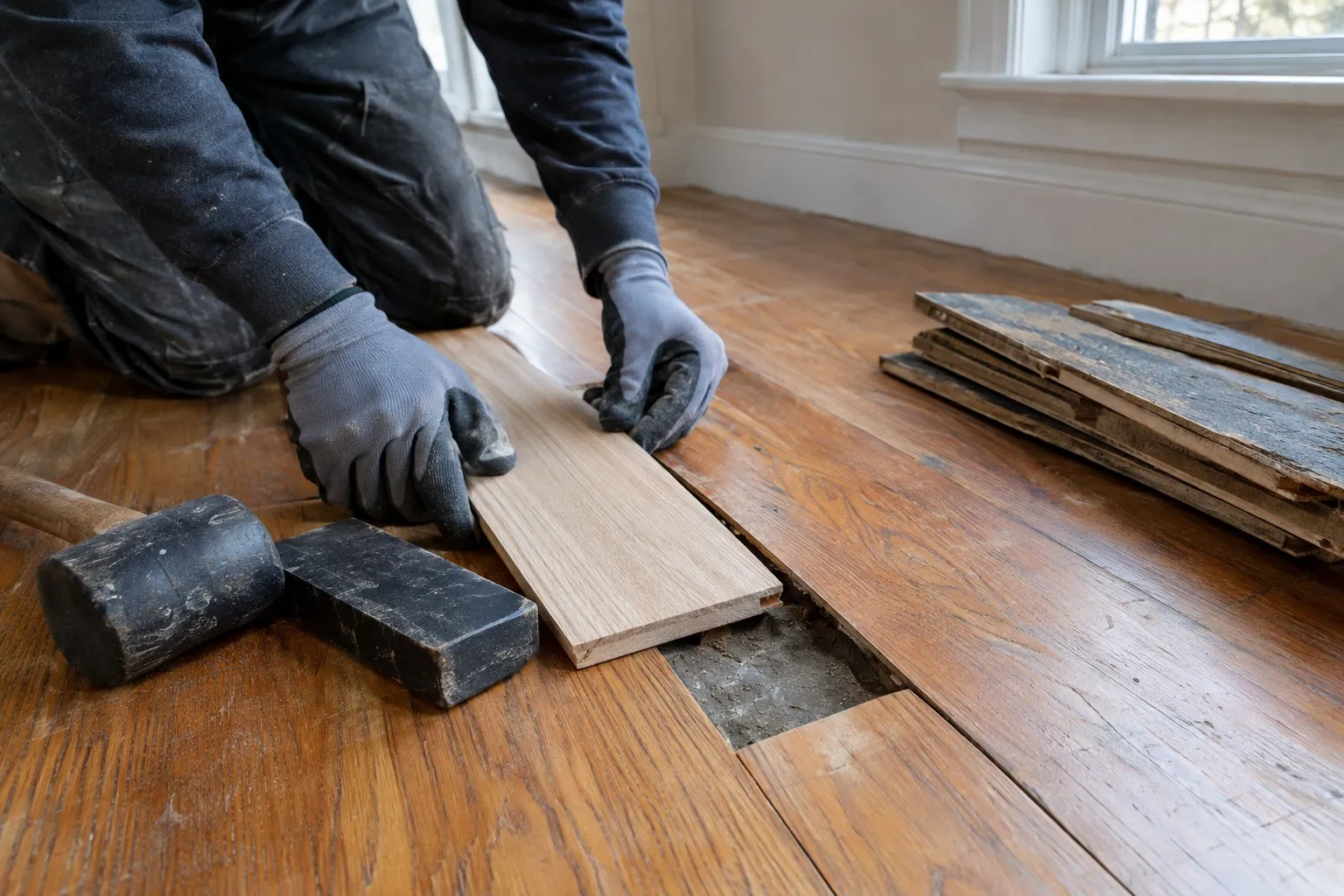

We study the kind of wood you have, its strip width and grain, then mix stain on scraps of new oak until the color vanishes beside the original strips.

Our free estimate covers three checks: what caused the damage, how much moisture is present and what the subfloor looks like, so the fix outlasts mud season.

Strips that flex or click underfoot get refastened, and the cracks that widen each January and trap crumbs are filled flush and smoothed.

NWFA trained staff from Brazil Floors, licensed and insured, do every repair. If one of their patches fails within a year, we send them back at no cost.


 Get your Free In-Home Estimate

We price each repair at a free estimate visit after seeing the damage up close. Where carpet or vinyl must be pulled first, removal runs roughly $1.00/Sq Ft.
Most of the time. Once species, width and grain are lined up, we brush stain onto offcuts of the replacement wood until the tone fits your floor.
Only sometimes. Patching a few strips can be blended alone, though if the finish has dulled all over, sanding the full room gives the most even result.
Moisture, in nearly every case. A slow drip, a damp cellar or snowy boots left by the door can lift strip edges, so we track down the cause first.
Faint ones usually do. Dark urine marks soak through the wood, though, so new oak goes in where they were, stained to blend.
Yes. We find each loose spot and drive fasteners down into the joists, and for most homes that ends the squeaking for good.
Lots of fixes wrap up in one visit. Bigger water damage takes longer when the subfloor needs a few days to dry out before fresh oak goes in.
It is, for twelve months of labor. Each NWFA trained tech holds a license and our insurance, so if any patch lifts or cracks, they're back to set it straight.







