Samples on Your Own Wood
Smooth color depends on smooth sanding. Leftover finish or a stray swirl mark turns into a blotch the moment pigment touches it, so our sanders never rush that stage.



Smooth color depends on smooth sanding. Leftover finish or a stray swirl mark turns into a blotch the moment pigment touches it, so our sanders never rush that stage.

After the color dries, clear polyurethane locks it beneath a tough shell. Choose matte, satin or gloss, and enough layers go on for the tone to hold up.

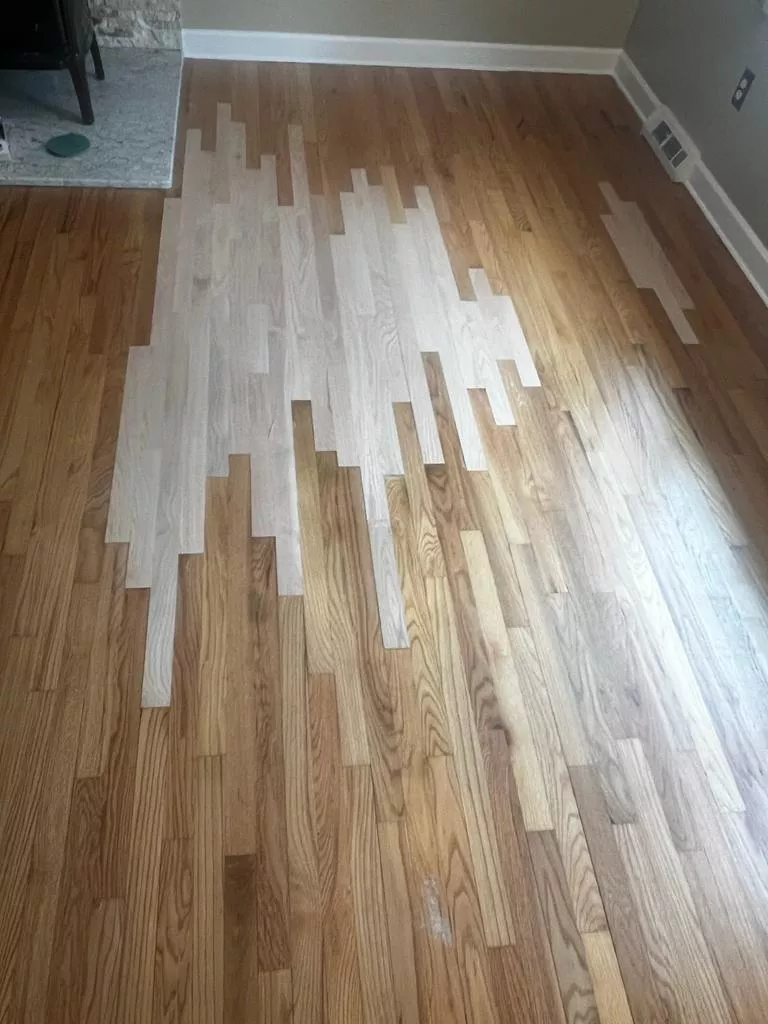
We brush a handful of candidate shades near a window you pass every day. Look at them midday and again under evening lamps, sleep on it if you like, then let us know.

Every stainer in your house is licensed, insured, NWFA trained and on our payroll. We guarantee their labor twelve months, and the bill is paid in two halves.


 Get your Free In-Home Estimate

Pigment is $2.00/Sq Ft, charged separately from the $2.50/Sq Ft sand and seal work. If you want furniture moved out and back, our team handles it for $250 total.
Yes. After sanding, a few test squares go into a corner. Check them in morning light and once more by lamplight before we stain the full room.
Red and white oak drink in pigment differently, and each floor mellows its own way over time. That is exactly why we test on your wood before deciding.
Most of the time. Medium browns, especially special walnut, quiet those orange and pink tones, and side by side samples let you compare first.
It is. Pet hair, dust and fine scratches stand out more than on mid browns. Dark floors look great, but weigh pets and traffic first.
Slightly. Stain needs about a day to dry before any polyurethane goes over it, so expect the project to run one day longer.
Only after its existing finish is sanded off completely. At the estimate we inspect your floor and tell you plainly what will work.
In two equal parts. You hand over half as the sanders arrive, the remainder once the top layer dries and you give the color a thumbs up.