Samples on Your Own Wood
Sample Pound Ridge stain beside retained finishes. Review the shade in daylight and under lamps with the proposed clear coat.



Sample Pound Ridge stain beside retained finishes. Review the shade in daylight and under lamps with the proposed clear coat.

Fine prep depends on wood and coating history. Inspect old marks before sanding, then prepare the surface for the selected stain.

Consistent application helps avoid dark overlaps. Follow the stain system’s sequence across boards, edges and doorway joints.

Pound Ridge stain labor coverage lasts for a year under written terms. Store approval and the finish-care directions with the plan.


 Get your Free In-Home Estimate
The municipal commission provides guidance for owners considering alterations to historic or landmarked homes. Alongside Pound Ridge’s designated Hamlet district, the municipality identifies older buildings that lack landmark status. For a color consultation, document the surviving wood, retained trim and any later additions before asking property-specific preservation questions. Stain approval should then use samples on the actual boards with the intended clear finish. The town’s historical context does not supply a universal floor color, and a neighboring house’s appearance cannot predict how your species and prior treatments will respond.
The town’s development history includes pronounced growth in the 1950s and 1960s after earlier settlement. Mark additions and altered rooms on your floor sketch, then photograph repaired boards and retained trim. Compare stain across those sections under normal interior lighting so approval considers the wood that will remain as well as the desired overall color.
Compare the physical stain and clear finish in daytime and evening light. Consider grain, sheen, furniture and cleaning routines, and identify rooms or stairs that will keep their existing appearance. Record the agreed sample and the boundary of the work before application begins.
The National Register identifies the historic district along roads including Pound Ridge Road, Trinity Pass and Westchester Avenue. If the property lies in that setting, send relevant records and photographs of features to retain, alongside your precise address and room list. Bring any preservation questions to the local commission as appropriate. The consultation can then focus samples on the boards and adjoining finishes involved in the project.
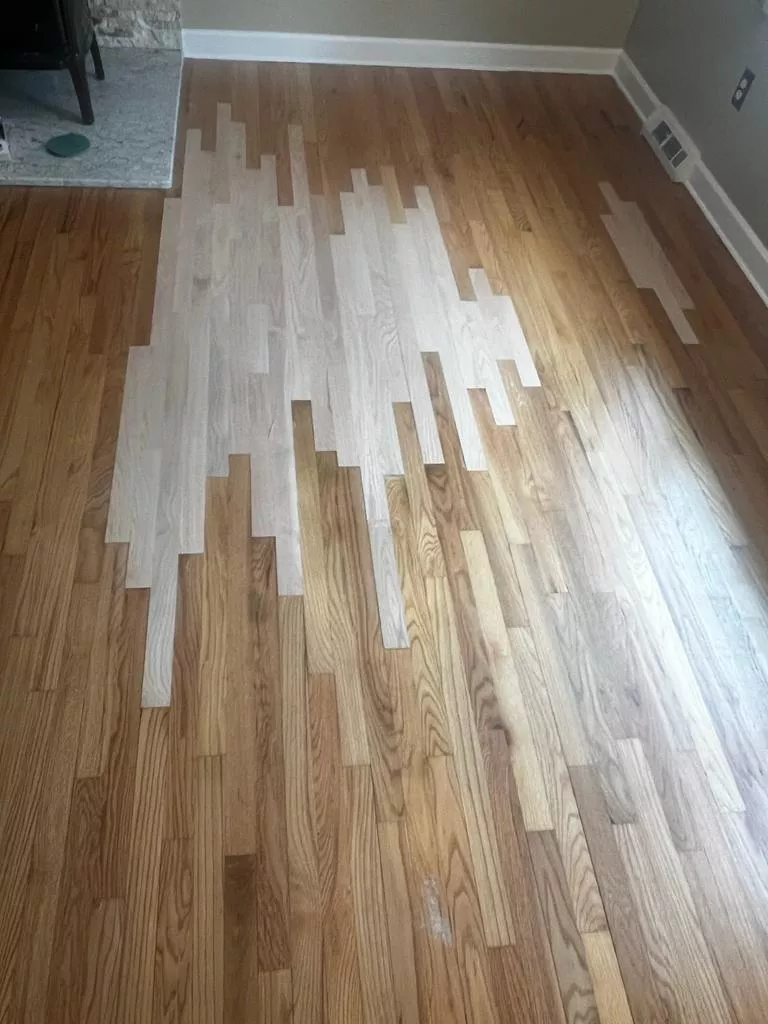
A blend can reduce contrast, but grain, species and age can still affect absorption. Approve a sample that includes the variation you expect to retain.
Old coatings, stains and limited usable wood can change the preparation plan. Establish a suitable surface without assuming that more sanding is always possible.
Screens and lighting can shift perceived color. Review the actual wood sample and planned coating in the room where the work will happen.
Keep the products, formula, sample location and approved protective finish with the scope so the agreed color system is identifiable.