
Boards Matched to Yours
A matching patch uses board dimensions and species. Compare replacement boards against retained wood and check age-related tone differences.



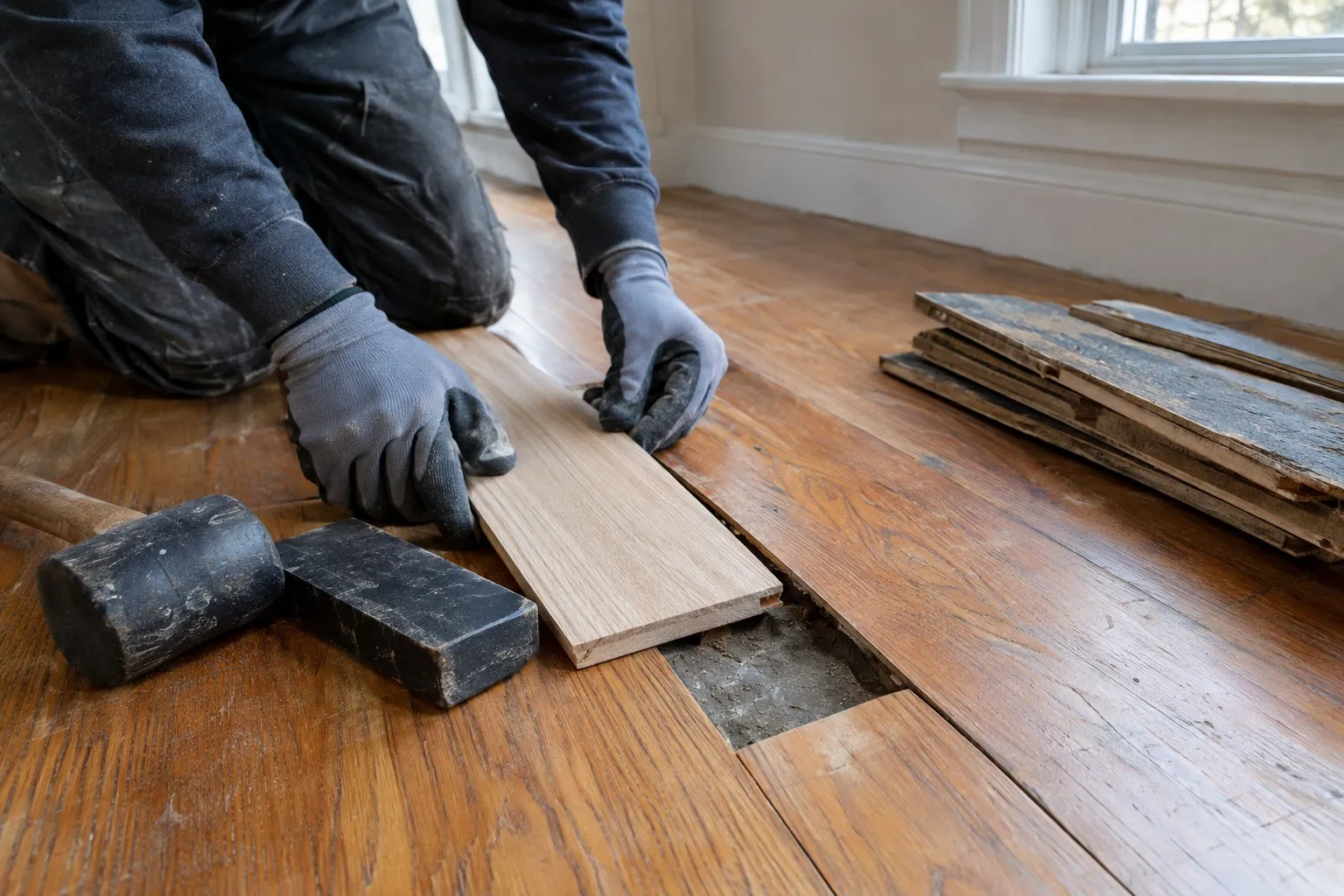

A matching patch uses board dimensions and species. Compare replacement boards against retained wood and check age-related tone differences.

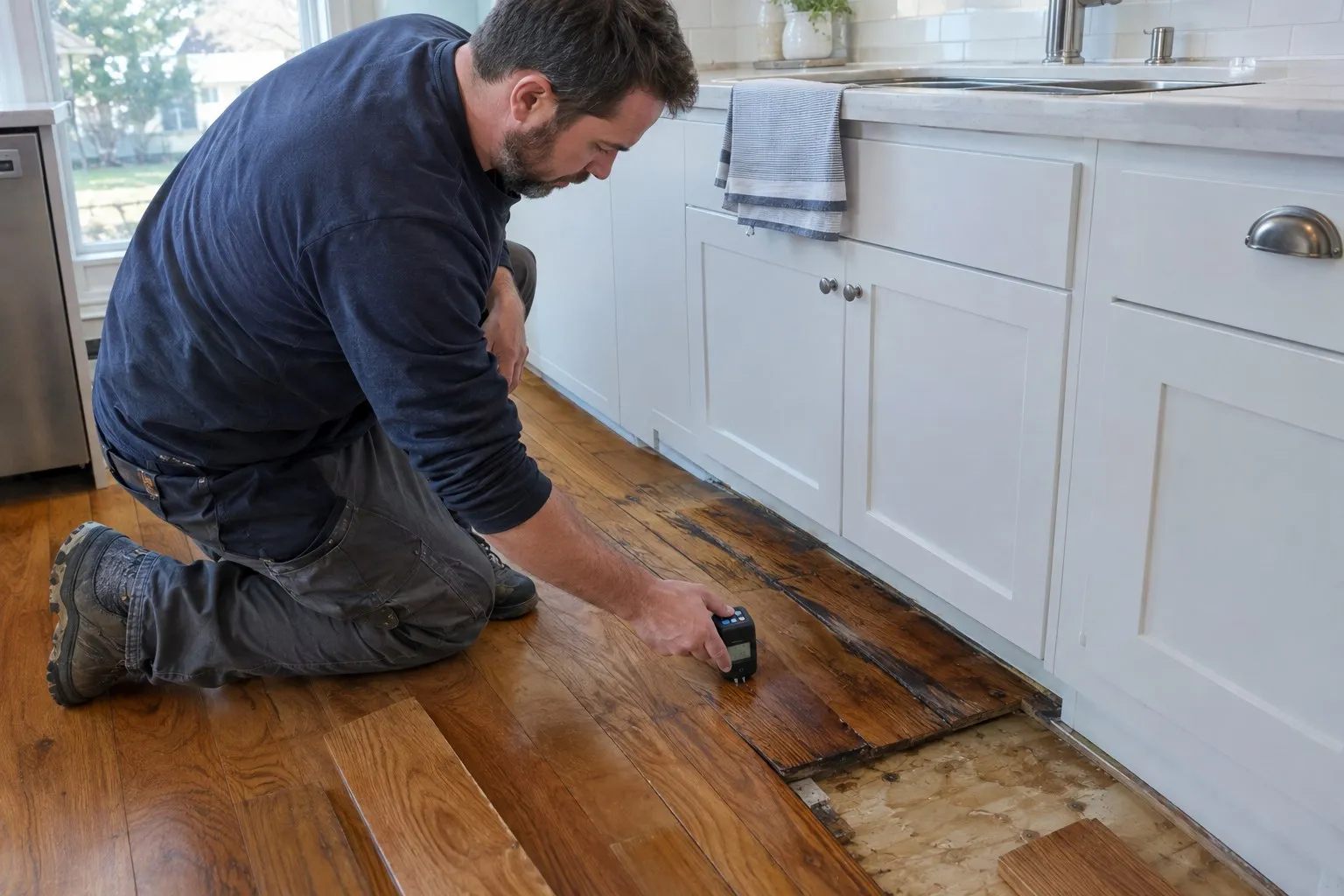
Find the moisture source before replacing damaged boards. Assess the floor and base, then define repairs once the assembly is suitable.

Inspect loose boards before filling gaps or securing strips. Separate a loose connection from a joint that changes with room conditions.

Pound Ridge repair labor has one-year coverage under its terms. Keep the damage note and agreed care advice with the warranty.


 Get your Free In-Home Estimate
The town identifies a Hamlet landmark district and separately acknowledges many historic buildings without designation. In that setting, a repair estimate should distinguish a damaged board from sound material worth retaining. Record existing widths, joints, later patches and the affected-area boundary before selecting replacement stock. The landmarks commission can assist with property-specific preservation questions, while the flooring inspection determines the damage and practical repair method. Neither landmark status nor absence from a designation list proves the age, species or condition of the wood in a particular room.
The town’s history spans older rural buildings and a later wave of residential growth. Photograph additions, earlier patches and adjoining floors that should stay before a repair is planned. During inspection, compare the actual board sizes and species and define the finish boundary. This lets the estimate address damage while preserving useful sections across the house’s different construction periods.
Provide a wide view of the room, close photographs of the affected area and a description of when the problem appeared. Share any known leak, spill or earlier repair. The visit can then investigate the cause and define the damaged area before choosing materials.
Scotts Corners’ main corridor follows Westchester Avenue, while the historic district record identifies roads including Old Stone Hill and Salem. Give the exact address and identify the affected rooms, retained finishes and entrance used for access. If preservation questions apply to the property, discuss them with the town before agreeing on removal. These location and retention details help organize a focused assessment.
Grain, aging and past coatings can remain visible after a repair. Discuss the available stock and sample appearance before agreeing on expectations.
Determine whether the joint is stable or moving. The cause governs whether filling is appropriate or a different repair is needed.
Usable wood is limited. Assess the stain and board thickness before choosing treatment; replacement may be preferable when discoloration extends too deeply.
Define the affected boards, preparation, replacement material and finish boundary, plus how any concealed damage will be evaluated if removal reveals it.







