Samples on Your Own Wood
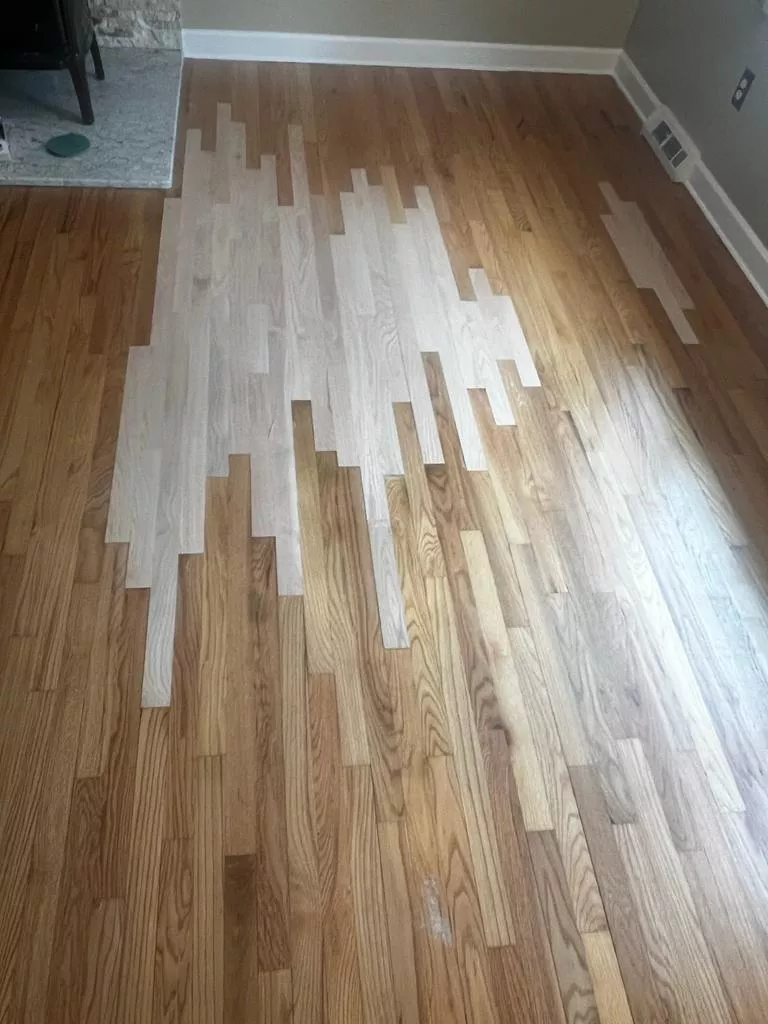
Every color job starts with a full sanding to fresh wood. That clean surface lets stain absorb evenly, instead of going blotchy where old finish hung on.



Every color job starts with a full sanding to fresh wood. That clean surface lets stain absorb evenly, instead of going blotchy where old finish hung on.

With the color settled, finish goes over it in satin, semi gloss or matte. Satin forgives footprints, and matte gives a soft, modern feel to big rooms.

Swatches in a few candidate shades go right onto your sanded oak. Check them at noon and after supper, since window light and lamp light tell different stories.

Stain and finish labor from our NWFA certified crew carries twelve months of coverage. Half the bill is paid when sanding begins, the remainder at the end.


 Get your Free In-Home Estimate

No. Refinishing is $2.50/Sq Ft, and whichever stain you settle on is already inside that price, along with sanding and the finish layers.
Usually. Sanding takes off the old color and exposes fresh wood, then the lighter shade goes on. Very deep stains may need an extra pass with the sander.
A handful of swatches go right onto the freshly sanded oak. Study them with breakfast light and again at night, against your trim and furniture, and then tell us your favorite.
They do. Red oak carries a pink undertone that warms most colors up, whereas white oak accepts stain on the cooler side and suits grays and natural tones.
Stain dries first, then finish goes over it and cures. Bare feet are usually fine sooner than furniture, and exact timing for your products is spelled out at the estimate.
Yes, ebony and dark walnut reveal dust and fine scratches sooner than mid tones. In a house with a dog or toddlers, a honey or golden shade forgives a lot more.
Staining is part of refinishing, so it's split: half when the sanders first roll in, the balance after your floor gets its final finish layer.
It is. Our NWFA certified crew guarantees stain labor twelve months, and the stain and finish makers each warranty their own products.