Samples on Your Own Wood
Compare the material or treatment with the surfaces that remain. The hardwood floor staining scope should explain preparation before a final selection is approved.



Compare the material or treatment with the surfaces that remain. The hardwood floor staining scope should explain preparation before a final selection is approved.

Agree on the final appearance and the steps required to achieve it. Discuss access during the work and the care needed afterward.

Record the full Harrison work area, including room connections and any landings. Measurements should describe what the proposal includes.

Keep the written one-year workmanship coverage with your proposal. Review its terms alongside the separate care instructions and material warranty for the selected products.


 Get your Free In-Home Estimate
Use photographs to describe your preference, then evaluate a suitable sample on the actual prepared wood. Camera settings and room lighting can change the apparent color.
The result depends on the species, previous treatments and available preparation depth. A test area can establish a realistic direction before the full scope is approved.
They may absorb and display color differently. Compare the materials together and discuss any remaining variation.
Stain and the protective coating serve different purposes. Specify the complete finishing system, including the desired sheen and care instructions.
Color cannot correct physical damage. Assess splits, movement and deep marks before choosing the preparation and staining scope.
Agree on that checkpoint before work begins. Review the prepared sample under the room lighting and record the chosen shade before treating the full floor.
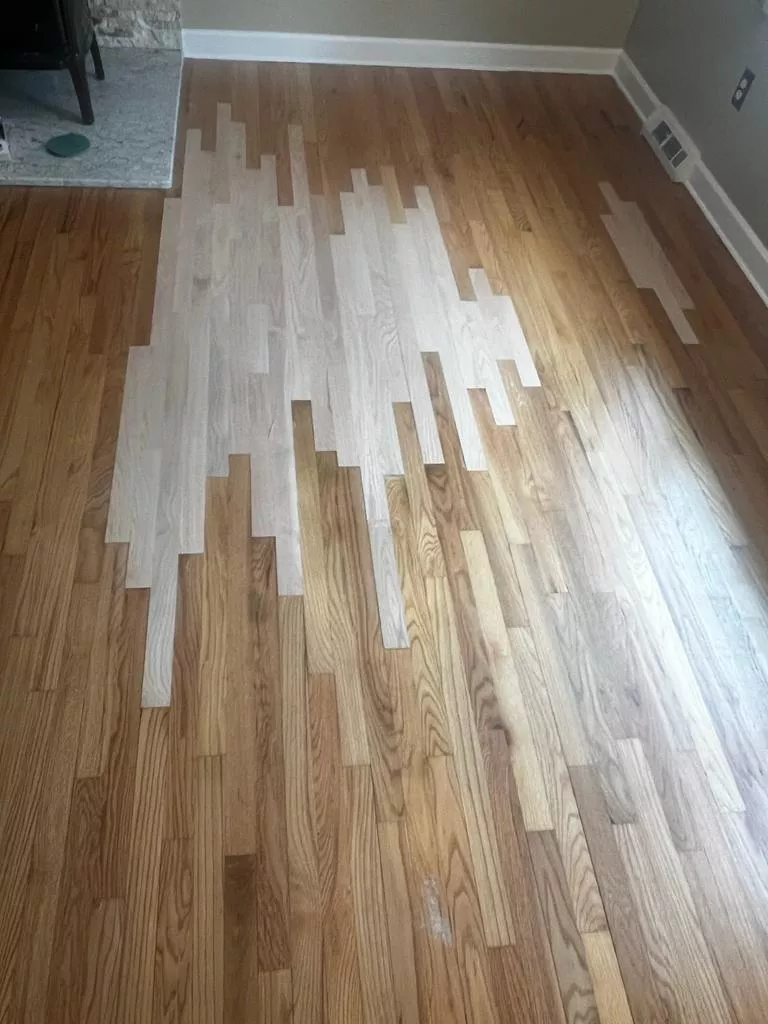
They can be considered together, but different wood or lighting may produce variation. Define any finish boundary and compare connected areas during selection.
The coating system determines the return-to-use instructions. Follow its guidance for rugs separately from light foot traffic and furniture.