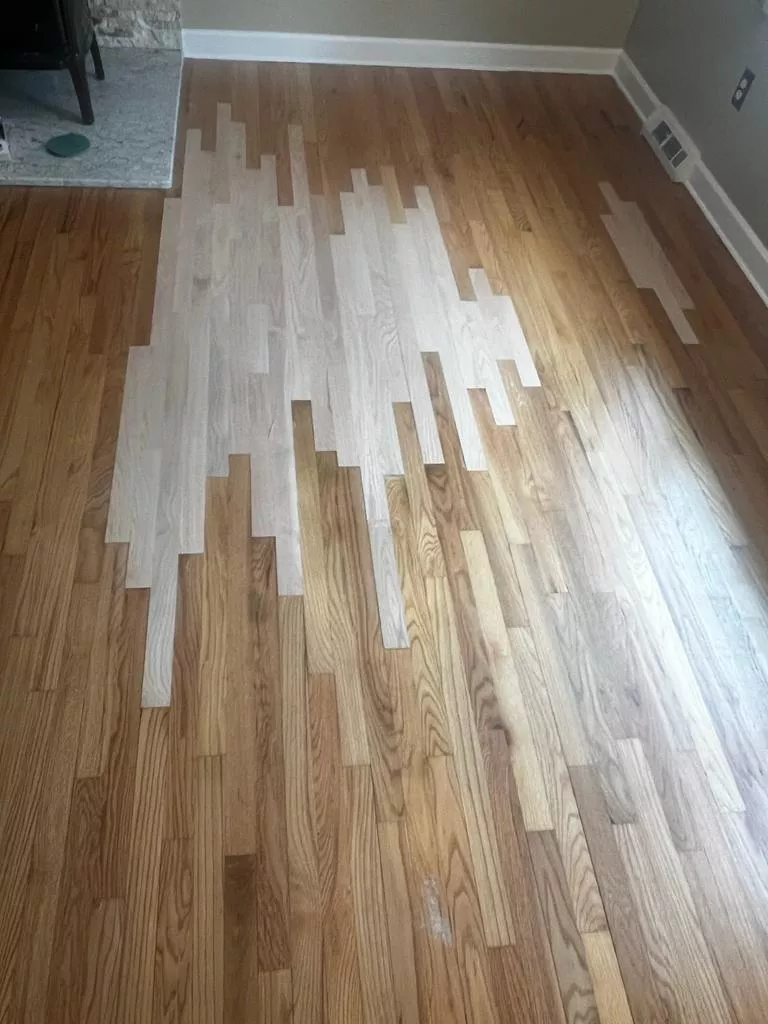
Samples on Your Own Wood
A small sample on prepared wood is more useful than a printed color name. Review it with your trim, furnishings and normal room lighting.



A small sample on prepared wood is more useful than a printed color name. Review it with your trim, furnishings and normal room lighting.

Older floors may contain different boards or previous patches. These can absorb stain differently, so check variations before approving the full area.

Stain application must suit the product and wood. Preparation and consistent technique matter more than choosing a color from a chart alone.

Our written workmanship warranty applies for one year. Color selection, care instructions and the agreed coating system should be recorded with the job details.


 Get your Free In-Home Estimate
The existing coating and color generally need assessment and preparation first. Wood species and any deep discoloration may limit the result.
No. Grain, species, age and replacement boards can produce variation. Review a sample across representative wood before choosing.
Use it as a starting point. Screen settings, lighting and wood species change the appearance, so approve a sample on the actual floor.
No. Stain changes color; a compatible finish protects the surface. The estimate should identify both parts of the proposed system.
Samples can help coordinate it, but an exact match is not guaranteed. Refinishing a wider area may be appropriate.
No. You can coordinate or contrast them. Compare samples together and account for species and lighting differences.
Not reliably. The damaged wood may remain visible or need replacement. Inspect and address the defect before selecting color.
Approve the representative sample before the full floor is stained. Record the product, color or formula and the intended finish with the project details.