
Boards Matched to Yours
Match replacement wood by species, width and thickness before considering stain. An older floor and new boards may still show differences in grain and color.



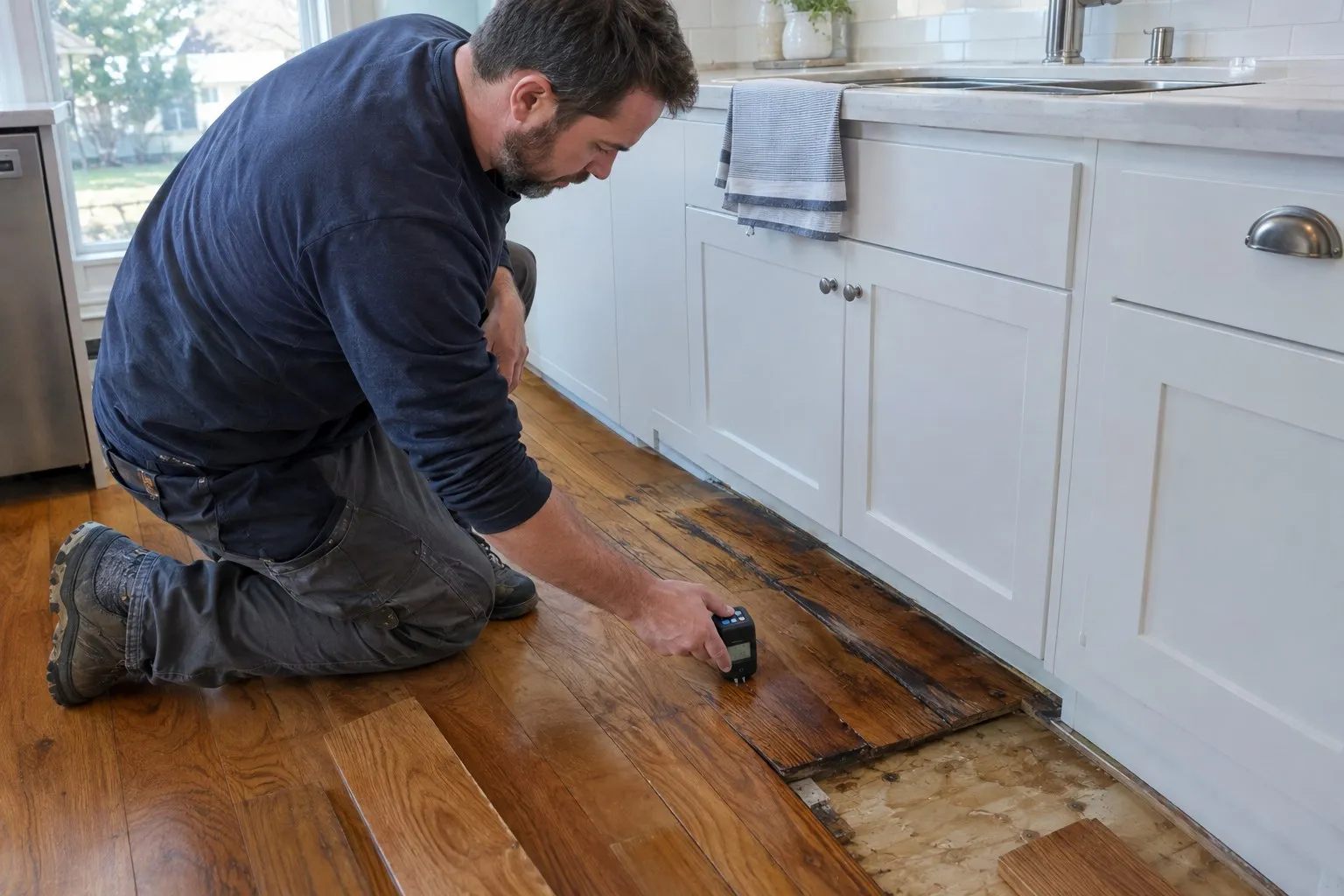
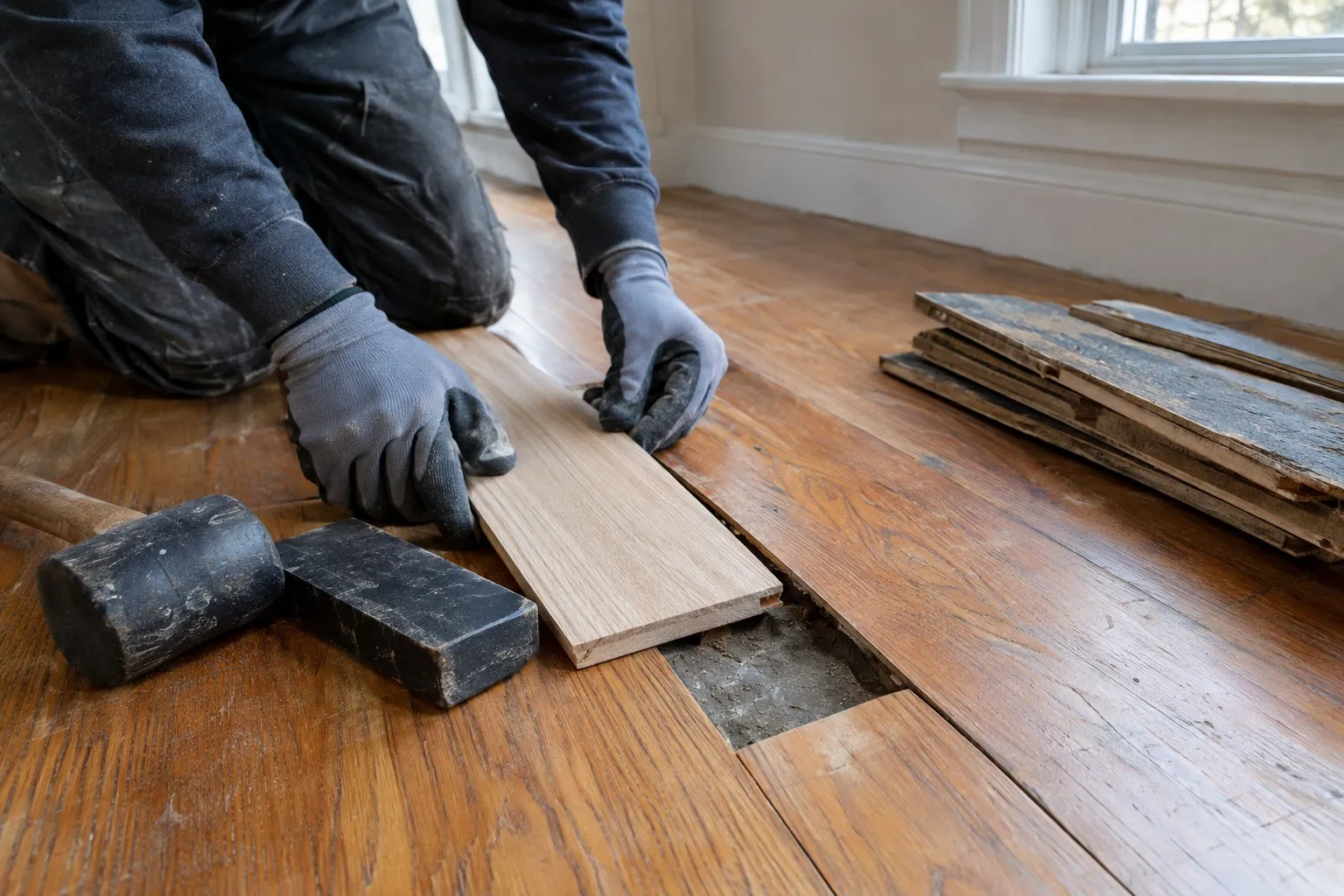

Match replacement wood by species, width and thickness before considering stain. An older floor and new boards may still show differences in grain and color.

Moisture-related damage needs investigation before replacement. Repairing boards cannot substitute for stopping a leak or correcting unsuitable conditions.

Movement can come from boards or the structure beneath them. A repair plan should address the cause rather than only conceal a noisy area.

One year of workmanship coverage applies under the written warranty. The repair estimate should describe the work and any limits on matching the retained floor.


 Get your Free In-Home Estimate
Sometimes. Availability of matching material, surrounding condition and finishing requirements determine whether a local patch makes sense.
An exact match is not guaranteed. Age, grain, species and earlier finishing all influence the result. Samples and a broader finishing scope may help.
The leak and moisture conditions need to be addressed first. New boards can be damaged again if the cause remains.
No. Some stains extend beyond the wood that can safely be removed. Board replacement may be the better option.
No. Some gaps change with seasonal movement. We assess conditions and the floor construction before recommending a repair.
It may be possible, but the source of movement must be identified. Access beneath the floor and the construction affect the options.
Often the new and existing finish need coordination. We explain whether a local finish or a larger continuous area is appropriate.
Provide wide and close photographs, the room location, approximate affected area and the history of any leak, impact or earlier repair.







