Samples on Your Own Wood
Try stain on representative Belle Harbor boards. Compare your prepared and coated result with the trim and retained flooring.



Try stain on representative Belle Harbor boards. Compare your prepared and coated result with the trim and retained flooring.

Fine-grit preparation must suit your wood and stain system. Keep the Belle Harbor test method consistent with the full treatment.

Even color depends on species and preparation. Check the Belle Harbor trial for uneven absorption before approving the stain.

Preserve an approved Belle Harbor color record and one-year labor terms. Follow the full finish system's cleaning and use guidance.


 Get your Free In-Home Estimate
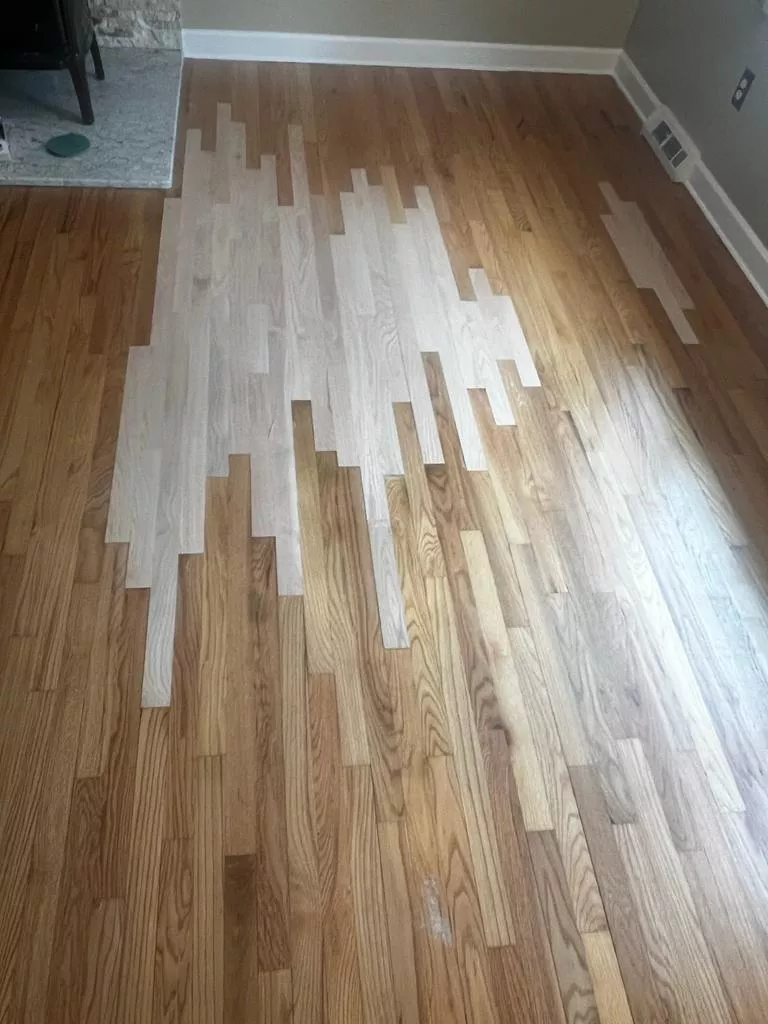
The established homes documented in the recovery plan can retain wood from different periods. Choose representative trial locations, including a repaired area if present, and assess previous coatings before preparation. Compare each sample beneath the intended finish. This gives the owner a realistic view of the color across the floor, rather than assuming a single stain name will make every generation of boards look identical.
Where the house received Sandy-related repairs, identify which rooms or boards changed and bring any material records you have. Replacement species and earlier treatments can affect the sample. Prepare trials on the wood now present, then agree the desired relationship between old and new areas. The documented recovery history is a reason to ask about repairs, not a claim that every local floor was affected.
The recovery survey describes a number of compact older homes. Select trial areas and a viewing sequence that respect the furniture and circulation space actually available. Look at prepared, coated samples beside the trim that will stay, in the lighting used each day. Before full treatment, plan where belongings and residents will go during sanding and drying so the color decision and the working sequence fit the same interior.
NYC's building-history portals may provide useful context for additions or reconstructed rooms. Relevant owner records or drawings can help identify where materials changed. Mark those areas during the inspection, then use separate prepared samples to compare their response. The actual wood and finish trials determine the treatment; documents may explain differences but do not guarantee that neighboring boards can achieve an exact match.
The city lists Belle Harbor with other neighborhoods in the 11694 postal area. Identify the complete street address, floor and entrance for the rooms being treated, and label the reference photographs accordingly. If a sample is intended to match a retained stair or neighboring room, show that surface during the visit. Clear location and room records prevent a color approval from being confused with another property's materials.
Test the proposed preparation and color on the actual oak, then apply the intended protective finish. Review how the wood's underlying warmth appears through the result. If it differs from the target, adjust the trial and record the approved method before treating the wider floor.
Provide a physical reference where possible and identify the lighting in which the surfaces will be seen. Compare prepared trials with their final coating, allowing for species and grain differences. Keep the selected sample and written color method with the project record.
A deep tone can make uneven preparation or absorption more apparent. Inspect the prepared trial for marks and color variation before approving it. The sanding sequence, wood condition and coating system should be considered together rather than using darkness as a substitute for preparation.