Samples on Your Own Wood
Ancram stain sampling should include different board sections. Review the dried color with existing woodwork before approval.



Ancram stain sampling should include different board sections. Review the dried color with existing woodwork before approval.

Fine-grit sanding for Ancram staining should suit the timber and finish. Inspect sanding marks before testing the proposed color.

Even stain in Ancram calls for consistent sanding and application. Plan the job to maintain a wet edge across the whole room.

Save Ancram's one-year staining workmanship coverage record with the accepted sample. Record coating details and care requirements.


 Get your Free In-Home Estimate
Identify which doors, baseboards or stair pieces will stay. In a house near the district, compare the finished sample directly against those surfaces rather than carrying a color card to a showroom. Look again after the protective coat has dried, under both daylight and the lamps you use at night.
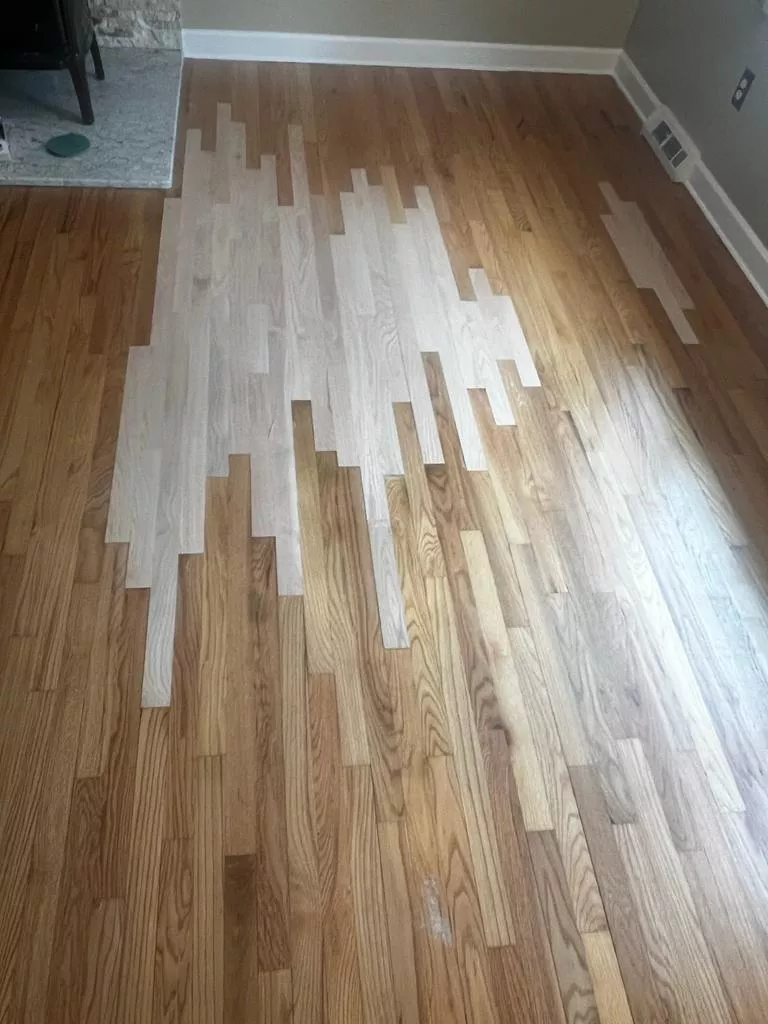
Test each wood where the addition meets the main rooms. A later floor may have a different grain or absorb stain differently from older boards. Approve both coated trials side by side before selecting a formula or deciding that the rooms should have separate shades.
Choose two small areas on the floor where you normally see it, such as beside a window and near a retained interior doorway. If an older patch is visible, include a trial there as well. That gives you a more useful comparison than judging the tone only under bright work lights.
Bring the colors you are considering and tell us which room surfaces are permanent. If the hall, stair and front room connect, pick where the samples should be seen together. That lets you judge the effect along the route you actually use through the house.
Find out how many times it was sanded, if you have records, and point out thin edges at old doorways. Check usable wood depth and set a test area before committing to a lighter finish. Prior repairs or deep color may still affect what the trial shows.
A topcoat can change the appearance of color and sheen. Compare the complete finish over the prepared wood under ordinary room lighting. Record the sample you approve so the crew has a reference for the job.
The wood’s underlying color can influence a gray trial. Compare different formulas on the actual boards, including any replacements. Evaluate them after the selected finish is applied before choosing how much of the warm tone to retain.
Keep the approved physical sample when possible and note the formula, wood species and protective finish. If a later repair uses a different batch of wood, sample that piece before expecting it to match the retained floor.