Samples on Your Own Wood
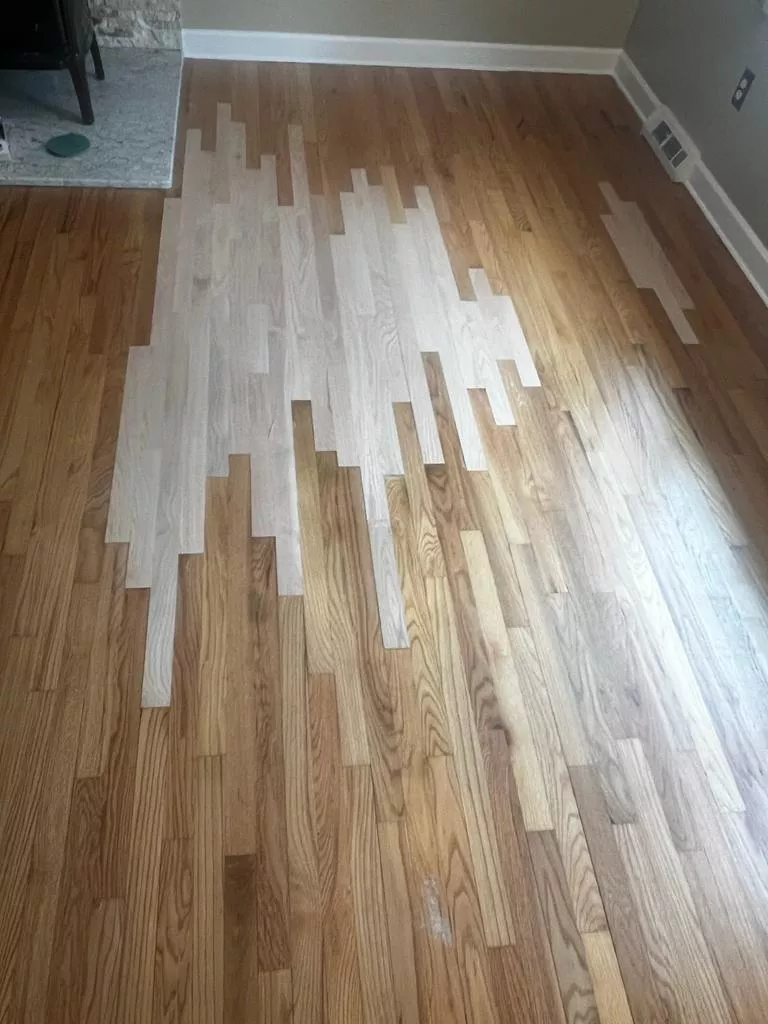
We lay three or four swatches on a sanded patch near your brightest window. Study them while the sun comes over Tom Ball Mountain, then again by lamplight after dinner.



We lay three or four swatches on a sanded patch near your brightest window. Study them while the sun comes over Tom Ball Mountain, then again by lamplight after dinner.

Old sander swirls glow under stain, so the last step before color is a buffer with a fine screen. That opens the oak evenly so the pigment settles in uniformly.

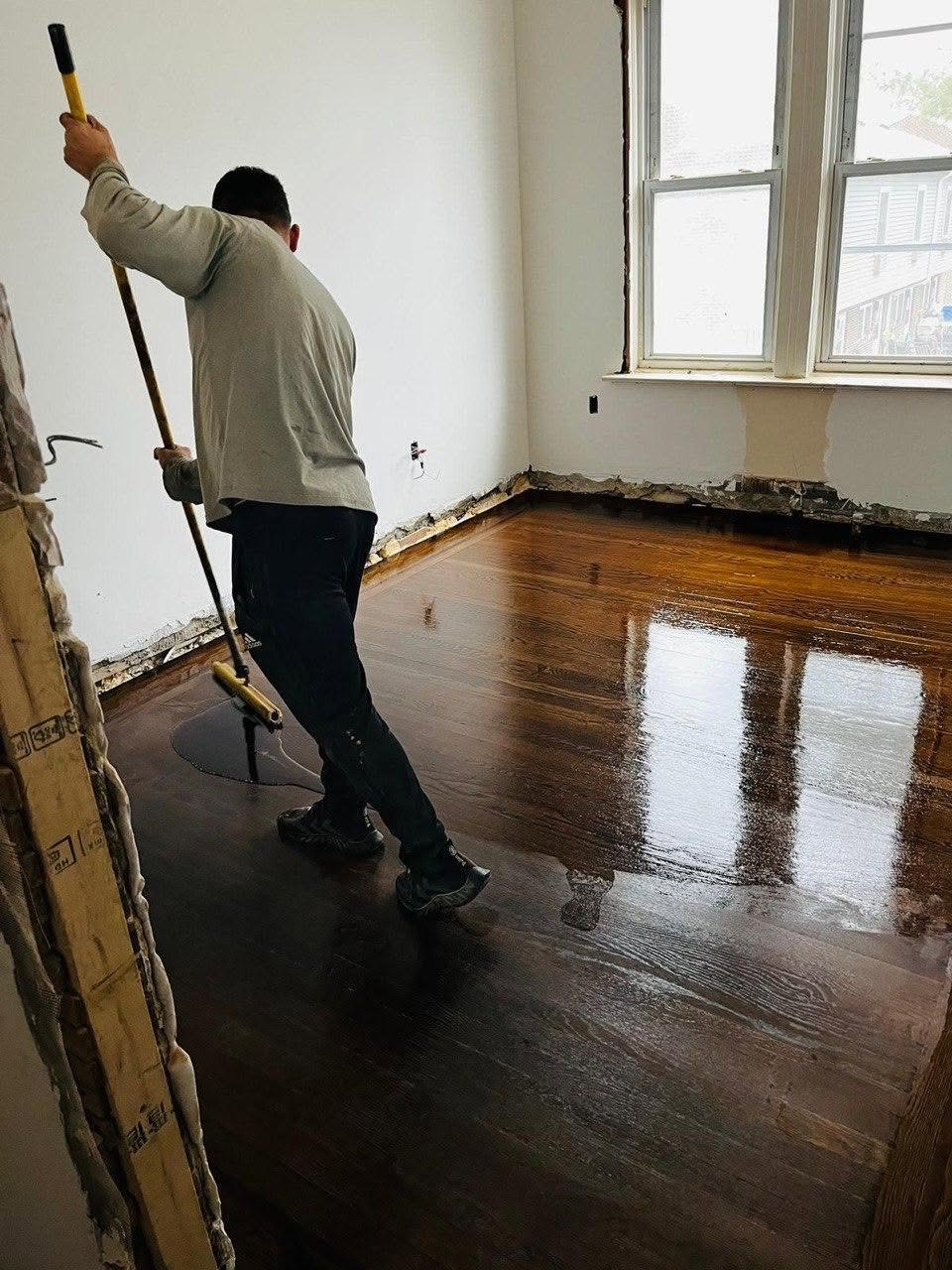
Stain gets spread over narrow sections with a lambswool pad, and leftover pigment comes off with rags right away. Keeping a wet edge the whole way stops lap marks from showing.

Whoever brushes stain in your house is an NWFA trained employee with a state license and insurance. Finish issues from our work within twelve months get fixed free.


 Get your Free In-Home Estimate

Staining is $2.00/Sq Ft. On refinishing jobs, sanding and clear finish come with it, and the free estimate gives you every line in writing.
Yes. Sanding removes the old amber varnish, and a neutral toner or slightly darker stain calms the orange cast that aging finish gives red oak.
Normally three or four, painted in a row across a single sanded spot. They stay overnight so you can study them at sunrise and again after dark.
Dark stains show dust, mud and dog hair faster. Many Alford families choose something in between, such as walnut, which hides tracked in dirt better.
Stain dries overnight before finish goes on. Bare feet after about a day, chairs and tables midweek, rugs after roughly two weeks.
Yes, but the color needs a natural stopping point like a doorway. If rooms flow into each other, staining the whole level looks cleaner.
Half when sanding begins and the remainder once the final finish is on. Furniture moving, if you want help, is a flat $250.
Stain sits under clear finish, so it's protected. Big south facing windows can soften it over many years, and fresh finish helps keep it rich.