
Boards Matched to Yours
Replacement material needs to be compared with the retained boards. Species, width, thickness and previous finishing all influence the fit and appearance.



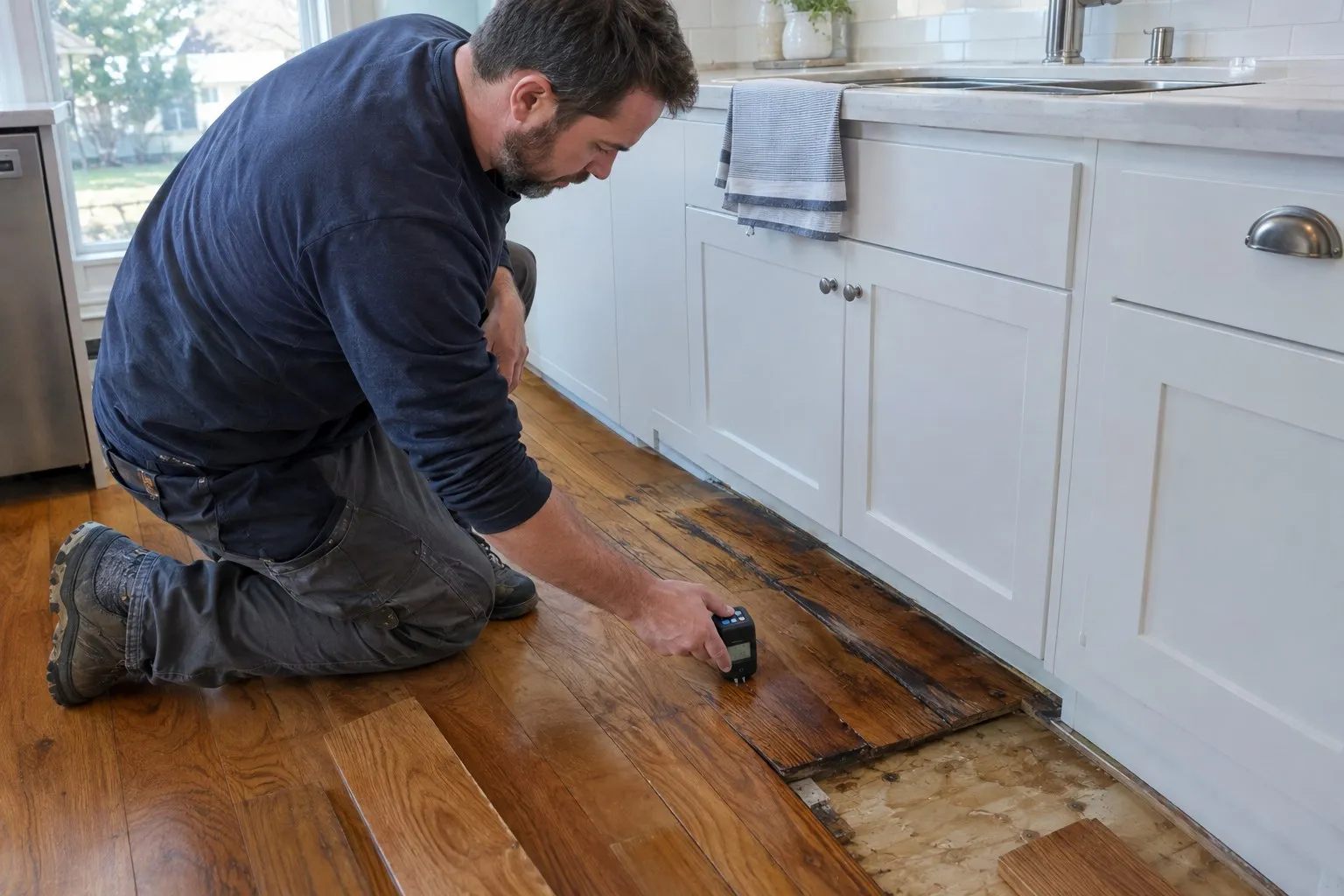
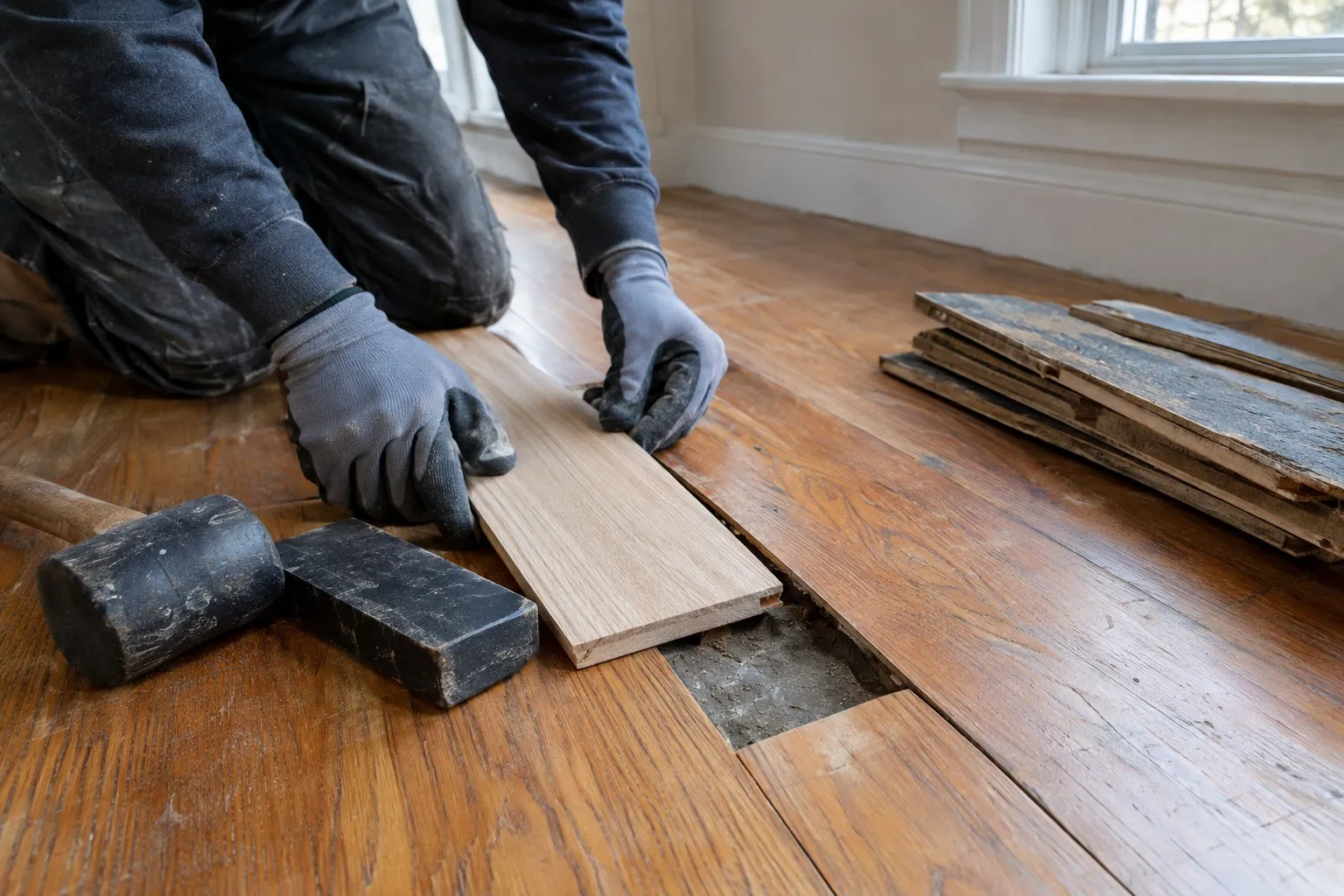

Replacement material needs to be compared with the retained boards. Species, width, thickness and previous finishing all influence the fit and appearance.

If water was involved, explain the leak history and repairs already completed. New wood should not be installed over an unresolved moisture problem.

Describe when the problem appeared and whether it changes. Movement, gaps and noise need their source assessed before a treatment is selected.

The workmanship terms apply to the agreed repair. Review the proposed finishing boundary and any limits on blending with older wood before approval.


 Get your Free In-Home Estimate
Sometimes, depending on the construction, surrounding condition and availability of suitable material. The inspection establishes whether a small repair is practical.
That result cannot be guaranteed. Grain, age, species and finish can differ even when the replacement dimensions are correct.
First address the water source and assess the moisture conditions. Otherwise the replacement material can be affected by the same unresolved problem.
No. Gaps can have different causes and may change with conditions. The floor needs assessment before a filling method is recommended.
Not necessarily. Locating the movement and considering access beneath the floor helps determine whether a focused repair is possible.
We consider the repair and surrounding coating together. The proposal should explain whether work remains local or extends across a connected area.
Yes, bring them to the assessment if available. Their condition and dimensions still need checking against the installed floor.
Mention leaks, previous sanding, earlier patches and when the damage first appeared. Include photographs that show the room and the affected section.







