
Boards Matched to Yours
Board matching combines width, thickness, profile and appearance. Check replacement stock with the floor before setting the repair boundary.



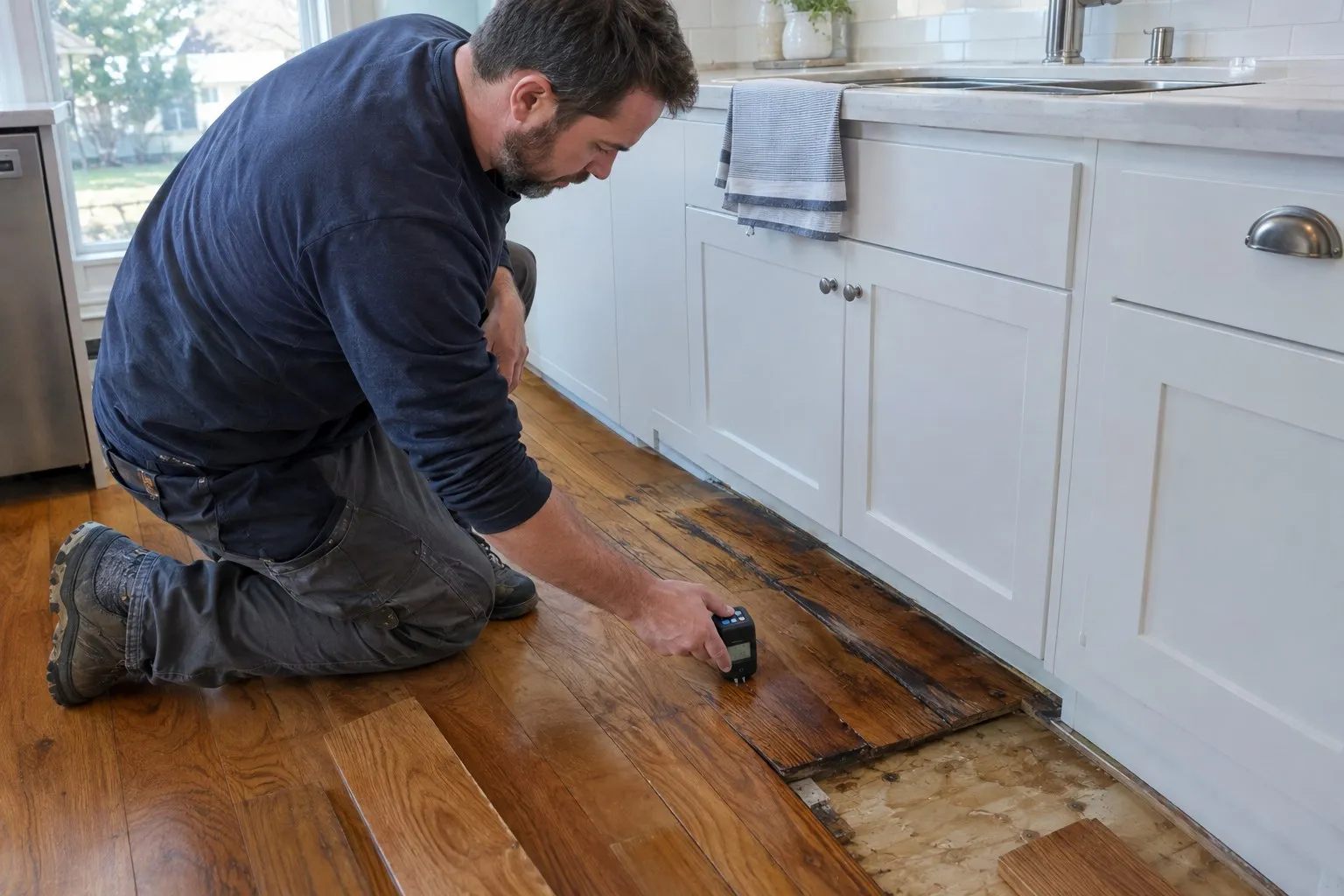
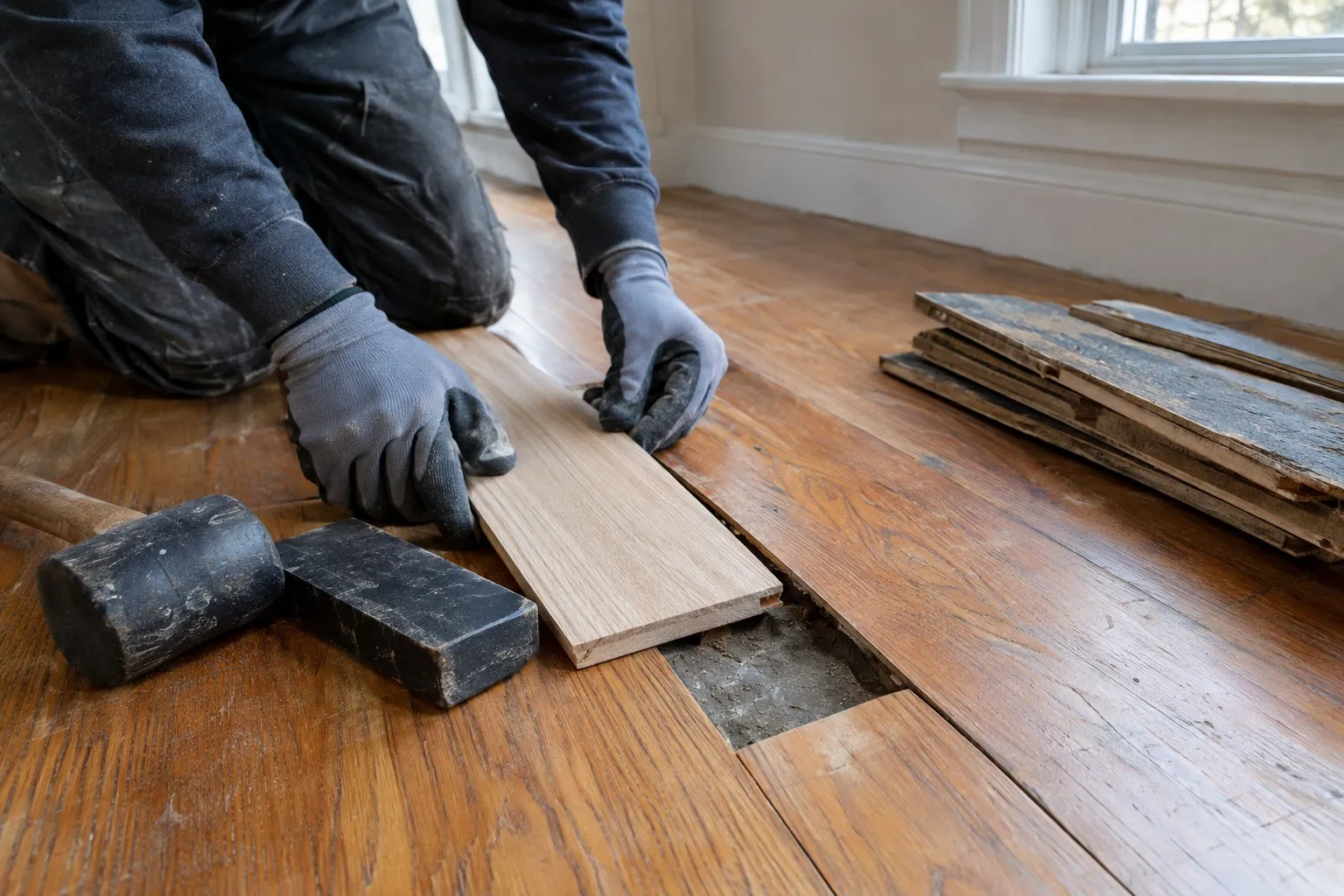

Board matching combines width, thickness, profile and appearance. Check replacement stock with the floor before setting the repair boundary.

If water contributed to the damage, resolve its source and inspect the base layers before new timber or finish hides the affected area.

Observe where gaps change and where squeaks occur. A stable joint, moving strip and loose connection can need distinct repair decisions.

Ask the repair quote to set out one-year labor coverage and limits on blending. Keep the agreed treatment and care directions.


 Get your Free In-Home Estimate
The City’s Bayswater housing account describes earlier resort homes mixed with later residences. An older house may also contain floors introduced during additions or previous repairs. Examine the damaged section itself and compare its profile with the adjacent boards before ordering material. Width, depth, joint design and grain all influence the choice. A piece that resembles another room may not fit this one. Record the available replacement and the likely finish difference so a limited repair has a realistic visual target.
No. City records show repair assistance in Far Rockaway-Bayswater, but that history is only background for an individual inspection. If your address had recovery work, point out the changed rooms and provide any useful records. Examine the new defect, the supporting layers and any active source of water or movement on their own merits. The proposal should state what the current findings support. It should neither blame an old event automatically nor assume a past repair makes every later condition acceptable.
The 2006 neighborhood report identifies larger apartment buildings along roads including Mott and Cornaga Avenues. If the damaged area is in a managed property, establish who can authorize the visit and provide any alteration instructions that affect repairs. Explain whether access to an adjacent room or an underside is possible with permission. Those practical details can help the inspection reach the relevant assembly. They do not replace diagnosis, and a local repair should not be expanded into other residents’ spaces without an agreed scope.
NYC’s residential waste allowances do not cover construction debris produced by a professional contractor. Even a small board-replacement job needs clear responsibility for appropriate private disposal. Identify the strips and any supporting material included in the removal scope, along with the carrying route and collection arrangement. Where the home remains occupied, keep entrances usable while work proceeds. A repair quote should address the material leaving the property as well as the new pieces fitted into it, rather than leaving hauling to assumption.
Assess depth, surrounding damage and the available finishing approach. Where too much material is lost or the board is unstable, replacement may need to be considered.
A photograph may identify the location, but it cannot show every moving connection. Observation and access to the relevant assembly may be needed before a repair is chosen.
A pet stain may penetrate beyond the usable sanding layer. Inspect the affected boards, then compare the expected result of surface treatment with a replacement patch. Do not promise complete stain removal from an unseen floor.
A patch may remain distinguishable from the surrounding floor. Existing aging, grain and finish differences should be discussed, with any broader refinishing allowance stated separately.







