Samples on Your Own Wood
A color chip cannot show every grain variation in your floor. We compare samples on suitable prepared wood before you choose the final tone.



A color chip cannot show every grain variation in your floor. We compare samples on suitable prepared wood before you choose the final tone.

Natural light near a window can differ from a hall’s artificial lighting. Review the sample in both conditions before approving a color.

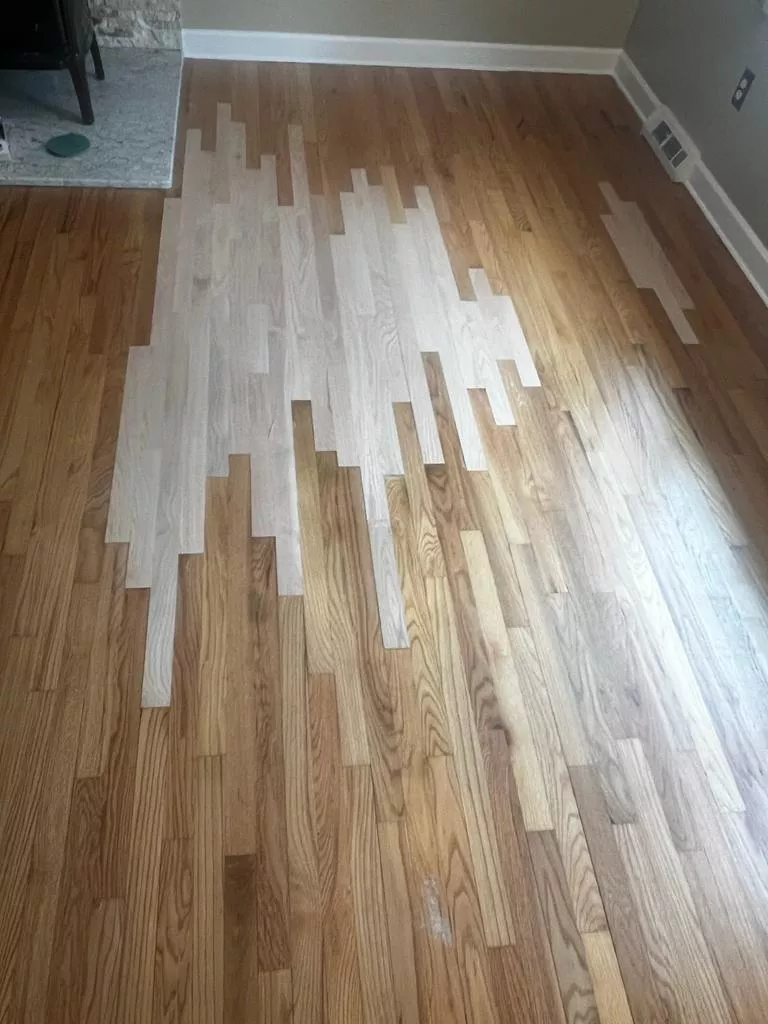
Species and sanding history affect color uptake. We inspect the surface so mixed boards or repairs are discussed before staining.

The workmanship terms and finish care instructions are explained with the proposal. Stain changes color; the compatible coating provides the finished wear surface.


 Get your Free In-Home Estimate
A conventional penetrating stain is not simply applied over an intact coating. The appropriate preparation and compatible system must be established first.
No. Grain, species, repairs and natural variation can produce differences even with the same stain and application.
We can compare samples and discuss blending options, but an exact match to aged wood and coating cannot be guaranteed.
Use it to shortlist options. Screens and lighting vary, so approval should be based on a sample of the actual wood.
Not reliably. Deep marks, damaged boards and inconsistent preparation need assessment rather than being covered by a darker color choice.
Yes. Different wood species and their natural undertones can change the appearance of the same stain.
Confirm the complete system in your proposal. Stain and the protective coating have different purposes and should be specified together.
Follow the schedule for the entire finishing system, including its final coat. Surface dryness alone does not mean the floor is ready for normal use.