
Boards Matched to Yours
We compare the original species, thickness and board width before looking for replacement material. An older floor may still show some difference after a patch.



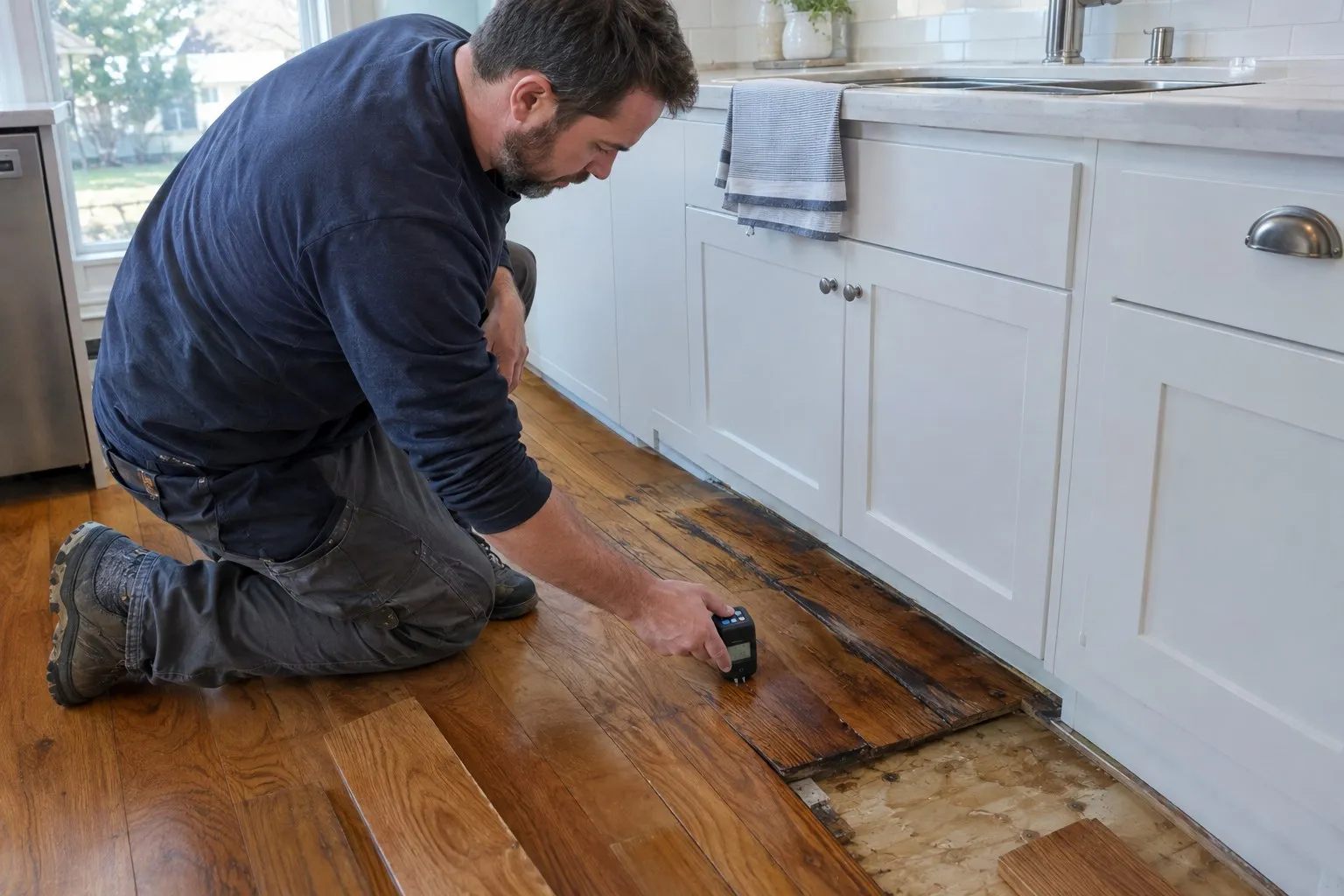
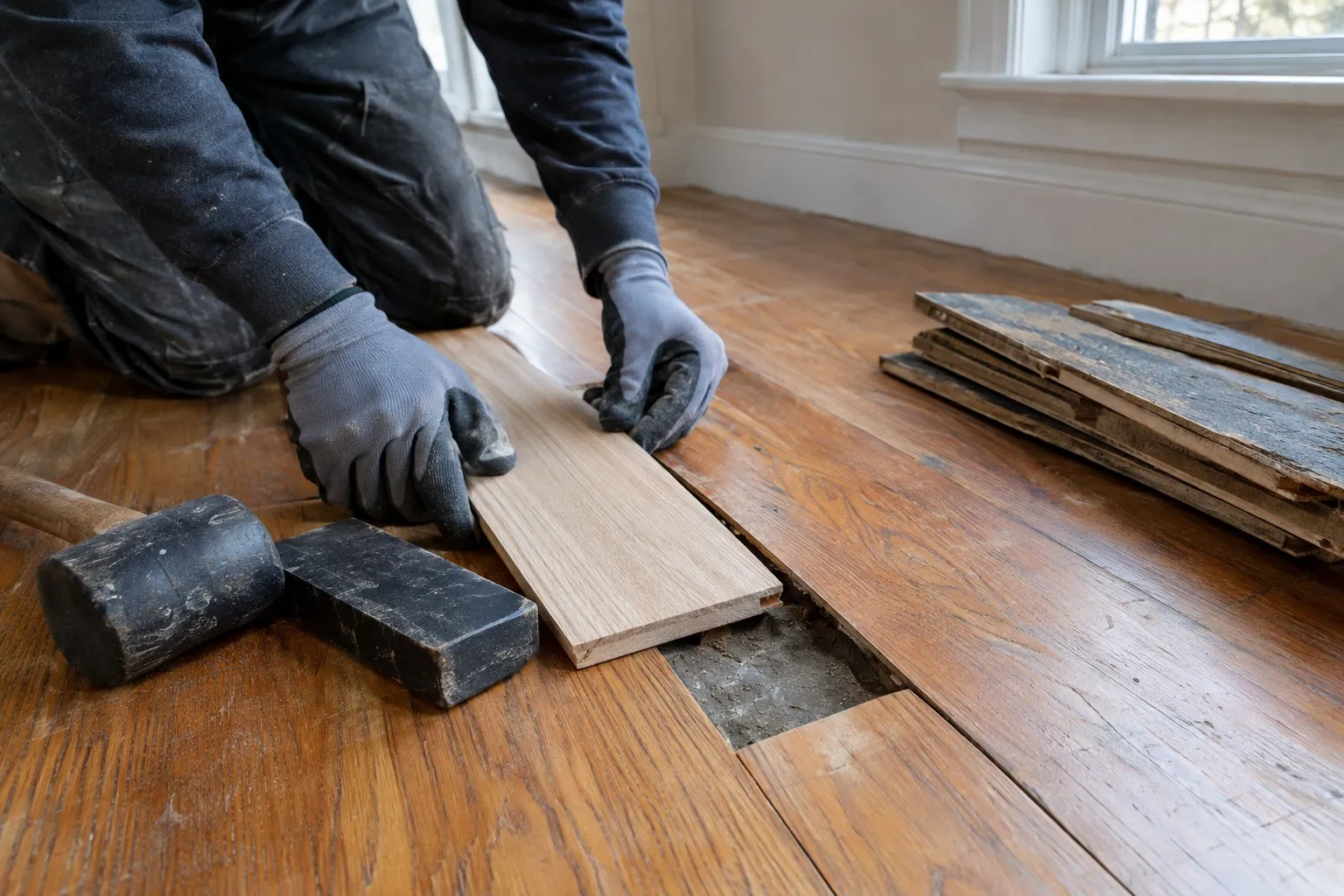

We compare the original species, thickness and board width before looking for replacement material. An older floor may still show some difference after a patch.

Leaks or continuing moisture must be addressed before damaged flooring is closed over. The repair plan follows the condition found on inspection.

Movement and squeaks need diagnosis. The source may be a board connection or the supporting floor, so a surface patch alone may not solve it.

The written proposal defines the repair and workmanship coverage. Unrelated existing defects and future damage are not assumed to be part of the repair.


 Get your Free In-Home Estimate
Often that can be considered, but access, flooring construction and replacement material determine whether a local patch is practical.
An exact match cannot be guaranteed. Existing wood changes with age and light, and new boards can take stain differently.
Yes. The source of ongoing moisture must be addressed and the floor assessed before a lasting repair can be planned.
Not necessarily. The discoloration may penetrate too deeply, in which case affected boards may need replacement.
No. Noise can come from several parts of the assembly. Inspection helps determine whether access below or another scope is needed.
No. Some gaps change with seasonal movement. We assess the floor before recommending a treatment that could fail later.
Only when stated in the scope. We discuss spot finishing versus a larger refinishing area and their likely appearance.
We inspect the affected area, required material and preparation. The written estimate identifies the repair boundary and any additional finishing.







