Samples on Your Own Wood
Samples on the Tappan floor show its response to preparation and stain. Review both old boards and replacement wood together.



Samples on the Tappan floor show its response to preparation and stain. Review both old boards and replacement wood together.

Fine-grit sanding belongs in the preparation sequence. Follow the chosen stain system before testing color on Pearl River boards.

Even color needs consistent preparation and application. Assess the Palisades trials for overlap marks and uneven absorption.

The one-year workmanship warranty should accompany your Orangetown stain work plan. Retain the approved mixture and coating system.


 Get your Free In-Home Estimate
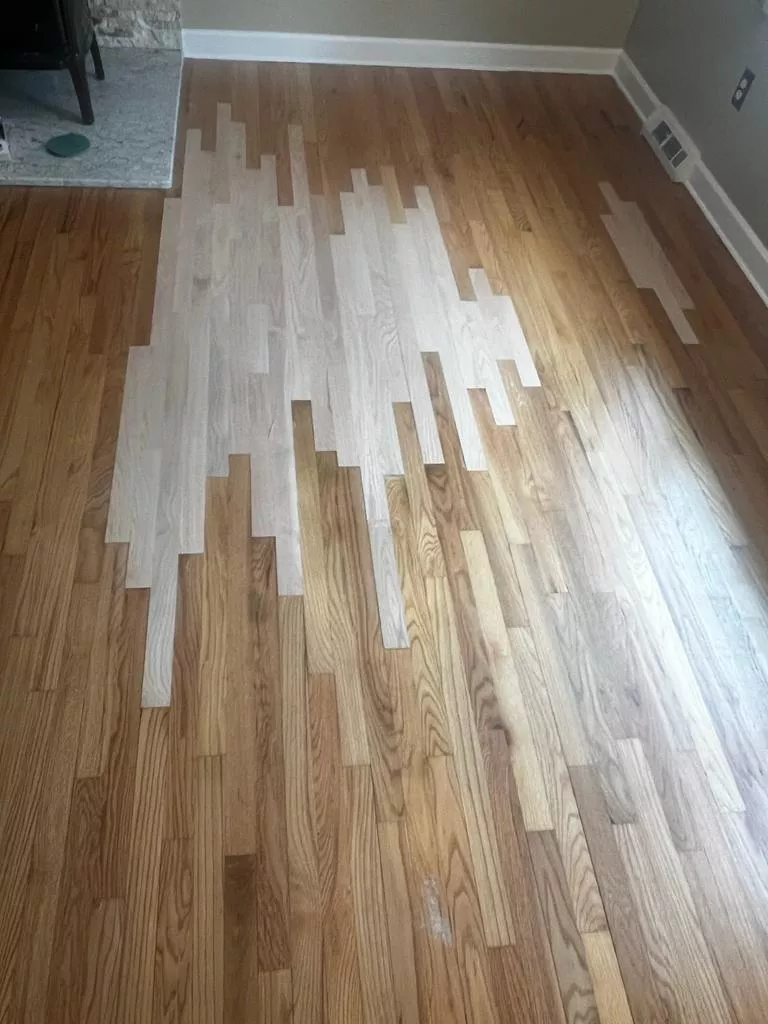
Tappan's documented historic core contains buildings from a range of periods, so the retained interior needs its own color review. Identify which doors and trim remain, then test prepared floorboards beside those surfaces. Include old patches or replacement boards in the trial. Approve the achieved relationship rather than expect a named stain to make unlike wood identical.
Orangetown's Palisades survey records a variety of residential styles and ages. Where your own interior combines flooring from more than one renovation, test the visibly different sections separately after the proposed preparation. Examine the samples with the intended protective coat. The goal is an agreed whole-room appearance, with any remaining variation understood before work proceeds.
The paper-mill site's replacement with residential and commercial development created managed settings where a unit's own conditions matter. Confirm the authorized sampling area and any owner or association requirements before preparing the wood. Coordinate the test visit with the permitted entry route, and keep the approved color and coating record tied to that unit's scope.
South Nyack is now an Orangetown locality after the former village dissolved in 2022. Give the full current address, specify the floor or staircase to be sampled and identify the property contact. For any municipal project question, use the current jurisdiction; the stain approval itself should describe the actual boards and retained interior being considered.
Pearl River and Sparkill are different Orangetown hamlets named by the town. A sample at one address can provide a color reference, but the second floor needs its own trial because the species, preparation and earlier repairs may differ. Label the formula, coating and approval by property so the reference does not become an unsupported promise for the other room.
Toning can adjust the perceived warmth or color balance, but it does not change the wood's species or grain structure. Compare a prepared sample with the intended reference and finish. Agree on the achievable appearance instead of treating the procedure as a way to turn one wood into another.
Yes. A trial should represent the planned sequence, including the selected coating, so you can assess both tone and sheen. The stain alone may not show the final appearance. Keep a record of the approved preparation, mixture and coating system with the project scope.
A darker color cannot restore missing wood thickness or solve an unsuitable preparation surface. Inspect remaining depth and earlier treatments before planning a color change. If another safe sanding is not possible, discuss a different restoration or replacement scope rather than using stain to disguise the limitation.