
Boards Matched to Yours
Check replacement boards by profile, thickness and species. A Palisades patch also needs its finish boundary reviewed against retained wood.



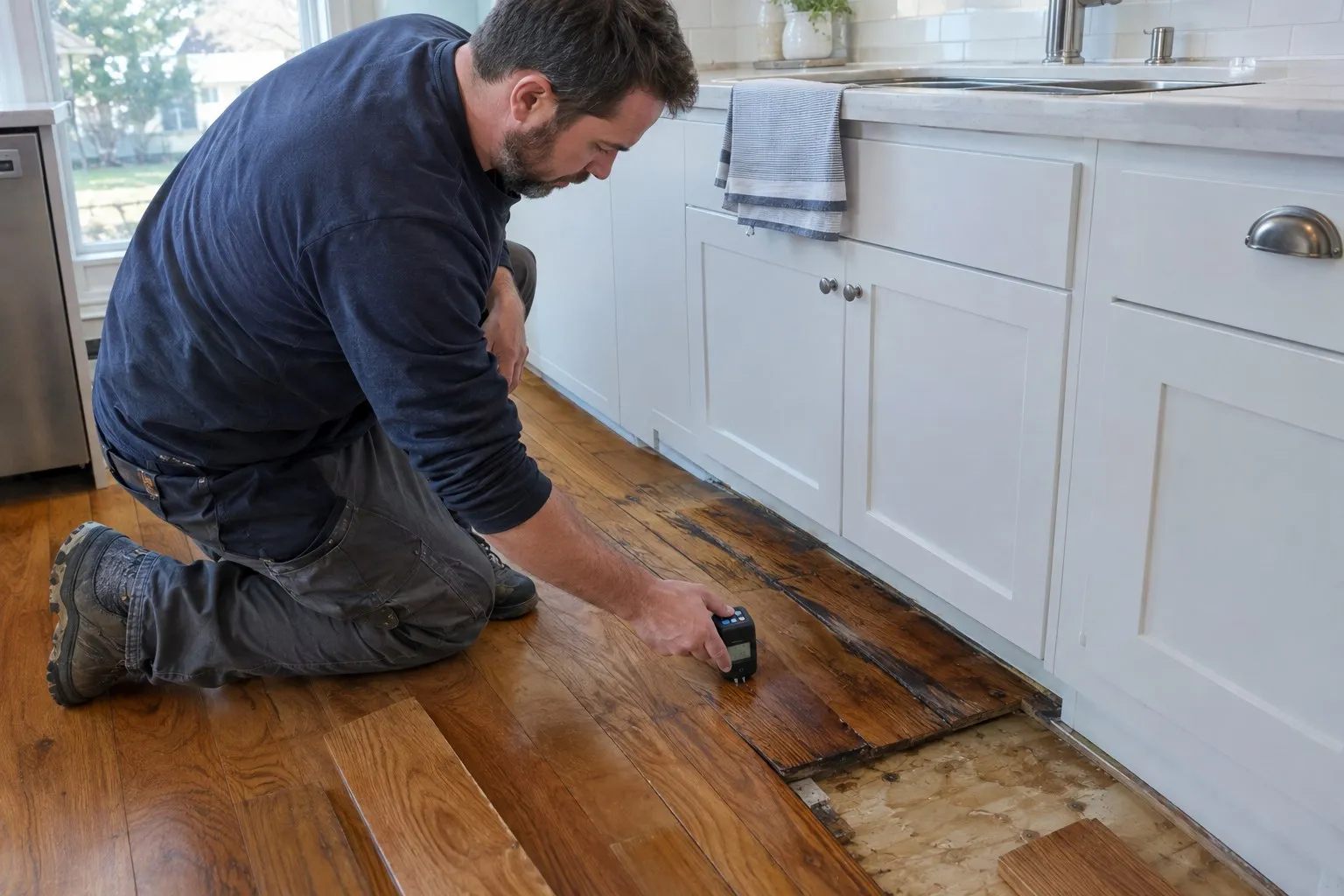
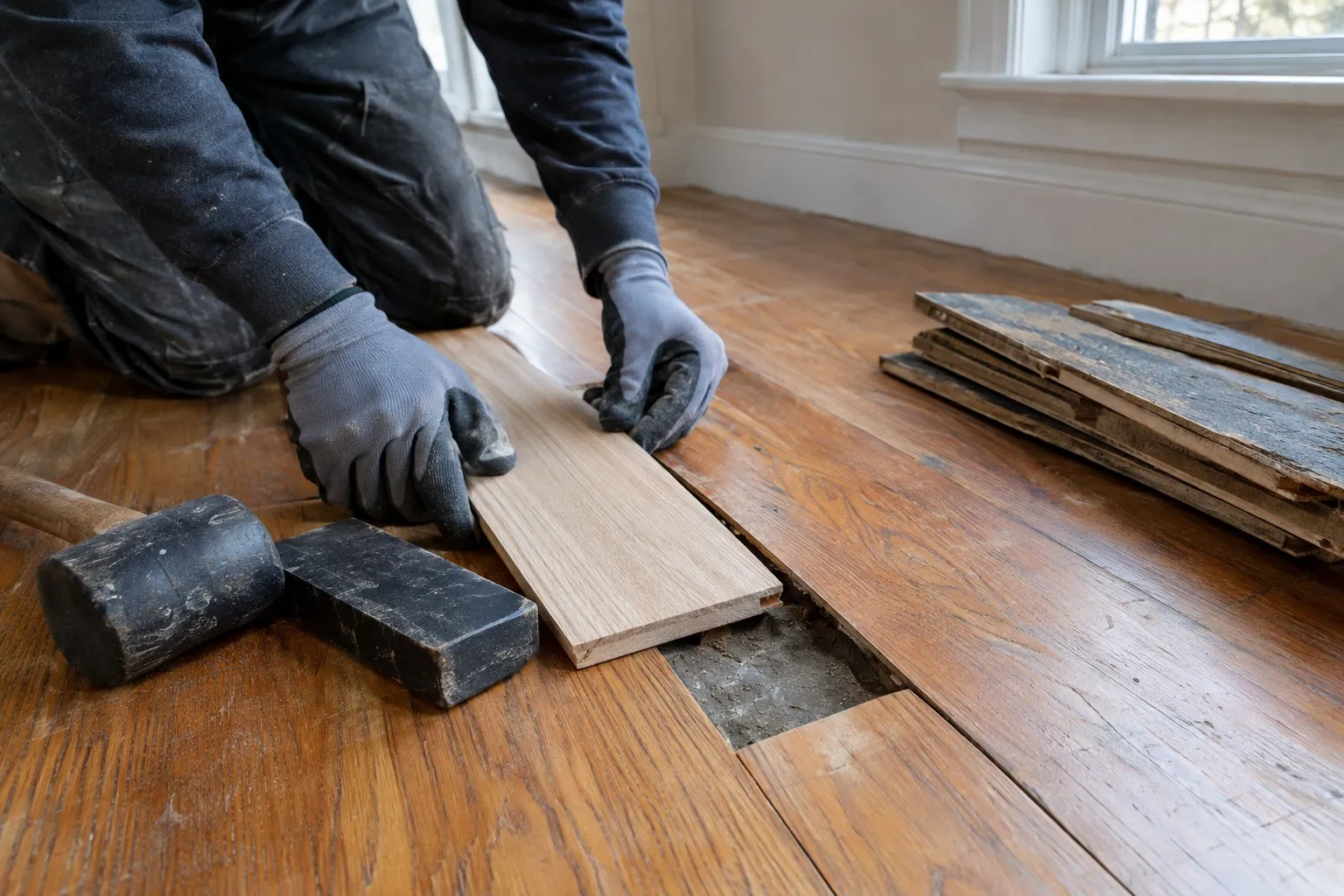

Check replacement boards by profile, thickness and species. A Palisades patch also needs its finish boundary reviewed against retained wood.

Moisture checks help confirm repair readiness after leaks. Record your water incident and resolve the source before new wood is fitted.

Locate the source of noise or an open joint before correcting the floor. At the Orangeburg visit, detail when movement or gaps appeared.

The one-year repair warranty applies to the labor scope. Keep the Orangetown repair details and care guidelines for reference.


 Get your Free In-Home Estimate
The local historic-area survey identifies a mixed residential and commercial core with buildings from different periods. For your repair, identify the floor and adjacent woodwork that will stay, then measure the existing profile and thickness. Choose the patch boundary from the material actually present. A historic facade does not prove that the interior boards are original or readily replaceable.
Palisades' historic districts contain diverse older houses. If a particular floor shows boards from different repairs or additions, compare those sections before selecting replacement stock. Species, profile and finish response all matter. Discuss an acceptable blend or a broader finishing boundary without promising that new material will be visually indistinguishable from every retained board.
The former mill site's redevelopment included homes as well as commercial premises. Establish who controls the damaged floor, the inspection route and any access needed beyond the unit. Ask the building contact about work conditions before arranging material removal. Investigation of a leak or supporting layer may involve a different responsible party from the person choosing the final flooring repair.
No separate South Nyack village remains following its 2022 dissolution. Use the property's current address within Orangetown when seeking municipal information or scheduling the floor assessment. A management company or association may still administer building access, so include its instructions separately rather than confusing that role with the municipal authority.
The town recognizes Blauvelt and Orangeburg as distinct hamlets. Provide one damage history and photo set for each address, noting water events, noise, open joints and previous patches. A repair method appropriate to one floor cannot be assumed for the other. Separate identification also keeps replacement dimensions and finish approvals from being mixed between jobs.
Appearance alone does not establish that the floor assembly is stable. Address the source, review the event and assess the material and supporting layers before specifying replacement or sanding. The work sequence should follow the inspection rather than use new wood to cover unresolved moisture.
A stain can penetrate wood beyond the amount that safe sanding can remove; a scratch may be limited to the coating or upper surface. Inspect the depth and remaining material before choosing treatment. Local repair, board replacement and a wider finish blend have different implications that should be explained in the estimate.
Some openings change as the wood moves, so a rigid fill may be unsuitable. Examine the gap pattern, supporting conditions and history before selecting a correction. A stable isolated void and a seasonal moving joint should not automatically receive the same repair.







