Samples on Your Own Wood
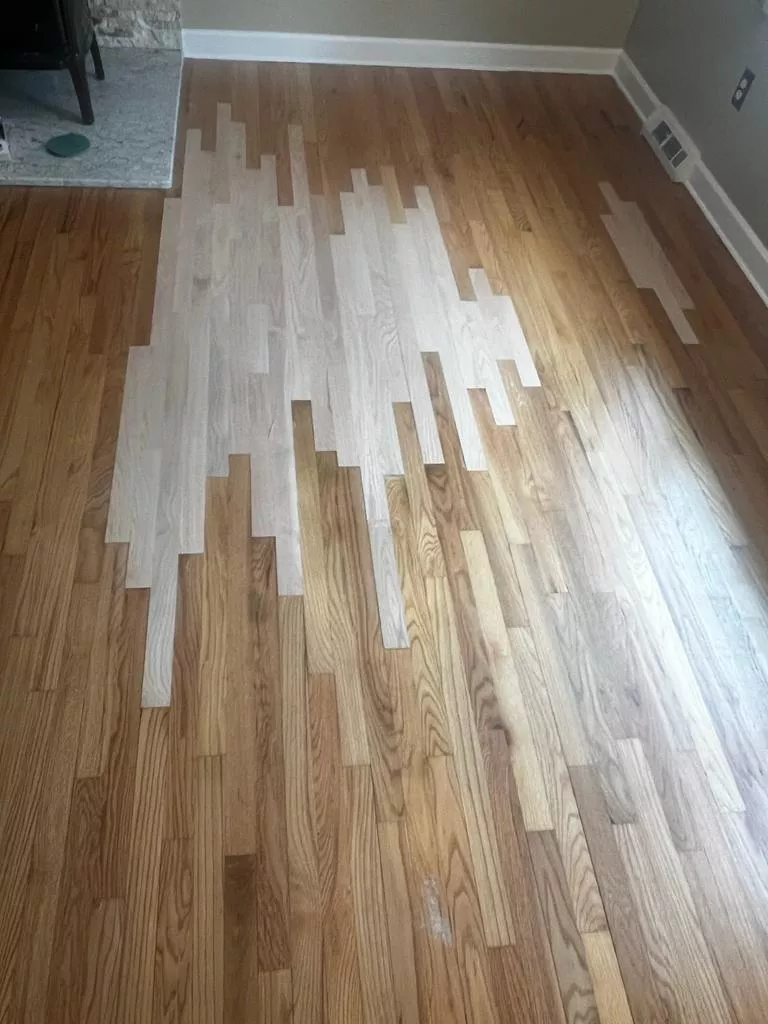
Our sanders take the entire floor back to raw oak, so the color takes evenly from wall to wall. Dust collectors stay on, so you can still cook in the kitchen and sleep upstairs.



Our sanders take the entire floor back to raw oak, so the color takes evenly from wall to wall. Dust collectors stay on, so you can still cook in the kitchen and sleep upstairs.

Over the stain, our water based finish goes on with a mild smell and dries clear, and the sheen can be anything from matte to semi-gloss.

A row of stain samples is brushed onto the sanded wood. Look at them in morning sun from your windows and once more after dark with the lamps on, then tell us your favorite.

Our 1-year labor warranty backs every Northborough stain job. Payment comes in halves: one when sanding begins, the other once the final finish layer has dried.


 Get your Free In-Home Estimate

In Northborough, staining comes with our refinish at $2.50/Sq Ft, covering sanding, your chosen color and every finish layer. Want the crew to empty the rooms too? That's a flat $250.
For the most part. A gray-brown or cool brown softens it, though red oak always stays a bit warm. Test squares brushed on your own oak show the real result.
Yes. A few swatches go on a sanded patch so you can view them in morning and evening light. Nothing is stained until you give the go-ahead.
Yes. Walnut and ebony look great, but pet hair, dust and light scratches stand out on them sooner than on honey or natural shades. We'll be upfront about that before you choose.
Often, when the real wood top layer has enough thickness for sanding. We check at a heat register or doorway first, and if that layer is too thin, we'll say so plainly.
Bare feet are fine as soon as the finish has dried, and furniture comes back once it cures. We put your timeline in writing at the estimate.
We collect 50% on the morning sanding gets going and the rest once the finish is done. You pay nothing before our crew arrives at your Northborough home.
Yes. Treads can match your hallway color. A spare tread gets the test first, so your stairs tie in with the landing above and the entry floor below.