Samples on Your Own Wood
Study stain samples directly on prepared Hawthorne wood. A printed swatch cannot show the grain and absorption of your floor.



Study stain samples directly on prepared Hawthorne wood. A printed swatch cannot show the grain and absorption of your floor.

Use a sanding sequence suited to the chosen stain. Check Thornwood repairs and species changes before preparing the test samples.

Consistent sanding and application help control blotches and lap marks. Examine the process for your existing Valhalla floor.

Retain one-year workmanship coverage with your approved stain sample. Ask how your scope addresses natural wood variation and care.


 Get your Free In-Home Estimate
Provide the street, unit and hamlet or village. The four hamlets are Valhalla, Hawthorne, Pocantico Hills and Thornwood. The town also contains the villages of Sleepy Hollow and Pleasantville. That distinction helps identify the home and intended entrance before the sample visit. List the rooms and stair surfaces whose colors should be considered together, so the consultation can focus on the wood and retained finishes actually involved.
Briarcliff Manor crosses the Ossining and Mount Pleasant town line, and the postal area reaches beyond the village. Identify the property's municipality from its address information when organizing the wider renovation. Put that same address on the stain scope and sample approval. Separate the color work from replacement planks or structural alterations so the relevant local office can consider the complete project where a determination is needed.
Pleasantville's guidance distinguishes certain decorative finish work from alterations affecting structural features. If floor staining follows support repairs, a new opening or stair changes, describe those tasks separately when checking the broader project with the village building office. The color proposal should identify the rooms, repairs included and surfaces that remain. That makes the approved sample a finish decision within a clearly described renovation scope.
The village has its own Building Department for construction and repair matters. Its guidance identifies finish-work categories apart from structural or access-related alterations. Describe the repair portion to that office if the renovation goes beyond the wood surface, and keep it separate from sanding and color selection in the estimate. Schedule sample approval after the intended replacement wood and retained surfaces are known.
Prepare samples on the actual species and inspect them beside retained trim. Existing undertones can influence a gray result, so a generic color label is insufficient.
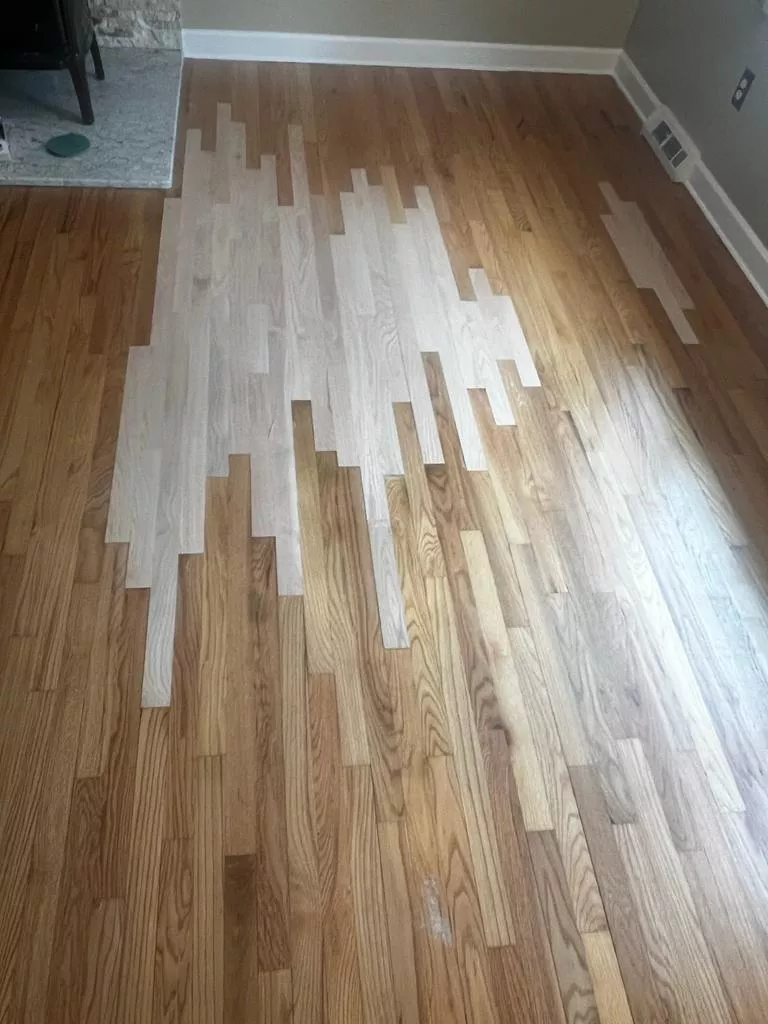
A custom blend can be tested toward the retained floor, but age and wood variation limit certainty. Approve a physical sample and discuss realistic blending expectations.
The preparation sequence influences absorption and visible marks. Use the sanding approach appropriate for the wood and stain, and inspect the prepared surface before application.
When the surfaces connect, viewing them together helps establish the intended relationship. Treads, rails and floors may be different woods, so test the relevant surfaces separately.