Samples on Your Own Wood
For a Greenville project, prepare the test on the wood that will receive stain so its grain and base color are visible. Use the room’s usual light.



For a Greenville project, prepare the test on the wood that will receive stain so its grain and base color are visible. Use the room’s usual light.

For a Greenville project, prepare the sample and final surface with the same sanding sequence so the trials compare fairly. Use the room’s usual light.

For a Greenville project, confirm how every species takes stain and inspect the sample for dark patches after it dries. Use the room’s usual light.

For homes near US 6, keep the stain and finish details with the written workmanship terms for later reference. Ask about the written terms.


 Get your Free In-Home Estimate
View a dry trial with the intended finish in place, using the room’s normal daylight and evening light. Include the lighting in a room set back from Mountain Road.
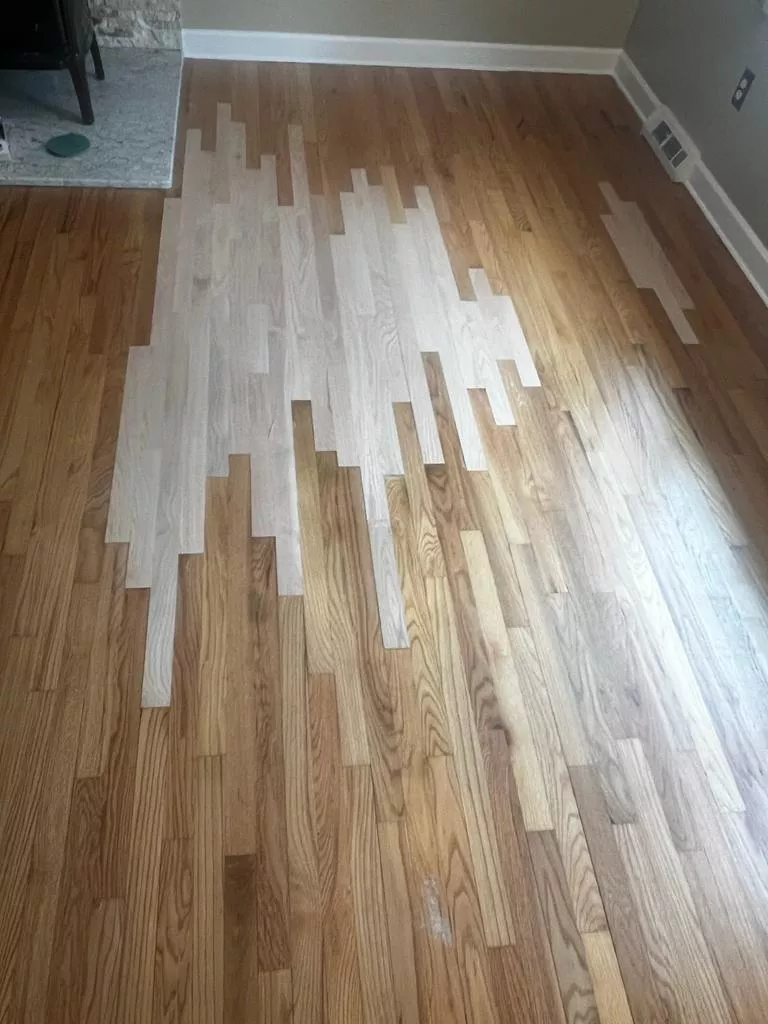
In a hillside house with a stepped entrance, yes. Prepare and finish an individual test on each species, especially when the floor includes earlier repairs.
Use a prepared sample that represents the actual wood and sanding sequence planned for the job. Measure the floor by the floor edge beneath a retained door.
In a hillside house with a stepped entrance, compare the darker trial in the strongest light and at the room’s shaded edge before approving it.
Yes. Check the sample with the planned protective finish so you can judge the combined color and sheen. Check the clearance near US 6.
In a hillside house with a stepped entrance, prepare a trial on the tread wood and place it beside a sample of the retained landing under the same light.
Label the approved sample with the stain, finish and mixing details, then store it out of direct sunlight. Check the finish in a room set back from Mountain Road.
In a hillside house with a stepped entrance, bring photos of the trim and a wood offcut if available. Note any sections that were patched in the past.