
Boards Matched to Yours
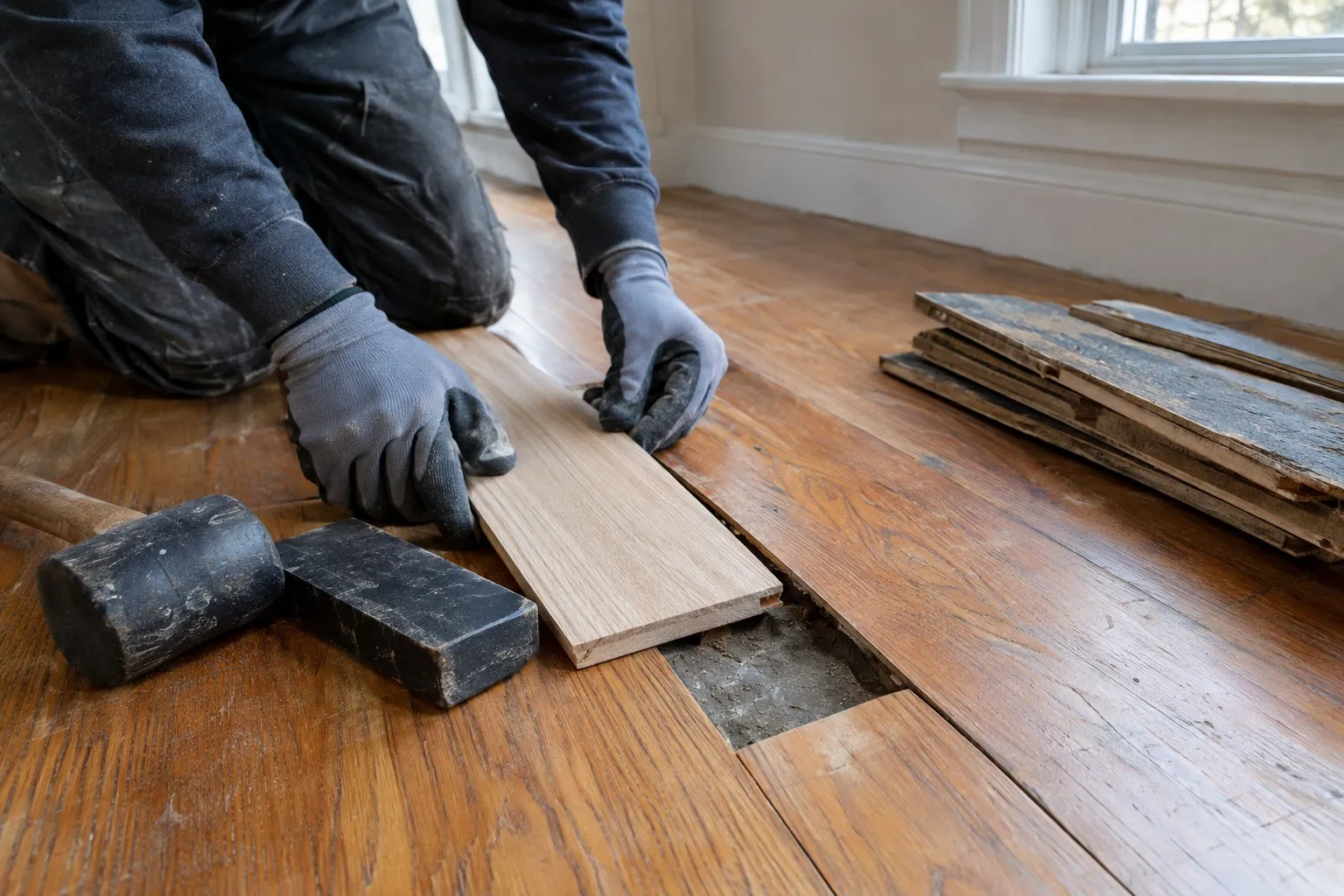
We confirm the species, from red or white oak to maple, measure strip width and thickness, then try stains on offcuts until the new wood matches yours.




We confirm the species, from red or white oak to maple, measure strip width and thickness, then try stains on offcuts until the new wood matches yours.

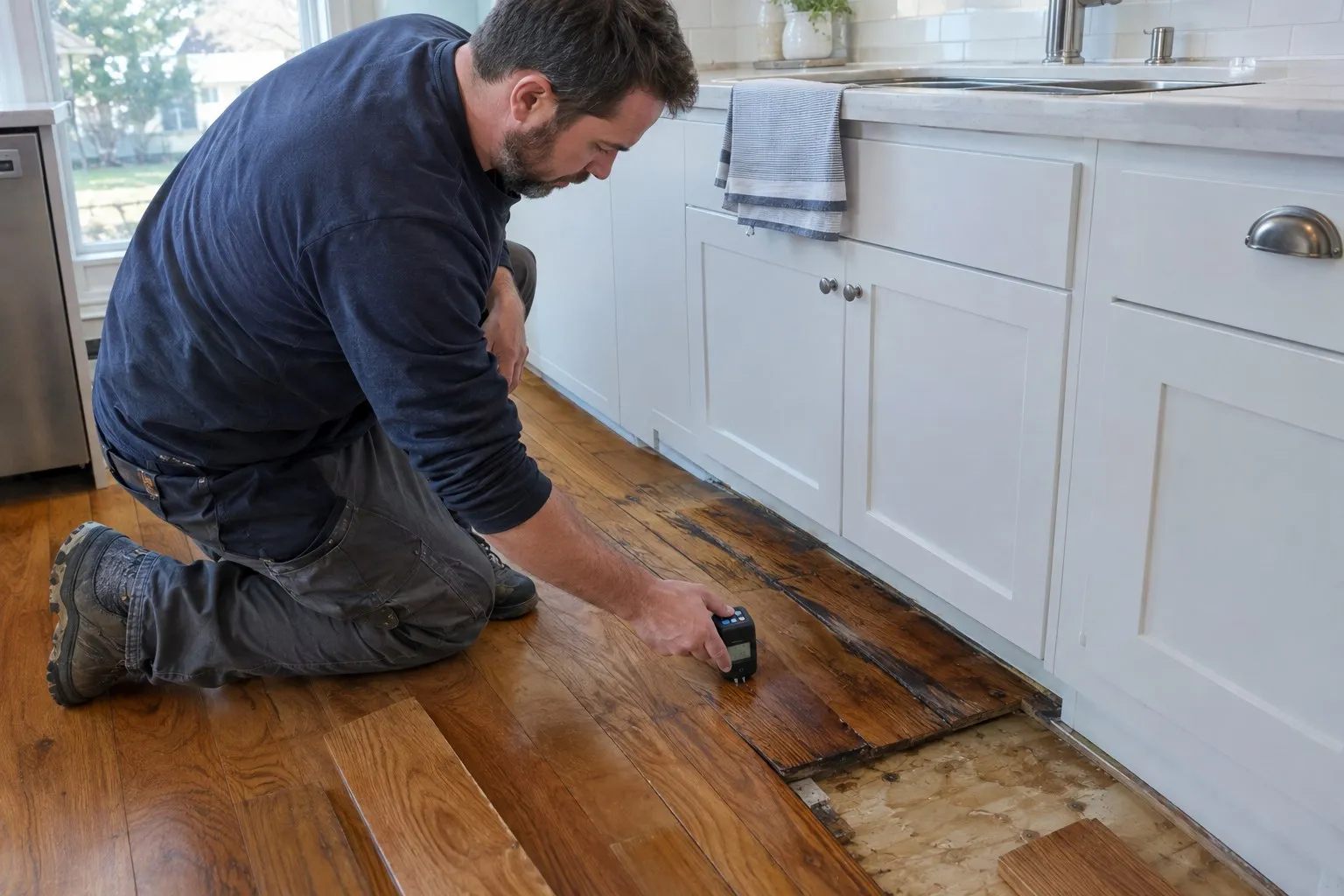
Our free visit includes walking the soft spots, a moisture meter reading, a look at the joists from below when possible and a written price.

Floors that flex get screwed tight to the framing from above, and the long gaps that open each winter can be filled so grit stops gathering in them.

Employees, not subcontractors, do every repair, all NWFA trained, licensed and insured by us. If our fix lets go before a year passes, we redo it free.


 Get your Free In-Home Estimate

Yes, it's one of our most common jobs. Fresh strips get woven in from both sides, row by row, so the patch blends in instead of leaving a straight line.
Each repair is quoted after a free visit, because the size and cause of the damage vary so much. You'll get a firm price before we start.
Often, yes. Patterned floors take more care, since each piece has to match the pattern, but damaged sections can usually be rebuilt piece by piece.
New wood can look lighter at first. We stain and finish to match, and if the whole room is faded, refinishing everything afterward gives the most uniform look.
Usually. A damaged engineered plank can be cut free and swapped for a matching one. When the veneer is thick enough, a light sanding helps them blend.
Squeaks happen when wood shifts against nails or the subfloor. We fasten the floor down tighter to the framing, which usually quiets it.
Gentle foot traffic is usually okay within a day. Heavier pieces like a sofa or bookcase should stay out for two or three days so the finish hardens fully.
Yes. Labor on every repair carries a twelve month guarantee. Should our fix give out in that window, the follow up visit and the work are both free.







