Samples on Your Own Wood
At your Fifth Avenue visit, sample stain on the exposed wood. The same stain reads differently across wood species.



At your Fifth Avenue visit, sample stain on the exposed wood. The same stain reads differently across wood species.

A loose sample may differ from the wood already installed. During the Prospect Park West walkthrough, compare the color once the sample has dried.

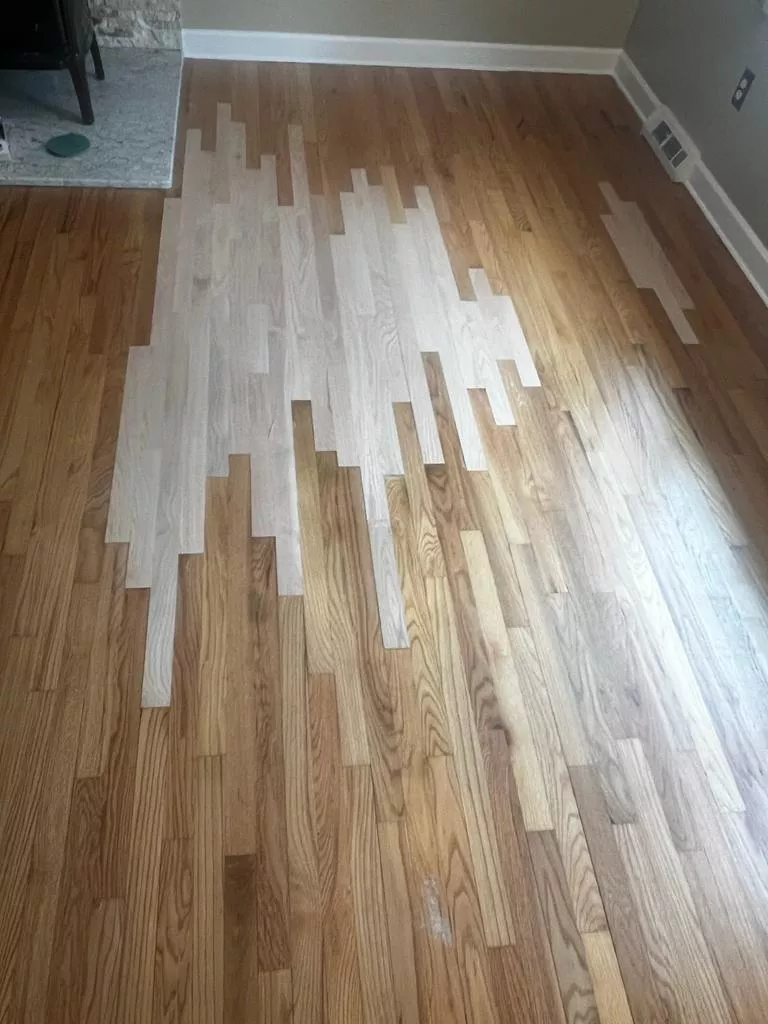
For wood inspection near Seventh Avenue, look at grain and remaining sandable thickness. That detail helps the crew identify old patches and different board species.

Ask what the written workmanship coverage includes for your Park Slope hardwood staining project. Keep the signed scope with the care instructions.


 Get your Free In-Home Estimate
Identify old patches and different board species. In Park Slope, ask which preparation, materials, and transitions are included in the written scope.
For a narrow brownstone with long connected rooms near Seventh Avenue, bring samples into both rooms under their normal light. Existing color and grain still influence pale results. Review that detail while the existing surface is still in place.
At the Park Slope visit, place samples where different room light reaches them. A loose sample may differ from the wood already installed.
Compare the stain with the planned topcoat. Follow up with the crew about how to check the sheen against walls and trim.
Bring up the light and natural tones when we review the rooms in Park Slope. Keep a natural sample in the comparison.
Medium colors can show variation where wood changes species. Before the visit, test a midtone beside darker furniture and trim.
Check how grain and small marks show through. In Park Slope, view dark samples where light crosses the floor before committing to the plan.
Different ages of wood can keep some visible variation. For the Park Slope estimate, look at the boundary from both sides of a doorway.