Samples on Your Own Wood
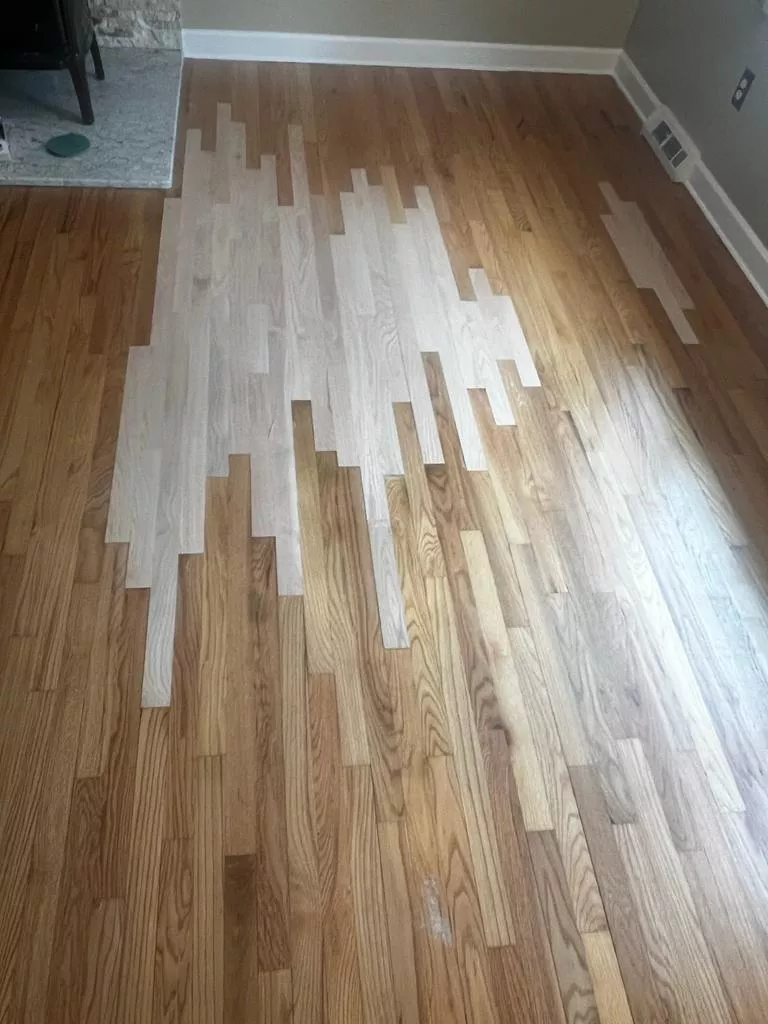
Compare test areas on the actual wood where feasible. A stain card cannot reproduce the age, grain and previous treatment of your apartment floor.



Compare test areas on the actual wood where feasible. A stain card cannot reproduce the age, grain and previous treatment of your apartment floor.

Old finish and damaged areas are assessed before color work. The floor must be suitable for the preparation needed to accept the new stain.

An even result depends on preparation and application suited to the species and stain system. We explain any limitations found during inspection.

Our written workmanship coverage lasts one year. Stain is followed by the specified protective finish, with care instructions for the completed floor.


 Get your Free In-Home Estimate
A standard penetrating stain normally needs suitable prepared wood. Existing coatings must be evaluated; applying stain over them is not a substitute for the correct preparation.
Not necessarily. Lighting, wood species, grain and previous repairs can affect its appearance across the apartment.
No exact transformation can be promised. Samples may help reduce or change the visible tone, but the underlying wood and grain remain different.
No. Color stain and the protective coating have different roles. The agreed finishing system should specify both where appropriate.
They can be coordinated, but different wood or age may produce variation. Compare samples on both surfaces before approving the color.
Possibly, after suitable sanding and assessment. Deep staining or limited wear thickness may restrict the result.
Review the agreed sample in the room's lighting and document the selected product or blend before full application.
The protective finish controls return-to-use timing. Rugs can require a longer wait than light foot traffic, so follow the instructions for the actual finish.