Samples on Your Own Wood
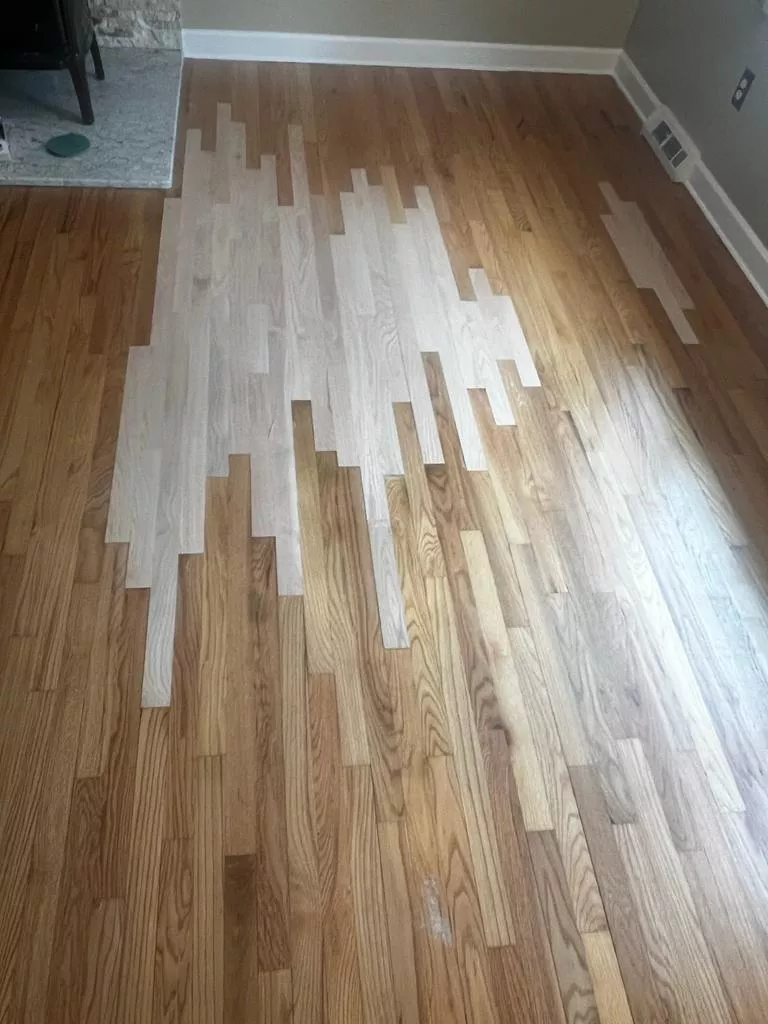
Sample stain on a prepared New City floor. Compare repaired areas and retained boards in the lighting before approving color.



Sample stain on a prepared New City floor. Compare repaired areas and retained boards in the lighting before approving color.

Nanuet staining begins with suitable sanding and preparation. Check the surface for scratches before the test sample is approved.

For Congers wood, plan even application across prepared boards. Review absorption and overlap marks before choosing a method.

Retain your Clarkstown one-year staining warranty and your approved color record. Check workmanship scope and finish care guidance.


 Get your Free In-Home Estimate
Use the chart to narrow the choices, then evaluate suitable samples on the prepared wood. The species, room light and final coating can change the appearance from the printed reference.
Color does not repair splits, gouges or contaminated wood. Assess those conditions and any necessary replacement before deciding whether a darker shade is appropriate.
Replacement wood can differ in species, age or grain from the surrounding boards. Preparation also matters. Include patched areas when reviewing a sample and setting realistic expectations.
Assess the Bardonia stairs and floor as related surfaces, then test the proposed shade on each. Different species, older finishes and room light can produce visible variation despite using one named stain. Review those comparisons before agreeing on a color.
No. Stain changes the color of suitable wood, while the protective coating and its sheen affect the finished appearance. Confirm both choices rather than treating one sample as an unspecified complete system.
Choose the boundary during planning, often at a suitable doorway or defined connection. The contrast with retained flooring should be understood before the new color is approved.
Do not assume that a new stain can penetrate or bond through the old finish. The proposed system requires an assessment of the current surface and compatible preparation. Agree on sanding and any other required treatment before approving a color-change scope.
Place the comparison at the actual boundary and look at it at different times of day. Consider the grain and sheen as well as the shade. Decide whether the aim is a close blend or a deliberate contrast before authorizing the larger application.