
Boards Matched to Yours
Narrow red oak strip, 2 1/4 inches wide, is in nearly every Boxford colonial, so a bundle of it stays in the van. New pieces get their color in several thin passes until the eye stops finding them.



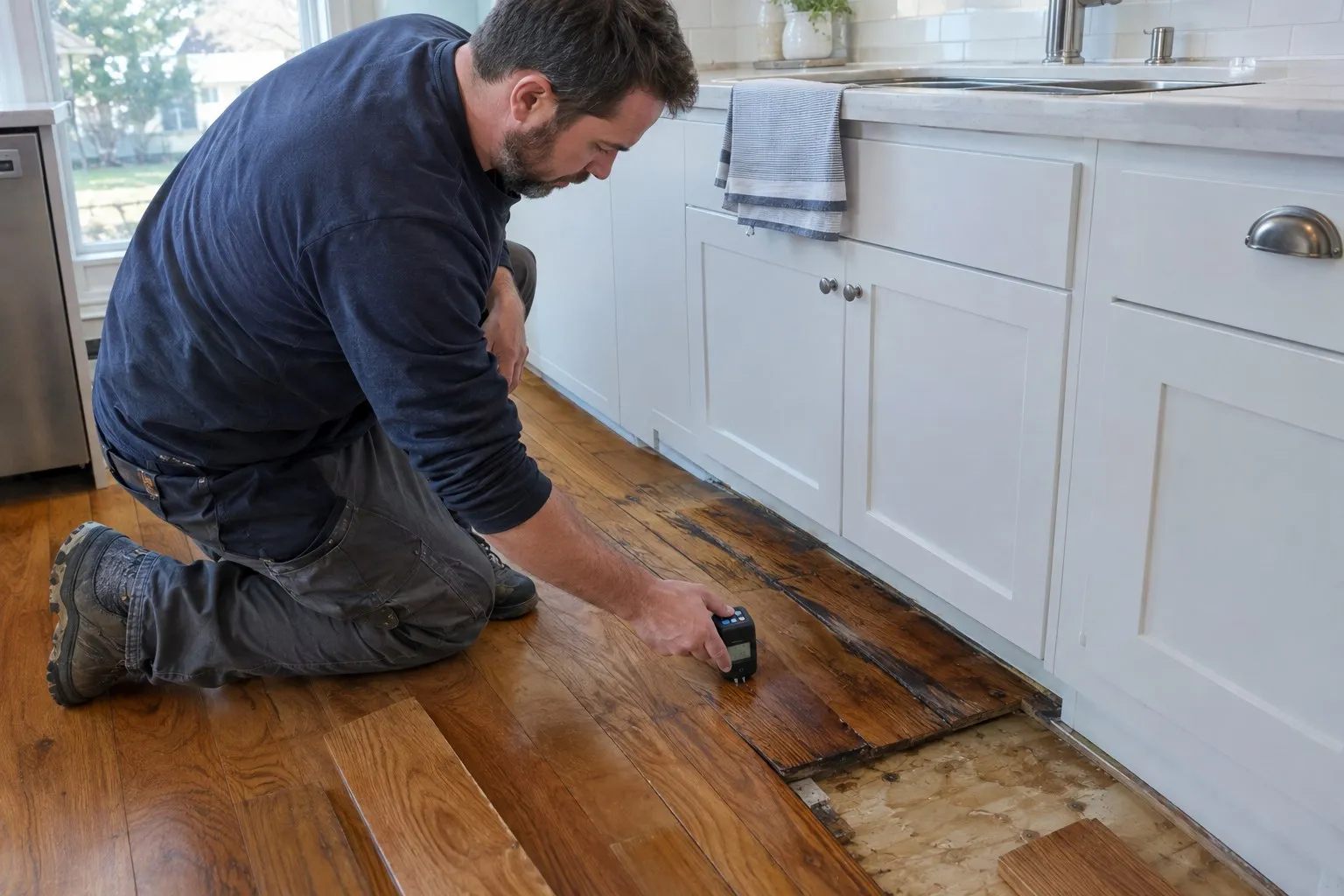
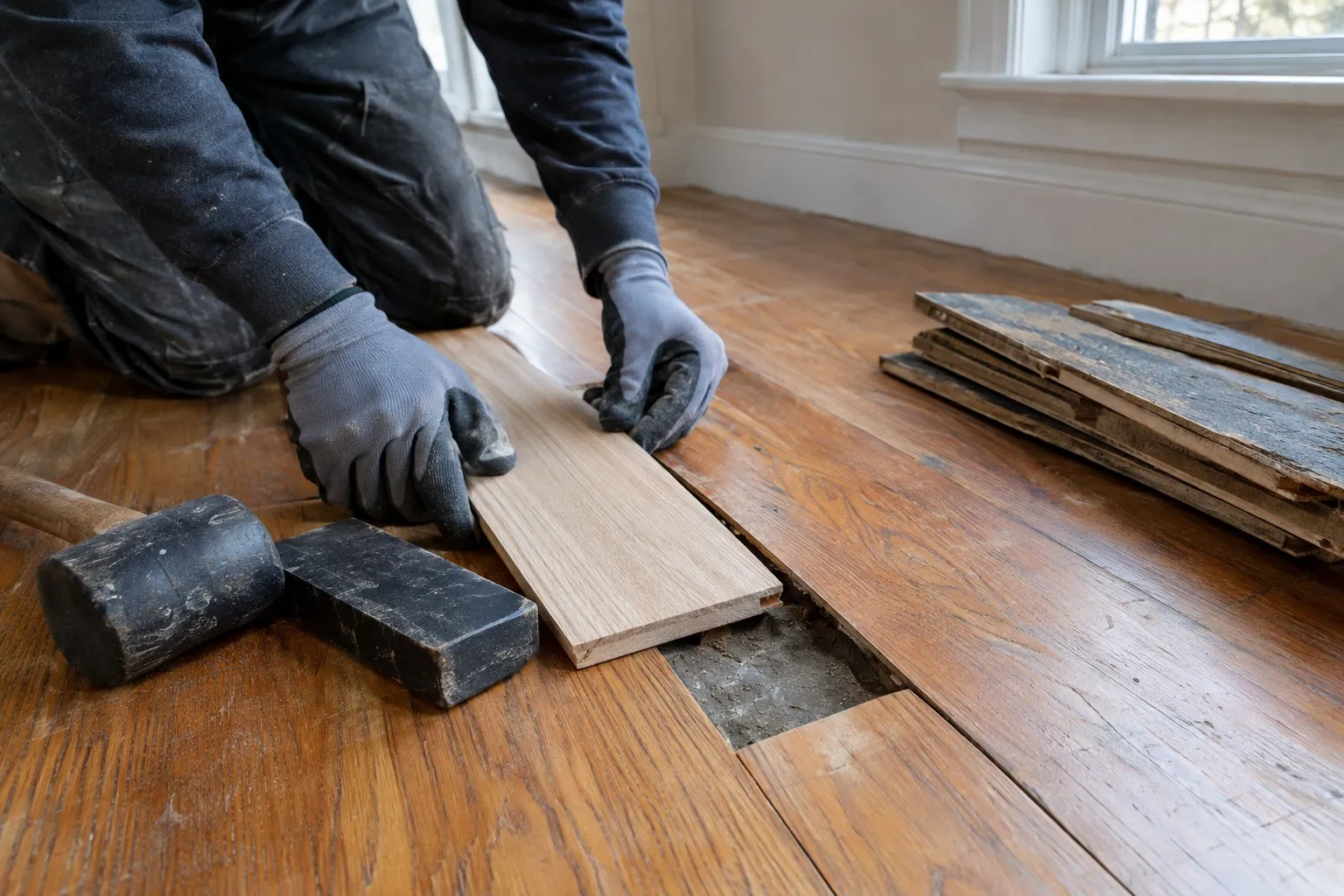

Narrow red oak strip, 2 1/4 inches wide, is in nearly every Boxford colonial, so a bundle of it stays in the van. New pieces get their color in several thin passes until the eye stops finding them.

The estimate is free and it begins with a moisture meter. Then we go down to the basement to see the subfloor from underneath and come back up to point out which boards genuinely have to go.

A hall that squeaks and a gap opening beside the baseboard heat are the two calls we get most from Boxford. The first takes screws driven from above; the second takes a filler tinted to the oak.

Each repair comes with a year on the labor, and every installer carries a license and insurance and works to NWFA standards.


 Get your Free In-Home Estimate

Repairs begin at $150. The final figure depends on how many strips failed and what did it, and you get it in writing after a free visit to the house.
Yes. We dry the floor, log the meter readings for several days and change only the boards that will not lie flat again.
Rarely all of it. Readings from the basement and from the room above tell us what dried and what did not, and only the strips that stay damaged come out.
Yes. Almost every colonial here has it, so a bundle lives in the van and the color is built up in thin passes until the patch matches.
Small screws go down through the boards and bite into the framing, and tinted putty hides each hole.
Yes. Heat dries those boards out, so the seams get a tinted filler that moves with the seasons instead of cracking.
Usually within the week, and a small Boxford patch is cut, set and coated well before dinner.
Our patch work carries a year of labor coverage, done by crew members who are NWFA certified, licensed and insured.







