
Boards Matched to Yours
Keep a piece with an intact edge when possible. Its thickness, grain and joint shape help narrow down compatible replacement stock.



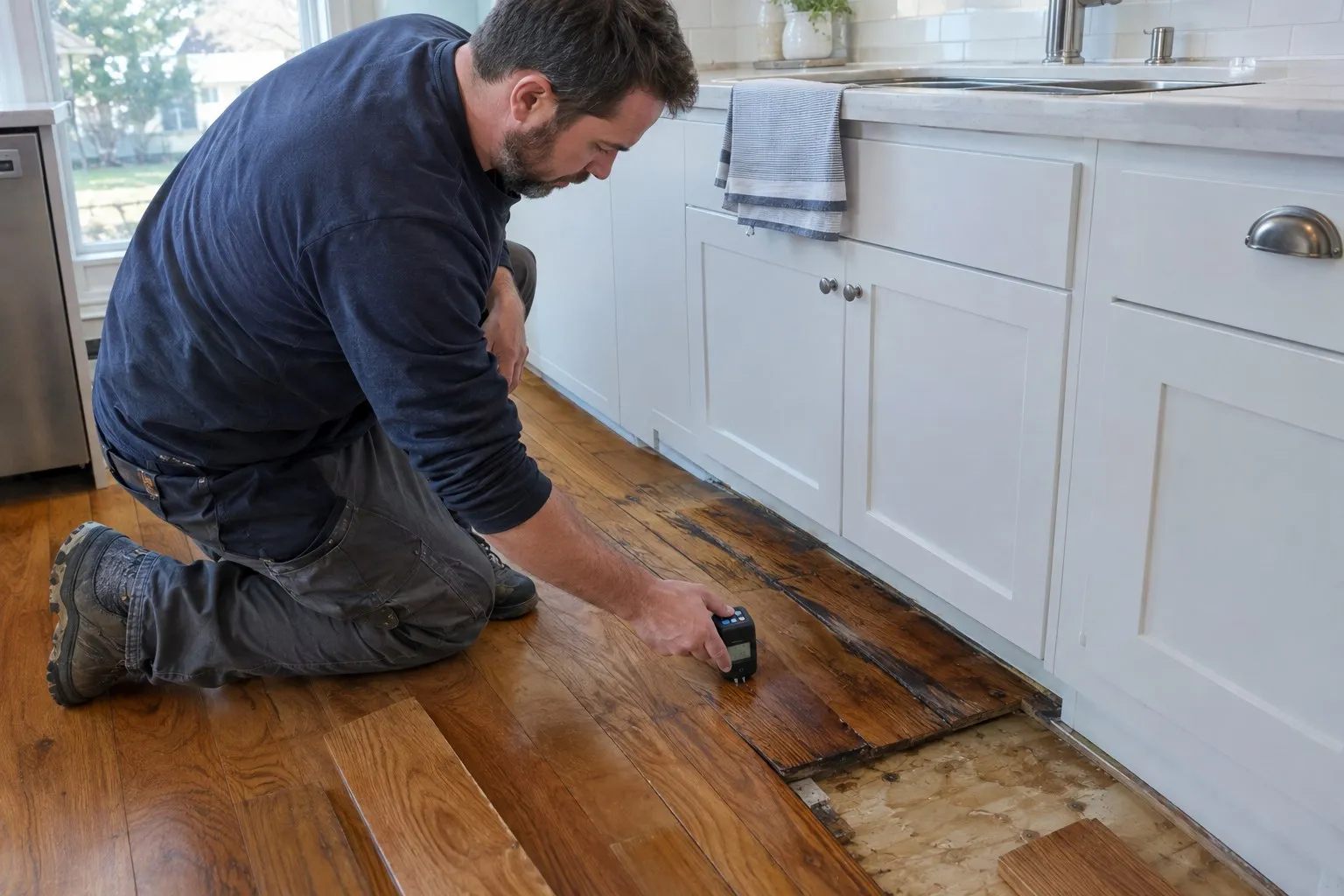
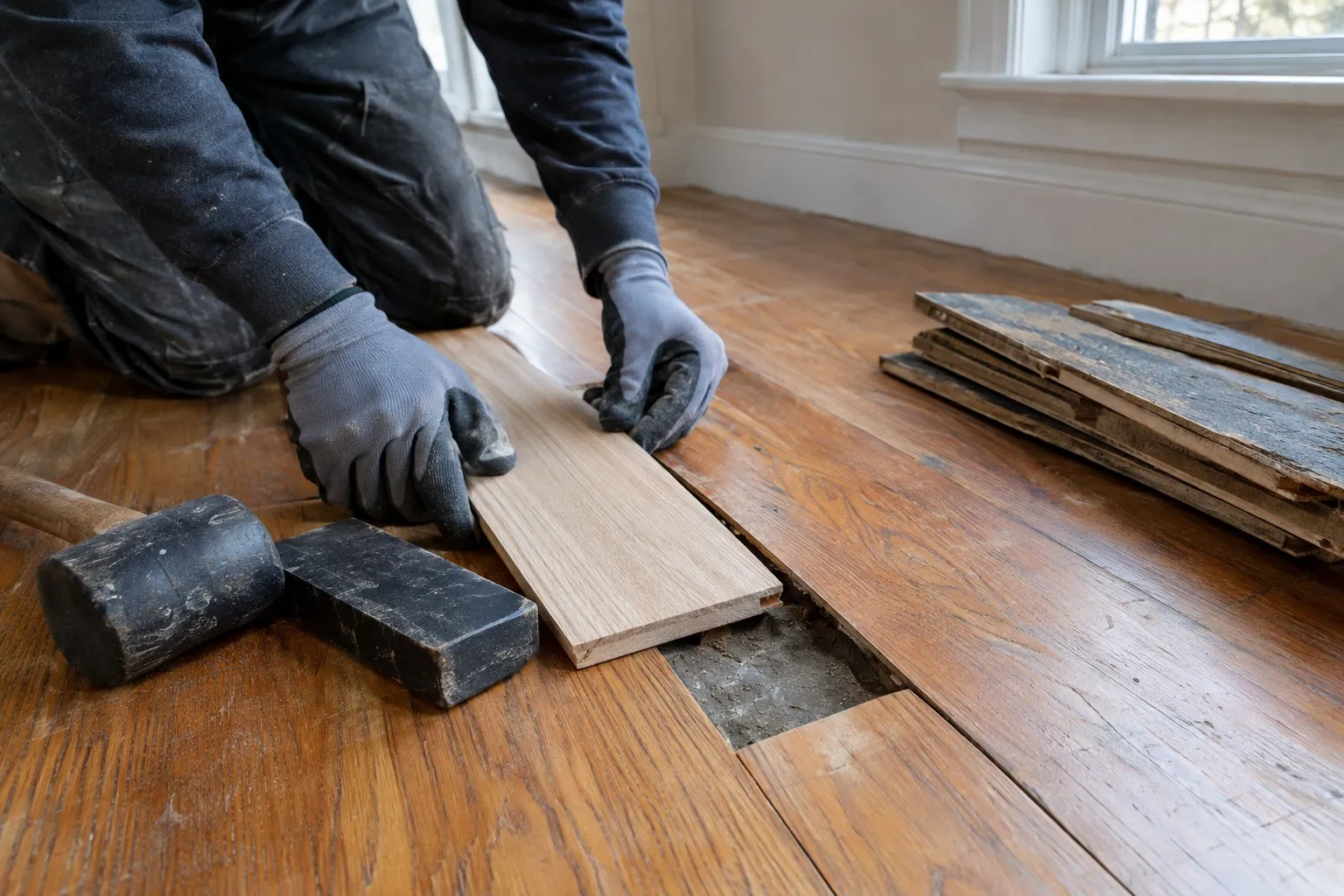

Keep a piece with an intact edge when possible. Its thickness, grain and joint shape help narrow down compatible replacement stock.

At the free home visit, show the boundary of the damage and any older repair. The scope can distinguish a patch from work on the support.

Find what moves when you step on the damaged area. An inspection can separate a loose strip from movement in the base below it.

Ask how long the area should stay clear after the repair. Keep a record of the stock and finish that were used for the patch.


 Get your Free In-Home Estimate
The at-home estimate is free. An inspection shows which strips need attention and whether the support below them needs repair.
Often the sound areas can stay. Check the profile and support around the split before choosing how much to lift.
Find and address the water source first. After the affected areas stabilize, an inspection can show which sections are suitable to keep.
Compare the species, grain direction and edge profile. A finish sample on the replacement can show whether it will blend after fitting.
A squeak can come from a small area. Locate the movement and inspect below the floor where accessible before choosing a repair.
That depends on how far the discoloration reaches. A trial on a small area can show whether a patch or another treatment is needed.
Include the whole hearth edge and both ends of the damaged strip. Mark any trim or stone that must stay in place.
They can be planned together when the surrounding material can take sanding. The written scope should identify which repairs must happen first.







